Table of Contents
- How to Decide What Your Senior Dog Actually Needs
- 1. A Supportive Bed
- 2. Traction and Flooring
- 3. Ramps, Stairs, and Car Access
- 4. A Support Harness or Lifting Sling
- 5. Bowls and the Feeding Setup
- 6. Joint Supplements and Pain Management
- 7. Grooming and Hygiene Supplies
- 8. Incontinence Supplies
- 9. Comfort for Senses, Mind, and Nights
- 10. Safety and Travel Gear
- Quick Reference: Problem, Gear, and Where to Read More
- How to Buy Smart: Mistakes to Avoid
- Senior Dog Essentials Checklist
- Frequently Asked Questions
How PawSeniors Researches This
PawSeniors articles are written and edited in-house, then checked against primary veterinary sources before publishing.
- Every medical claim is sourced to the American Kennel Club, PetMD, VCA Animal Hospitals, or another named veterinary source, linked at the end of the article.
- Every claim is tied to a named, checkable veterinary source linked at the end of the article — nothing is published without a reference you can verify yourself.
- Articles are updated when veterinary guidance changes.
The essentials for most senior dogs come down to a handful of things: a supportive bed, safe footing, a way to manage heights such as stairs and car seats, a harness or sling for help when legs are weak, and a few small changes at mealtime and at grooming time. You do not need to buy everything at once; the right list depends on what your dog is struggling with today, and the best purchases solve a problem you can actually see.
This guide walks through each category of senior dog gear, what it is for, what to look for when you compare products, and which signs tell you it is time to add it. It links to our deeper buying guides for each item, so you can use it as a starting point and go into detail only where you need to. It is not a list of sponsored picks, and it does not replace advice from your veterinarian, who should look at any new limp, weakness, or change in behavior before you try to solve it with equipment.
How to Decide What Your Senior Dog Actually Needs
Older dogs change gradually, and owners often notice the problem before they notice the cause. Instead of starting with a shopping list, start with a short observation of your dog’s day. Over a week, watch for:
- Getting up and lying down: Does your dog circle many times, hesitate, or push up with the front legs only?
- Footing: Do the back feet slip on wood, tile, or laminate? Does your dog avoid certain rooms?
- Heights: Has your dog stopped jumping onto the sofa or bed, or started waiting at the bottom of the stairs or by the car door?
- Walks: Does your dog tire earlier, scuff the back toes, or need help on curbs and steps?
- Meals: Does your dog eat with the front legs splayed, drop food, or walk away from the bowl partway through?
- Nights: Is your dog restless, pacing, or panting in the evening?
- Toileting: Are there leaks on the bed or accidents indoors?
Each observation points to a category below. Many of these signs can also mean pain or illness, so share your notes with your vet. Our guides on recognizing pain in senior dogs and the early signs of arthritis help you describe what you are seeing.
A simple priority order
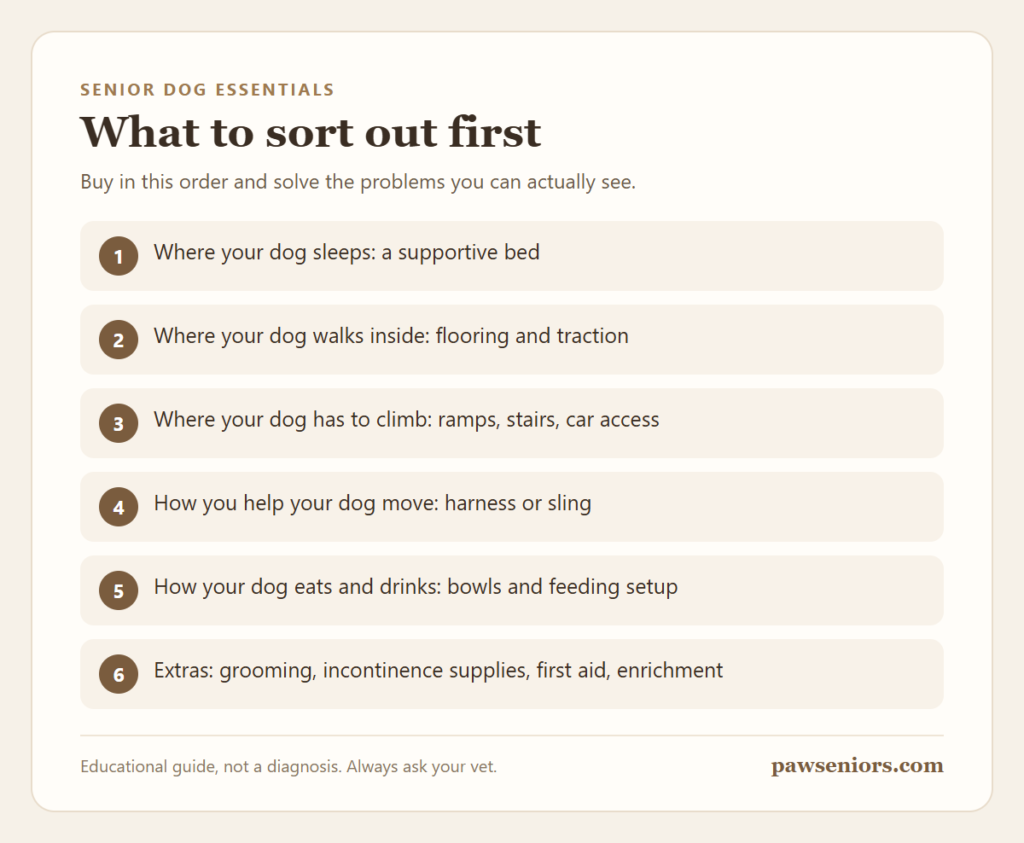
If you are unsure where to start, this order works for most aging dogs because it follows the movements a dog repeats most often each day:
- Where your dog sleeps (bed)
- Where your dog walks inside (flooring and traction)
- Where your dog has to climb (ramps, stairs, car access)
- How you help your dog move (harness or sling)
- How your dog eats and drinks (bowls and feeding setup)
- Comfort, hygiene, and safety extras (grooming, incontinence supplies, first aid, enrichment)
1. A Supportive Bed
A senior dog spends a large part of the day lying down, so the bed is usually the single most useful upgrade. A thin cushion lets hips, elbows, and shoulders press through to the hard floor, which can make stiffness worse after rest and can lead to pressure sores in thin or less mobile dogs.
What to look for
- Supportive foam: Solid orthopedic or memory foam that does not flatten when your dog lies on it. Press down with your fist; if you can easily feel the floor, it is too thin for a large or heavy dog.
- Low entry: A low front edge or no bolster on one side, so a stiff dog can step on instead of climbing over.
- Size: Big enough for your dog to stretch out fully, not only curl up. Many older dogs with sore joints prefer lying flat on their side.
- Washable, water-resistant cover: A removable cover and a waterproof liner are important if leaks are possible now or later.
- Non-slip base: So the bed does not slide when your dog steps onto it.
For a detailed comparison of foam types and bed styles, read our orthopedic bed buying guide and how to choose an orthopedic bed for a senior dog. Where you put the bed matters as much as the bed itself: away from drafts, close to the family, and on a level surface. Our guide to setting up a senior-friendly bedroom covers placement, light, and temperature.
Signs you need a better bed
- Your dog is stiff after naps and loosens up after a few minutes of walking.
- Your dog keeps choosing the sofa, your bed, or a rug over its own bed.
- You see calluses or hair loss on elbows or hips.
- The old bed has a permanent dent in the middle.
2. Traction and Flooring
Smooth floors are one of the most overlooked problems in a senior dog’s home. When back legs weaken, a dog needs grip to push up and to stop safely. Slipping does not just cause falls; many dogs start avoiding rooms or stop coming to greet you because the floor feels unsafe.
Options, from simplest to most involved
- Runners and rugs with rubber backing along the paths your dog uses most: bed to water bowl, bed to door, and the hallway.
- Interlocking foam or rubber tiles in the area where your dog rests and gets up.
- Nail and paw care: Long nails and long hair between the pads reduce grip. Keeping both trimmed is free traction. See nail care for senior dogs.
- Grip socks, booties, or toe grips for dogs that tolerate them. Introduce them slowly, check fit often, and remove socks when your dog is unsupervised so they do not twist or get chewed.
- Baby gates to block stairs or slippery rooms when you are not around to help.
Our full guide to non-slip flooring for senior pets compares rugs, mats, tiles, and coatings, and 7 home modifications that help senior dogs move safely brings the whole house together.
3. Ramps, Stairs, and Car Access
Jumping down puts a lot of load on the front legs and shoulders, and jumping up demands strength in the hips and back legs. When an older dog starts to hesitate at the sofa or the car, a ramp or step can protect joints and keep your dog included in family life.
Ramp or stairs?
- Ramps suit dogs with arthritis, weak back legs, or spinal problems, because they avoid the step-up motion. They need more floor space and a gentle angle.
- Pet stairs take less space and suit small dogs that are still fairly steady. Shallow, wide steps with a carpeted or rubber surface are easier for older dogs.
- Car ramps are usually longer and fold or telescope for storage. Check the weight rating against your dog’s weight, the surface grip, and whether you can carry and set it up yourself.
What to look for in any ramp
- A gentle slope for the height you need; longer ramps make a lower angle.
- A high-traction surface, such as rubber or carpet, that stays grippy when wet.
- Side rails or raised edges for dogs with poor balance or vision.
- A stable base that does not wobble or slide.
- Width that lets your dog walk with a natural stance.
Read the best ramps for senior dogs and car ramps for senior dogs for detailed comparisons, and ramps vs. stairs vs. lifts if you are deciding between them. Many dogs need practice before they trust a ramp; teaching a senior dog to use a ramp gives a step-by-step plan with treats and short sessions.
4. A Support Harness or Lifting Sling
When your dog needs help on stairs, getting into the car, or standing up after a nap, a well-fitted harness lets you help without pulling on the collar, neck, or belly. It also protects your own back.
Types of support
- Rear-end slings: A padded band under the belly with handles. Useful for short-term help, after surgery, or for dogs with weak back legs.
- Full-body lifting harnesses: Front and rear sections with handles along the back, so you can steady the whole dog. Many can stay on during the day if the fit allows.
- Everyday walking harnesses with a handle: A good option for dogs that are mostly steady but sometimes need a hand on curbs.
Fit and comfort checklist
- Wide, padded straps that do not rub behind the front legs.
- Room for two fingers under each strap.
- A design that allows a male dog to urinate without soaking the sling.
- Easy on and off, ideally without lifting legs through tight loops.
- Check the skin under the harness daily for redness or hair loss.
Our guide to support slings and lifting harnesses explains when to use each type and how to lift safely. If your dog needs help more often, ask your vet about the cause, such as muscle loss, arthritis, or a neurological problem, and whether physical rehabilitation could rebuild strength. If the back legs are shaking or giving way, read why an old dog’s back legs shake before choosing equipment.
5. Bowls and the Feeding Setup
Small changes at mealtime help dogs with stiff necks, sore front legs, or poor balance.
- Bowl height: Some older dogs with neck or front-leg pain eat more comfortably from a raised bowl. Elevated feeders are not right for every dog, so read elevated food and water bowls: do they help? and ask your vet, especially for large, deep-chested breeds.
- A non-slip mat under the bowls, so your dog does not have to brace on a slippery floor while eating.
- Stable, heavy, or non-tip bowls for dogs that push bowls around.
- More than one water station in a larger home, so a stiff dog does not have to walk far to drink. See why senior dogs need more water than you think.
- Slow feeders or food puzzles for dogs that gulp, as long as they do not frustrate a dog with dental pain or poor vision.
What goes in the bowl matters too. Our guide on how to feed a senior dog covers diet changes, and the best treats for senior dogs managing weight or diabetes helps when you use food rewards for ramp training or enrichment.
6. Joint Supplements and Pain Management
Supplements are one of the most common purchases for older dogs, and also one of the most confusing. They are not a substitute for a pain plan from your vet, but some owners use them as part of one. Before you buy, check with your vet, especially if your dog takes other medications.
- Learn what each ingredient is meant to do in joint supplements explained.
- Compare product types, quality seals, and dosing in the best joint supplements for senior dogs, compared.
- Ask your vet about prescription options described in prescription pain medications for arthritic senior dogs.
Keeping your dog lean takes pressure off every joint and often helps more than any single product. See weight management for senior dogs.
Medication organizers
Many senior dogs end up on several medications or supplements. A weekly pill organizer, a written schedule on the fridge, and a log of doses given make mistakes much less likely, particularly when more than one person feeds the dog. Our practical system for managing multiple medications explains how to set this up.
7. Grooming and Hygiene Supplies
Older dogs often find grooming harder to tolerate, and some cannot stand for long. The right tools make sessions shorter and kinder.
- A non-slip mat in the bath or on a table, and short sessions with breaks.
- Gentle brushes suited to thinner skin and less padding over bones.
- Nail clippers or a grinder your dog accepts, used little and often.
- Dog-safe wipes and a waterless shampoo for spot cleaning between baths.
- A toothbrush and dog toothpaste, because dental disease is common in older dogs. Read dental disease in senior dogs.
For handling tips with sore joints, see grooming a senior dog with arthritis or health conditions. While you groom, run your hands over the body and note any new lumps; skin and coat changes in senior dogs explains what to show your vet.
8. Incontinence Supplies
Leaking urine is common in older dogs, and it has many possible causes, some of them treatable. See your vet first; our guide to urinary incontinence in senior dogs explains the work-up and treatment options. While you sort out the cause, these supplies help keep your dog clean and comfortable:
- Waterproof bed liners and washable pee pads under the bedding.
- Belly bands for male dogs or dog diapers, changed often to protect the skin.
- Gentle wipes and a barrier cream approved by your vet to prevent urine scald.
- An enzymatic cleaner for accidents, so the smell does not draw your dog back to the same spot.
9. Comfort for Senses, Mind, and Nights
Aging affects more than joints. Hearing, vision, and thinking can change, and the right setup helps a dog feel secure.
- Night lights along the route from the bed to the water bowl and door help dogs with poor vision or confusion at night. See vision loss in senior dogs and cats.
- Corner guards and a consistent furniture layout for dogs that bump into things.
- A vibration or light cue instead of calling, for dogs with hearing loss. Read hearing loss in senior dogs.
- Food puzzles, snuffle mats, and scent games that are low-impact but keep the mind busy. Our list of mental enrichment ideas for senior dogs has many options.
- A calm evening routine for dogs that become restless as the day ends; see sundowning in senior dogs and why a senior dog pants at night.
- Warmth in winter: a coat for thin or short-haired dogs and a warm, draft-free bed. Cold weather and arthritis has more ideas. Use heating pads only if they are made for pets and your dog can move off them easily.
10. Safety and Travel Gear
- A first aid kit kept where everyone can find it, with your vet’s and the emergency clinic’s numbers inside. Our senior pet first aid kit guide lists what to include.
- A crash-tested car harness or a secure crate, plus a ramp for getting in and out. See car travel safety for senior dogs and cats.
- Up-to-date ID on the collar and a microchip with current contact details, which matters even more if your dog has become confused or hard of hearing.
- A health folder with medication lists and recent test results, which helps at every visit. See preparing for a senior pet’s vet visit.
Quick Reference: Problem, Gear, and Where to Read More
| What you notice | Gear that may help | Read more |
|---|---|---|
| Stiff after naps, calluses on elbows | Orthopedic bed with low entry | Orthopedic beds |
| Back feet slipping, avoiding rooms | Rugs, runners, foam tiles, nail trims, grip socks | Non-slip flooring |
| Hesitating at sofa, bed, or car | Ramp or pet stairs | Ramps |
| Needs help on steps or standing up | Rear sling or full lifting harness | Slings and harnesses |
| Uncomfortable at the bowl | Non-slip mat, stable bowl, height check | Elevated bowls |
| Several daily medications | Pill organizer and dose log | Medication system |
| Leaks on the bed | Waterproof liners, belly bands, diapers | Incontinence |
| Confused or restless at night | Night lights, calm routine, enrichment | Sundowning |
How to Buy Smart: Mistakes to Avoid
- Buying for the dog you had, not the dog you have. Measure your dog now: weight, height at the shoulder, and chest girth for harnesses.
- Using equipment instead of a diagnosis. A ramp helps a dog with arthritis, but it will not treat the pain. Book a vet check for any new weakness, limping, or collapse.
- Skipping the introduction. New beds, ramps, and harnesses work best when introduced slowly, with treats and short sessions.
- Ignoring the weight rating. Ramps, stairs, and harness handles all have limits. Choose a margin above your dog’s weight.
- Using human products. Some human supplements and creams contain ingredients that are unsafe for dogs, such as xylitol. Ask your vet before you use anything made for people.
- Buying everything at once. Start with the problem you see most often, then add gear as needs change.
For a wider view of care beyond equipment, our pillar guide Caring for a Senior Dog: The Complete Guide covers vet visits, diet, exercise, behavior, and comfort. If you also share your home with an older cat, see Caring for a Senior Cat and our guides to litter boxes for senior cats and stairs and ramps for senior cats.
For general guidance on aging pets, the AVMA’s senior pets page and VCA Animal Hospitals’ senior dog care overview are reliable places to start.
Senior Dog Essentials Checklist
- Supportive bed with a low entry and a washable, waterproof cover
- Rugs or runners on slippery paths; nails and paw hair kept short
- Ramp or stairs for the furniture and car your dog uses
- A harness or sling that fits, and that you know how to use
- Non-slip mat under bowls and water within easy reach
- Medication organizer and a written dose schedule
- Gentle grooming tools and a toothbrush
- Incontinence supplies on hand if leaks start
- Night lights and a calm, predictable routine
- First aid kit, vet and emergency numbers, current ID, and a health folder
Frequently Asked Questions
What is the most important thing to buy for a senior dog?
For most older dogs, a supportive bed and better traction on slippery floors make the biggest daily difference, because your dog lies down, gets up, and walks across the house many times a day. After that, choose gear based on the problem you see most, such as a ramp for a dog that hesitates at the car.
At what age does a dog need senior equipment?
There is no fixed age. Large and giant breeds tend to age earlier than small breeds, and needs depend on health, weight, and activity. Watch for signs like stiffness after rest, slipping, or reluctance to jump, and ask your vet when your dog should start senior check-ups.
Are ramps better than stairs for older dogs?
Ramps usually suit dogs with arthritis, weak back legs, or back problems, because they avoid the step-up motion. Stairs take less space and can work for small dogs that are still steady. A gentle slope and a grippy surface matter more than the type.
Do senior dogs need joint supplements?
Not every dog does, and supplements do not replace pain management. Some vets suggest them as part of an arthritis plan. Ask your vet before starting any supplement, and choose products made for dogs with a clear label and a quality seal.
How do I get my old dog to use a new bed or ramp?
Introduce it slowly. Place the bed where your dog already likes to rest, add a familiar blanket, and reward your dog for using it. For a ramp, start with it flat on the floor, lure your dog across with treats, and raise it gradually over several short sessions.
This article is for general information and does not replace veterinary advice. If your senior dog has new pain, weakness, limping, collapse, or changes in eating, drinking, or toileting, consult your vet before relying on equipment or supplements.
Photo: “Elderly Dog” by CristinaPessini, licensed under CC BY-SA 2.0.