Table of Contents
How PawSeniors Researches This
PawSeniors articles are written and edited in-house, then checked against primary veterinary sources before publishing.
- Every medical claim is sourced to the American Kennel Club, PetMD, VCA Animal Hospitals, or another named veterinary source, linked at the end of the article.
- Every claim is tied to a named, checkable veterinary source linked at the end of the article — nothing is published without a reference you can verify yourself.
- Articles are updated when veterinary guidance changes.
Vision loss in aging pets tends to creep in rather than arrive suddenly, and dogs and cats are remarkably good at compensating using memory and other senses. That’s part of why it’s often missed until a piece of furniture gets moved or a pet is in an unfamiliar space, according to the American Kennel Club.
Common Causes
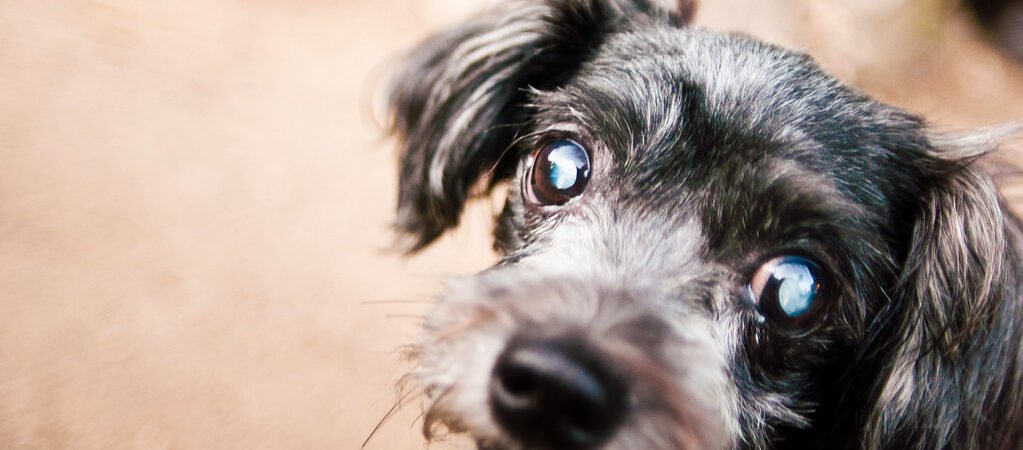
- Cataracts — a clouded lens that appears as a hazy, opaque white growth over the eye, sometimes with a slight sparkle at certain angles. Cataracts are common in aging cats as the lens naturally degenerates, and in dogs they’re often linked to diabetes.
- Glaucoma and macular degeneration — progressive conditions that damage vision over time.
- Hypertension — high blood pressure can cause retinal detachment, particularly relevant in senior cats.
- Chronic dry eye or untreated infections — ongoing irritation that damages the eye over time.
- Tumors — less common, but a possible cause worth ruling out.
It’s worth noting that a cloudy-looking eye isn’t always vision loss: nuclear sclerosis is a normal aging change that gives the eye a hazy appearance without actually affecting sight. Only a vet exam can tell the two apart.
How Vets Diagnose the Cause
A basic eye exam checks pupil response to light and looks for the visible cloudiness typical of cataracts, but distinguishing cataracts from nuclear sclerosis, or catching glaucoma early, usually needs more specific tools. A tonometer measures pressure inside the eye to screen for glaucoma, and a vet may use a bright light and magnification to examine the retina directly. Blood pressure measurement is often included too, since hypertension-related vision loss in cats is diagnosed by finding and treating the underlying high blood pressure, not by examining the eye alone.
Signs to Watch For
- Bumping into walls, furniture, or objects that weren’t there before
- Trouble locating the food bowl or favorite toys
- Avoiding eye contact
- New reluctance to jump on or off furniture
- Increased anxiety or clinginess
- Defensive or startled reactions to being approached — sometimes read as new aggression, but really a response to vulnerability
Many of these signs are subtle enough that they’re first noticed in a new environment — a hotel room, a friend’s house — where a pet can’t rely on memorized layout.
How to Help a Vision-Impaired Pet at Home
- Keep the layout consistent. Avoid rearranging furniture. A stable “home base” for food, water, and bedding matters more than it seems.
- Add texture cues. Textured mats near stairs or on slick flooring give tactile landmarks a pet can learn.
- Walk through changes together. If a layout change is unavoidable, walk your pet through it on a leash or by hand multiple times so they can rebuild a mental map.
- Use consistent sound. Leaving a TV or radio on in one area can act as an audio landmark for orientation.
- Announce yourself. Speak before approaching or touching a vision-impaired pet so you don’t startle them.
- Walk with heavier steps. The vibration gives advance warning that someone’s approaching, especially useful for dogs.
- Remove hazards. Sharp corners, low-hanging objects, and clutter in main pathways are worth clearing out.
What Treatment Can Actually Offer
Not every cause of vision loss is treatable, but several are: cataract surgery can restore functional vision in many dogs, glaucoma responds better the earlier it’s caught, and hypertension-related vision loss in cats can sometimes partially reverse once blood pressure is controlled with medication. Even when the underlying cause can’t be reversed, treating pain (as with glaucoma) and slowing further progression are still worthwhile goals, which is part of why “it’s just old age, nothing to do” is rarely the full picture.
When to See a Vet
Any suspected vision change deserves a proper eye exam — partly to identify the cause, and partly because some causes (like glaucoma) are painful and progressive, where early treatment genuinely changes the outcome.
Sources: American Kennel Club — Vision Loss in Dogs: Signs, Symptoms, and Management, VCA Animal Hospitals — Cataracts in Dogs.
Photo: “Cloudy” by CarbonNYC, licensed under CC BY 2.0.