Table of Contents
- Why Slick Floors Are So Risky for Aging Pets
- Where to Start: High-Traffic Paths First
- Choosing Mats That Actually Stay Put
- Other Traction Aids Worth Considering
- Budget-Friendly First Steps
- Don’t Forget Ramps and Transition Points
- Outdoor Traction Deserves Attention Too
- Revisiting Your Setup as Mobility Changes
How PawSeniors Researches This
PawSeniors articles are written and edited in-house, then checked against primary veterinary sources before publishing.
- Every medical claim is sourced to the American Kennel Club, PetMD, VCA Animal Hospitals, or another named veterinary source, linked at the end of the article.
- Every claim is tied to a named, checkable veterinary source linked at the end of the article — nothing is published without a reference you can verify yourself.
- Articles are updated when veterinary guidance changes.
Slippery floors are one of the most significant, and most preventable, injury risks facing senior pets at home, especially for dogs already dealing with arthritis or reduced muscle strength in their hind legs.
Why Slick Floors Are So Risky for Aging Pets
Arthritis affects roughly 20 percent of older dogs, and joint pain combined with weaker muscle tone makes it much harder for a senior dog to catch themselves if a paw slides out on hardwood, tile, or laminate flooring. A single bad slip can cause a serious soft-tissue or ligament injury, and repeated smaller slips can make a dog increasingly anxious about walking across certain rooms altogether, which further limits their mobility and confidence.
Where to Start: High-Traffic Paths First
The American Kennel Club recommends laying down non-slip area rugs or inexpensive yoga mats specifically in the areas your dog walks through most often, such as the path from their bed to the door or around food and water bowls, rather than trying to cover an entire home at once. Textured, dog-friendly stair treads are also worth adding to any indoor or outdoor steps a senior pet regularly navigates.
Choosing Mats That Actually Stay Put
A rug that slides across the floor when your dog steps on it can be more dangerous than no rug at all, so look specifically for options with a genuine non-slip, suction-style rubber backing rather than a standard decorative rug. Rubber-backed traction mats with some cushioning underneath offer the added benefit of joint support along with grip, which matters more for senior pets than for younger, more surefooted dogs.
Other Traction Aids Worth Considering
For dogs who struggle even with mats in place, grippy dog socks, toe grips, or all-season dog boots can add an extra layer of traction directly on their paws, which some senior dogs adapt to well once they’re used to the feeling. Keeping nails trimmed short also genuinely helps, since overly long nails can actually reduce a dog’s natural paw grip on smooth flooring.
Addressing slippery flooring early, before a serious fall happens, is a low-cost, high-impact way to protect a senior pet’s mobility and confidence at home.
Budget-Friendly First Steps
You don’t need to refloor a house to make it safer; inexpensive yoga mats cut to size, secured with double-sided carpet tape, cover the same high-traffic paths as pricier purpose-made dog traction mats at a fraction of the cost. Runner rugs with rubber, non-slip backing from any home goods store work just as well as pet-branded versions, as long as the backing genuinely grips the floor rather than just adding a decorative layer on top.
Don’t Forget Ramps and Transition Points
The transition between a rug and bare flooring, or the bottom of a ramp meeting a slick tile floor, is often where slips actually happen, so extending traction slightly past where you think it needs to end gives a senior pet more margin for error. Checking these transition points specifically, rather than only the middle of a room, catches a common blind spot in otherwise well-planned flooring fixes.
Outdoor Traction Deserves Attention Too
Wooden deck boards, painted concrete, and smooth patio stones can be just as slippery as indoor flooring, especially when wet, and are easy to overlook since the focus tends to stay indoors. A textured outdoor rug or adhesive traction strips along a senior dog’s regular outdoor path, particularly near steps or a door threshold, closes a gap that indoor-only fixes miss entirely.
Revisiting Your Setup as Mobility Changes
A flooring fix that worked well a year ago may need adjusting as a senior pet’s mobility continues to change, so it’s worth periodically walking through the home from your pet’s perspective, at their eye level if possible, to spot new trouble areas before they cause a fall.
Sources: American Kennel Club — Senior Dog Comfort: Tips for Making Your Home More Accessible, VCA Animal Hospitals — Creating a Comfortable Home for Your Mobility Compromised Dog.
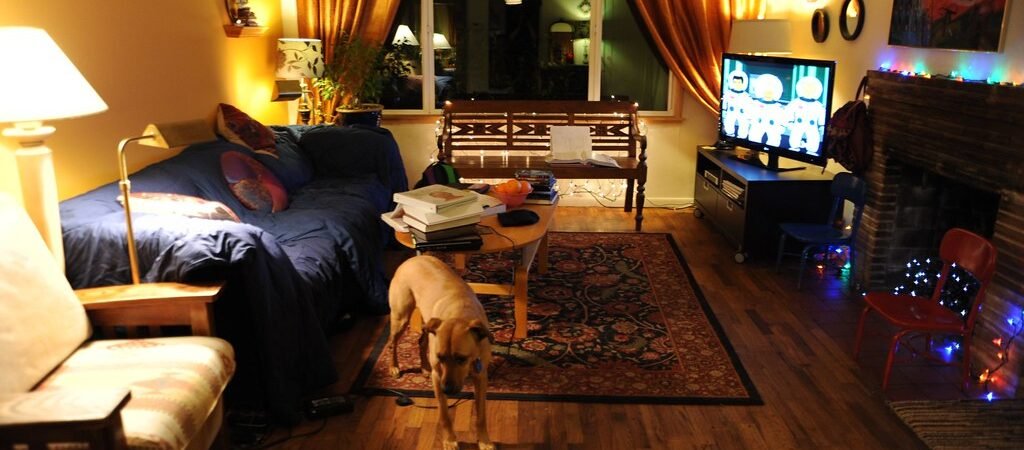
Photo: "Rosie stretches in the golden living room on the wood floor" by Wonderlane, licensed under CC BY 2.0. Source.