Table of Contents
How PawSeniors Researches This
PawSeniors articles are written and edited in-house, then checked against primary veterinary sources before publishing.
- Every medical claim is sourced to the American Kennel Club, PetMD, VCA Animal Hospitals, or another named veterinary source, linked at the end of the article.
- Every claim is tied to a named, checkable veterinary source linked at the end of the article — nothing is published without a reference you can verify yourself.
- Articles are updated when veterinary guidance changes.
Our guide to choosing between ramps, stairs, and lifts covers when a ramp is the right call for a senior dog. If you’ve already landed on a ramp, this guide narrows things further: which specific ramp fits which situation, since a ramp built for a car trunk and one built for a tall bed solve different problems.
What to Look For, Regardless of Use Case
A few features matter across every ramp type. Width should comfortably fit your dog’s whole body, not just their front feet, since a narrow ramp invites uneven paw placement and lost balance. A non-slip surface, textured rubber, carpet, or a grip coating, is non-negotiable for a dog with any joint weakness. Weight capacity should be checked against your dog’s actual current weight with margin, and side rails or raised edges help prevent a dog from stepping off the edge mid-climb, one of the more common causes of ramp-related falls.
Best for Car Access: PetSafe Happy Ride Ramp
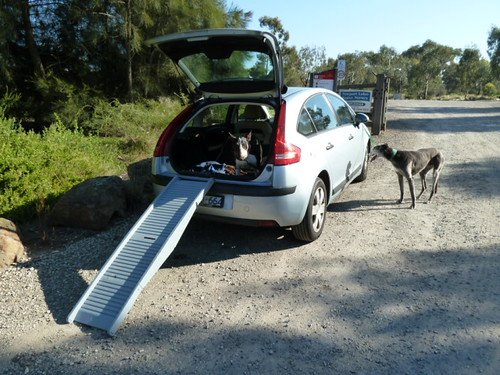
A telescoping design lets this ramp extend or shorten to match different vehicle heights, from a sedan trunk to a taller SUV, which makes it a practical single purchase for car access rather than needing different ramps for different situations. It folds down for storage, an important feature for a ramp that needs to travel with you rather than stay in one room.
Best for Beds: PetSafe CozyUp Wooden Dog Ramp
Built from wood rather than lightweight plastic or foam, this ramp is designed to stay put next to a bed without sliding, and its finish is meant to blend into a bedroom rather than look like medical equipment, something that matters to owners who want a mobility aid that doesn’t dominate the room. The tradeoff for that sturdiness is weight; it’s a better fit for a ramp that stays in one place than one that gets moved often.
Best Budget Option for Furniture: Pet Gear Ramp
A shorter ramp suited to couches and lower furniture, with a removable, washable carpet tread that’s easier on paws than bare plastic or wood. It’s a reasonable lower-cost entry point for dogs with only mild mobility issues who mainly need help with shorter climbs, like a low sofa, rather than a tall bed or vehicle.
Best Portable Option: Gen7Pets Mini Indoor Foldable Dog Ramp
Lightweight and foldable with a carry handle, this ramp is built for owners who need to move a ramp between rooms, take it when traveling, or store it out of the way between uses. It folds and locks flat, trading some of the stability of a heavier, fixed ramp for genuine portability.
Matching a Ramp to Where You’ll Use It
The honest answer to “which ramp is best” depends more on where it needs to work than on any single feature. A ramp that’s excellent for a car trunk is often the wrong shape and angle for a tall bed, and a ramp built to stay permanently by a couch usually isn’t practical to fold up and take on a trip. Rather than looking for one ramp to solve every access point in the house, most senior dogs end up better served by matching a specific ramp to each specific spot they need help reaching.
This is an independent editorial guide based on published product specifications and vet-sourced buying criteria, not a paid or sponsored review. Sources: American Kennel Club — Dog Stairs vs. Ramps: Choosing the Right Option, PetMD — Does My Dog Need Dog Stairs or a Dog Ramp?.
Photo: "dogs and car and ramp" by annieb, licensed under CC BY-SA 2.0. Source.