Table of Contents
How PawSeniors Researches This
PawSeniors articles are written and edited in-house, then checked against primary veterinary sources before publishing.
- Every medical claim is sourced to the American Kennel Club, PetMD, VCA Animal Hospitals, or another named veterinary source, linked at the end of the article.
- Every claim is tied to a named, checkable veterinary source linked at the end of the article — nothing is published without a reference you can verify yourself.
- Articles are updated when veterinary guidance changes.
Watery eyes that never seem to clear up, squinting, or a thick discharge that returns no matter how often you wipe it away can be more than a minor annoyance; in senior dogs, these are often signs of keratoconjunctivitis sicca, more commonly known as dry eye.
What’s Actually Happening
Dry eye develops when the lacrimal gland and the gland of the third eyelid stop producing enough of the watery component of tears needed to keep the cornea properly lubricated and protected. Without adequate tear film, the cornea and surrounding tissue become inflamed, which is genuinely painful and, left untreated, can lead to corneal scarring or ulceration over time.
Who’s Most Affected
Dry eye is a common condition, especially in small-breed, middle-aged to senior dogs, though it can occur in any breed. The most common underlying cause is an immune-mediated process, not fully understood, in which the body’s own immune system attacks the tear-producing glands, gradually reducing their output over months or years.
Signs to Watch For
Most affected dogs have visibly red, irritated eyes and may squint, blink excessively, or hold one or both eyes partially shut due to discomfort. A thick, yellowish, mucus-like discharge is a hallmark sign, distinct from the thinner, clear discharge seen with a simple allergy or minor irritation, and it tends to reaccumulate quickly even after being wiped away.
Diagnosis and Treatment
Vets diagnose dry eye with a simple, quick test called a Schirmer tear test, which measures how much moisture a small strip of paper absorbs from the eye over a set time. Treatment typically involves a topical immunosuppressive medication, most commonly cyclosporine or tacrolimus, applied directly to the eye to help restore natural tear production over several weeks, alongside artificial tear drops or ointment to keep the eye comfortable in the meantime.
While improvement often takes a few weeks to become noticeable, most dogs respond well and are able to maintain good eye comfort and vision with treatment, though the underlying condition usually requires management for the rest of the dog’s life rather than a one-time cure.
What Happens Without Treatment
Left unmanaged, chronic dry eye can lead to corneal scarring, chronic pigmentation of the eye’s surface, and in severe, prolonged cases, corneal ulceration that puts vision itself at risk. This progression is part of why vets recommend starting treatment promptly once KCS is confirmed rather than managing symptoms with occasional artificial tears alone.
What Daily Management Looks Like
Most dogs need eye medication applied once or twice daily, indefinitely, along with periodic rechecks to confirm tear production is improving and staying stable over time. Many owners find the daily routine becomes second nature within a few weeks, and the payoff, a genuinely more comfortable dog, tends to make the ongoing commitment feel worthwhile.
Balancing Cost and Commitment
Because KCS medication is typically lifelong, cost and ease of administration are worth discussing openly with your vet from the start rather than discovering months in that a particular formulation is hard to apply consistently. Some dogs tolerate a gel or ointment better than drops, and finding the right format early improves the odds that treatment actually happens reliably every day, which is what the condition requires to stay controlled.
Other Conditions That Can Look Similar
Conjunctivitis, a foreign body lodged in the eye, or a simple allergic reaction can all cause redness and discharge that superficially resembles dry eye, which is exactly why a proper Schirmer tear test matters rather than assuming any red, goopy eye is automatically KCS.
A Note on Breed Predisposition
Cocker Spaniels, Bulldogs, Lhasa Apsos, Shih Tzus, and West Highland White Terriers are among the breeds seen more often with KCS, so owners of these breeds may want to mention any eye discomfort to their vet sooner rather than later.
Sources: VCA Animal Hospitals — Keratoconjunctivitis Sicca (KCS) or Dry Eye in Dogs.
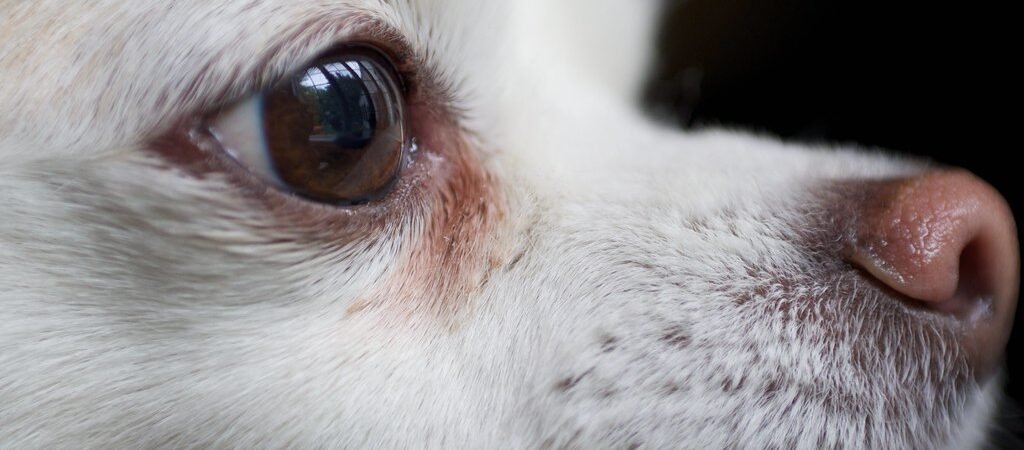
Photo: "5/12 Baxter in 2014 – It's All About The Eyes" by Au Kirk, licensed under CC BY 2.0. Source.