Table of Contents
- Cataracts Versus Lenticular Sclerosis
- What Causes Cataracts in Senior Dogs
- How to Tell if Your Dog’s Vision Is Affected
- Treatment: What Actually Works
- Living Well With a Blind or Partially Blind Dog
- Preventing Injury During the Adjustment Period
- What a Pre-Surgical Evaluation Involves
- Cost and Recovery Considerations
How PawSeniors Researches This
PawSeniors articles are written and edited in-house, then checked against primary veterinary sources before publishing.
- Every medical claim is sourced to the American Kennel Club, PetMD, VCA Animal Hospitals, or another named veterinary source, linked at the end of the article.
- Every claim is tied to a named, checkable veterinary source linked at the end of the article — nothing is published without a reference you can verify yourself.
- Articles are updated when veterinary guidance changes.
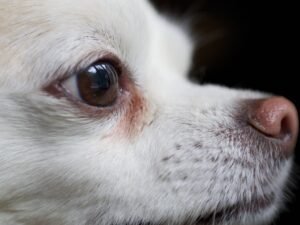
A cloudy, bluish-white haze developing in your senior dog’s eyes is easy to notice but not always easy to interpret correctly, since two very different age-related changes can produce a similar look while having very different implications for vision.
Cataracts Versus Lenticular Sclerosis
Lenticular sclerosis is a bluish, transparent haze that develops naturally in the lens of nearly every dog’s eyes as they age, typically starting around age six or seven, and it does not significantly affect vision. A true cataract, by contrast, is a genuinely opaque, white clouding of the lens that blocks light from reaching the retina and does progressively impair sight, sometimes leading to complete blindness if left untreated.
What Causes Cataracts in Senior Dogs
Inherited predisposition is the most common cause, with breeds like American Cocker Spaniels, Labrador Retrievers, Poodles, and Boston Terriers considered more susceptible. Diabetes mellitus is another major cause and can produce cataracts that form and worsen with striking speed, sometimes within days; other contributing factors include eye trauma, chronic inflammation, and other underlying eye disorders such as glaucoma.
How to Tell if Your Dog’s Vision Is Affected
Dogs with progressing cataracts often become more hesitant on stairs, bump into furniture that hasn’t moved, seem reluctant to go outside after dark, or startle more easily when approached from the side. Because dogs compensate remarkably well using smell and memory of familiar spaces, vision loss can be well underway before an owner notices anything beyond the visible cloudiness.
Treatment: What Actually Works
Surgical removal of the cataract-affected lens is currently the only effective treatment for restoring vision, performed under general anesthesia by a veterinary ophthalmologist using ultrasonic fragmentation to remove the diseased lens material. Success rates are high, with more than 95 percent of surgeries resulting in improved vision, and most dogs return to normal activity within just a few days of the procedure.
For dogs who aren’t candidates for surgery, or whose owners choose not to pursue it, cataracts themselves don’t cause pain, and many dogs adapt remarkably well to partial or complete vision loss at home, especially when the household layout stays consistent and furniture isn’t rearranged.
Living Well With a Blind or Partially Blind Dog
Dogs who lose vision gradually, as most cataract cases do, tend to compensate remarkably well using scent, hearing, and memorized floor plans of their home, often to the point where visiting owners don’t realize the dog can’t see well at all. Keeping furniture in consistent positions, using scent or texture cues near stairs and doorways, and announcing yourself verbally before touching a sleeping dog all help a vision-impaired senior dog stay confident and safe.
Preventing Injury During the Adjustment Period
The transition period right after vision changes become noticeable is when injuries are most likely, so blocking off pools, stairs without gates, and other hazards temporarily gives a dog time to adjust their navigation strategy. Most dogs adapt within a few weeks and go on to live full, confident lives even with significant vision loss, especially in a stable, well-known home environment.
What a Pre-Surgical Evaluation Involves
Before recommending cataract surgery, a veterinary ophthalmologist typically performs an electroretinogram to confirm the retina itself is still functioning normally behind the cataract, since surgery can’t restore vision if the retina has already been damaged by an unrelated condition. Bloodwork and a general health screening are also standard, since surgery involves general anesthesia and senior dogs benefit from a thorough pre-anesthetic workup regardless of the specific procedure.
Cost and Recovery Considerations
Cataract surgery is a genuine investment, often running into several thousand dollars when performed by a veterinary ophthalmologist with the necessary specialized equipment, and recovery involves a cone collar, restricted activity, and a course of eye drops for several weeks afterward. Pet insurance that was purchased before a cataract diagnosis can sometimes offset a meaningful portion of the cost, which is worth checking before ruling surgery out on price alone.
Sources: VCA Animal Hospitals — Cataracts in Dogs, American Kennel Club — Vision Loss in Dogs: Signs, Symptoms, and Management.
Photo: "The Head of an Old Dog" by *rboed*, licensed under CC BY 2.0. Source.