Table of Contents
- The Real Risk Factor Isn’t Age Itself
- What Pre-Anesthetic Screening Actually Involves
- How the Anesthetic Plan Changes for Senior Pets
- Recovery Looks a Little Different
- The Risk of Skipping Anesthesia Entirely
- Questions Worth Asking Your Vet Beforehand
- What This Costs and Whether It’s Worth It
- Special Considerations for Brachycephalic and High-Risk Breeds
How PawSeniors Researches This
PawSeniors articles are written and edited in-house, then checked against primary veterinary sources before publishing.
- Every medical claim is sourced to the American Kennel Club, PetMD, VCA Animal Hospitals, or another named veterinary source, linked at the end of the article.
- Every claim is tied to a named, checkable veterinary source linked at the end of the article — nothing is published without a reference you can verify yourself.
- Articles are updated when veterinary guidance changes.
“Is my dog too old for anesthesia?” is one of the most common questions vets hear from owners of senior pets, usually asked right before a needed dental cleaning, a lump removal, or another procedure that can’t be done any other way. The honest, evidence-backed answer is more reassuring than most owners expect, but it comes with real conditions worth understanding before you sign a consent form.
The Real Risk Factor Isn’t Age Itself
According to veterinary anesthesia specialists, age itself is not a disease, and anesthetic risk isn’t dramatically higher for a healthy senior patient than for a healthy younger one. What actually drives anesthesia risk is the presence of underlying disease, heart conditions, kidney or liver dysfunction, or other chronic illness, which naturally becomes more common as dogs age, but isn’t guaranteed by age alone. This distinction matters enormously in practice: a healthy twelve-year-old dog with normal bloodwork can be a genuinely low-risk anesthesia candidate, while a much younger dog with an undiagnosed heart condition can carry more risk despite being years younger. This is exactly why a proper pre-anesthetic workup matters more than a birthday.
What Pre-Anesthetic Screening Actually Involves
Before recommending anesthesia for a senior pet, vets typically run baseline bloodwork to check organ function, a complete blood count, and a full physical exam, specifically to catch problems that would change the anesthesia plan before they become a surprise mid-procedure. Some clinics add chest X-rays or an EKG for dogs with any history of heart concerns. This screening does two things at once: it can catch an underlying issue that needs addressing before an elective procedure at all, and for dogs cleared to proceed, it lets the vet tailor the anesthetic drugs and dosing specifically to that individual patient rather than using a one-size-fits-all protocol.
How the Anesthetic Plan Changes for Senior Pets
A senior-specific anesthesia plan typically uses lower, more carefully titrated doses, additional IV fluid support to protect blood pressure and organ perfusion during the procedure, and more intensive monitoring throughout, tracking heart rate, blood pressure, oxygen levels, and body temperature continuously rather than periodically. Many practices also extend post-procedure monitoring time for senior patients, keeping them under closer observation as they wake up rather than sending them home the moment they’re technically conscious. None of this makes the procedure risk-free, but it’s specifically designed to compensate for the reduced physiological reserve that often comes with age, even in an otherwise healthy senior dog.
Recovery Looks a Little Different
Senior dogs generally take somewhat longer to fully clear anesthesia from their system than younger dogs, and it’s common for them to seem more confused, sluggish, or unsteady for a longer stretch of time after waking up. This extended grogginess isn’t necessarily a sign that something went wrong; it’s a fairly normal reflection of slower metabolism processing the anesthetic drugs. That said, any recovery that seems to be worsening rather than gradually improving, or any signs of pain, difficulty breathing, or repeated vomiting after a procedure, warrants a call to your vet rather than waiting it out.
The Risk of Skipping Anesthesia Entirely
Anesthesia-free dental cleanings are sometimes marketed as a gentler alternative for senior pets, but major veterinary organizations, including the American Veterinary Dental College and the American Animal Hospital Association, agree dental cleanings should only be performed under anesthesia. Without anesthesia, a cleaning can only address the visible surface of the teeth, since a conscious animal won’t tolerate scaling below the gumline or dental X-rays, both of which are where most meaningful dental disease actually lives. Leaving that disease unaddressed carries its own real risk: chronic oral infection can spread bacteria through the bloodstream and damage the heart, liver, and kidneys, organs that are already more vulnerable in older pets. In practice, this means the anesthesia-free option often trades a manageable, monitored risk for a slower, less visible one.
Questions Worth Asking Your Vet Beforehand
Going into a consultation with a short list of specific questions tends to produce a more useful conversation than a general worry about age. Worth asking directly: what does my dog’s pre-anesthetic bloodwork show, and does anything there change the plan? What monitoring will be used during the procedure? How will pain be managed afterward? And, for a genuinely borderline case, is delaying the procedure actually the safer option, or does it just delay an outcome that’s coming either way? A vet who’s willing to walk through this in detail, rather than offering a blanket reassurance, is generally a good sign that the plan is being built around your specific dog.
What This Costs and Whether It’s Worth It
Pre-anesthetic bloodwork, extended monitoring, and IV fluid support all add cost to a senior pet’s procedure compared to a bare-minimum approach, and it’s fair for owners to notice that difference on an estimate. That said, this isn’t optional padding; it’s the specific set of safeguards that make the procedure genuinely safer for an older patient, and cutting it to save money on the front end tends to shift risk onto the part of the process where a problem would be hardest to catch and correct in time. If cost is a real concern, it’s worth asking your vet directly which parts of the plan are truly essential for your specific dog’s risk profile versus which are more discretionary, rather than declining screening across the board.
Special Considerations for Brachycephalic and High-Risk Breeds
Certain senior dogs carry extra anesthesia considerations beyond age alone. Brachycephalic breeds, dogs with short, flat faces like Bulldogs and Pugs, have airway anatomy that makes both anesthesia induction and recovery riskier at any age, and that risk compounds with the other changes that come with being senior. Dogs with known heart murmurs, a history of collapsing trachea, or significant obesity also warrant a more detailed conversation with your vet about anesthesia planning specifically tailored to that risk, rather than a generic senior-pet protocol. None of these factors make anesthesia off-limits, but they’re exactly the kind of detail a thorough pre-anesthetic exam is designed to catch and plan around.
Sources: American Kennel Club — Dog Anesthesia: What Every Dog Owner Should Know, VCA Animal Hospitals — Risks of Anesthesia-Free Dental Procedures.
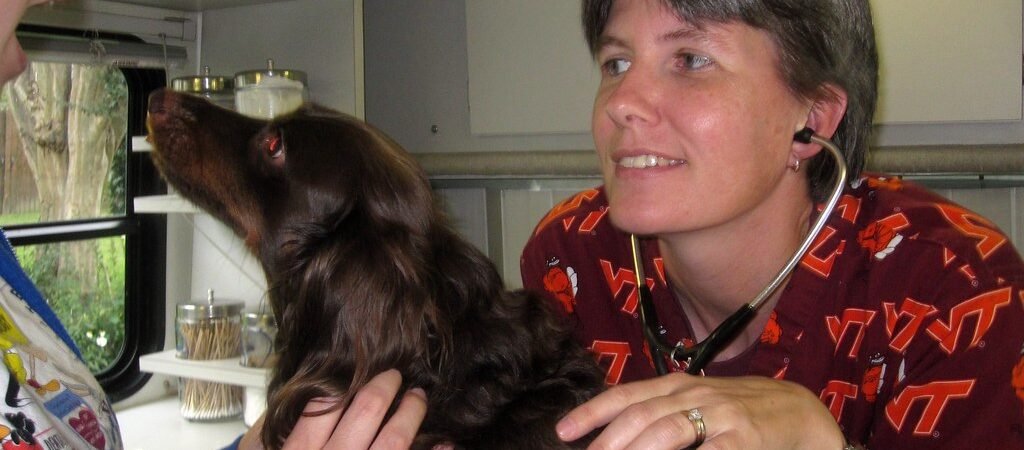
Photo: "Link's Check-Up" by Tobyotter, licensed under CC BY 2.0. Source.