Table of Contents
How PawSeniors Researches This
PawSeniors articles are written and edited in-house, then checked against primary veterinary sources before publishing.
- Every medical claim is sourced to the American Kennel Club, PetMD, VCA Animal Hospitals, or another named veterinary source, linked at the end of the article.
- Every claim is tied to a named, checkable veterinary source linked at the end of the article — nothing is published without a reference you can verify yourself.
- Articles are updated when veterinary guidance changes.
Bad breath is often treated as a cosmetic annoyance, but in senior dogs it’s usually the first visible sign of something more serious. According to VCA Animal Hospitals, more than two-thirds of dogs over age three have some degree of periodontal disease, and over 80% have active dental disease by that point — numbers that only climb as dogs enter their senior years.
How Dental Disease Progresses
Periodontal disease moves through stages, and only the first one is reversible:
- Stage 1 — Gingivitis. Inflammation of the gums. Reversible with a professional cleaning and better home care.
- Stage 2 and beyond. Infection spreads deeper, starting to destroy the bone that holds each tooth in its socket. This damage is not reversible.
- Advanced disease. Teeth become loose and may fall out. Complications can include an oronasal fistula (a hole connecting the mouth and nasal cavity), jaw fracture, and facial abscesses.
Why Most Owners Miss It
Dogs are stoic about mouth pain, and eating doesn’t necessarily stop even when it hurts — hunger usually wins. Watch for subtler signs instead of waiting for a dog to refuse food entirely:
- Bad breath that’s noticeably worse than usual
- Bleeding or inflamed, red gums
- Chewing on one side of the mouth
- Pawing at the mouth, head shaking, or jaw chattering
- Dropping food while eating, or a new preference for softer food
- Excessive drooling, sometimes with visible blood
What a Professional Cleaning Actually Involves
A dental cleaning under anesthesia starts with a full oral exam and X-rays, since a large part of dental disease hides below the gumline where a visual check alone can’t see it. The vet team then scales tartar off each tooth, including below the gumline, polishes the enamel to slow new plaque buildup, and probes each tooth’s gumline depth to check for pockets indicating bone loss. Anesthesia is what makes this level of below-the-gumline work possible — an awake dog won’t tolerate probing and scaling deep enough to actually treat the disease, which is part of why anesthesia-free “dental cleanings” offered by some groomers don’t accomplish the same thing.
Why It’s More Than a Mouth Problem
Bacteria from advanced oral disease doesn’t necessarily stay in the mouth. Per VCA, it can enter the bloodstream and has been associated with pathological changes in major organs, including the heart, liver, and kidneys — organs that are already working harder in an aging dog. This is part of why dental care tends to get more, not less, important as dogs get older, even though anesthesia risk is a legitimate conversation to have with your vet at that stage.
What Actually Helps
- Daily brushing. Still the most effective single thing you can do. Use a dog-specific toothpaste made to be swallowed — never human toothpaste.
- VOHC-approved chews and treats. Look for the Veterinary Oral Health Council seal, which means a product has been tested to actually reduce plaque or tartar, not just marketed to.
- Dental-formula food. Some diets are shaped or textured specifically to mechanically scrape plaque as a dog chews.
- Water additives. A lower-effort supplementary option, though less effective alone than brushing.
- Professional cleanings under anesthesia. The only way to treat disease below the gumline, where brushing can’t reach.
The Bottom Line
If your senior dog’s breath has changed, or you’ve noticed any of the signs above, it’s worth a dental-focused vet visit rather than waiting for the next annual checkup. Caught at the gingivitis stage, damage is still reversible — caught later, the goal shifts to preventing further loss and protecting the rest of the body from ongoing bacterial exposure.
Sources: VCA Animal Hospitals — Dental Disease in Dogs, American Kennel Club — Dog Dental Care.
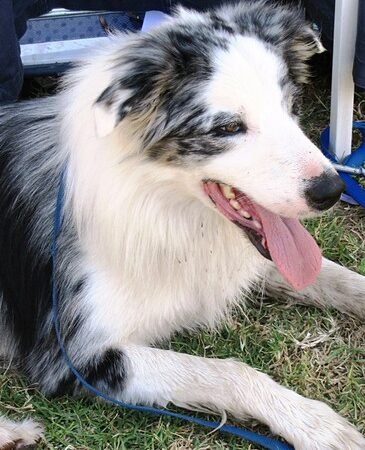
Photo: “Border Collie Smile” by moonjazz, Public Domain Mark 1.0.