Table of Contents
How PawSeniors Researches This
PawSeniors articles are written and edited in-house, then checked against primary veterinary sources before publishing.
- Every medical claim is sourced to the American Kennel Club, PetMD, VCA Animal Hospitals, or another named veterinary source, linked at the end of the article.
- Every claim is tied to a named, checkable veterinary source linked at the end of the article — nothing is published without a reference you can verify yourself.
- Articles are updated when veterinary guidance changes.
A cat that stops coming when called, sleeps through the doorbell, or startles when you walk up behind them isn’t necessarily ignoring you on purpose. Hearing loss is a common, easy-to-miss part of feline aging, and because cats compensate so well with their other senses, owners often don’t notice until it’s fairly advanced.
Why Hearing Loss Sneaks Up on Cats
Age-related hearing loss develops gradually, the same way it does in people: the eardrum and the structures of the inner ear become less flexible and less efficient at transmitting sound over years, not overnight. Because the decline is slow and a cat’s other senses, especially smell and vibration sensitivity, pick up much of the slack, a cat can lose a meaningful amount of hearing while still seeming largely normal day to day. Most cats reach senior status around age 10, and hearing changes become more common from that point on.
Signs to Watch For
- Not responding to their name or the sound of a can opener the way they reliably used to.
- Sleeping unusually soundly, or seeming startled and disoriented when woken.
- Vocalizing louder than normal. A cat who can’t hear their own voice well loses the natural feedback that keeps meows and yowls at a normal volume.
- Not noticing when you enter a room or approach from behind, sometimes reacting with a startle rather than the usual acknowledgment.
- Increased hiding or general withdrawal, which can reflect the disorientation of losing a sense they’ve relied on their whole life.
Because these signs overlap with cognitive decline and can even look like general aloofness, it’s worth testing rather than assuming: clap, jingle keys, or crinkle a treat bag out of your cat’s line of sight and see whether they react.
Age-Related vs. Other Causes
Most hearing loss in senior cats is simply age-related and not preventable, the same gradual wear that affects aging ears across species. That said, it’s worth ruling out other contributors a vet can actually treat: chronic ear infections, wax and debris buildup, or inflammatory growths in the ear canal can all reduce hearing and are addressable in ways that pure age-related decline isn’t. A vet exam is the only reliable way to tell the difference between “this is just aging” and “this is a treatable ear problem showing up as hearing loss.”
How Vets Test a Cat’s Hearing
A basic in-office assessment usually starts with a visual exam of the ear canal and eardrum, checking for infection, debris, or structural changes that could explain reduced hearing on their own. For a more precise answer, some veterinary practices and specialty clinics offer BAER testing (brainstem auditory evoked response), which measures the brain’s electrical response to sound and can confirm the degree of hearing loss more objectively than behavioral observation alone. BAER testing isn’t necessary for every cat showing typical age-related signs, but it’s useful when the picture is unclear or when a diagnosis needs to be certain, such as before undertaking training or safety changes based on the assumption of hearing loss.
Living With a Deaf or Hard-of-Hearing Cat
- Use visual and vibration cues. A flashlight flicked on and off, a stomp on the floor, or a consistent hand signal can substitute for a cat’s name when you need their attention.
- Approach where they can see you. Coming into a hard-of-hearing cat’s field of view before touching them avoids startling a cat who didn’t hear you coming.
- Keep the environment’s layout consistent. A cat relying more heavily on memory and vibration to navigate benefits from furniture and food/water locations staying put.
- Use scent and touch for reassurance. A familiar blanket or a gentle touch on a consistent part of the body can help a cat locate you and feel oriented even without sound.
Safety Considerations
A cat who can’t hear approaching danger, a car in a driveway, another animal, a person calling a warning, is safer kept strictly indoors if they aren’t already, since the usual auditory warning signals a hearing cat relies on simply aren’t available anymore. Indoors, it’s still worth being deliberate about not startling a sleeping or unaware cat, since a sudden touch can trigger a defensive scratch or bite reaction that isn’t aggression, just surprise.
The Bottom Line
Hearing loss in a senior cat is common, usually age-related, and rarely something to fix, but it is something to adapt around. A cat that seems to be ignoring you more, sleeping harder, or getting startled easily deserves a vet check to rule out a treatable ear problem, and if it does turn out to be age-related hearing loss, a few consistent habits go a long way toward keeping that cat oriented and confident.
Sources: PetMD — Deafness in Cats: Causes, Symptoms, and How to Help Your Cat, VCA Animal Hospitals — Living With a Deaf Cat.
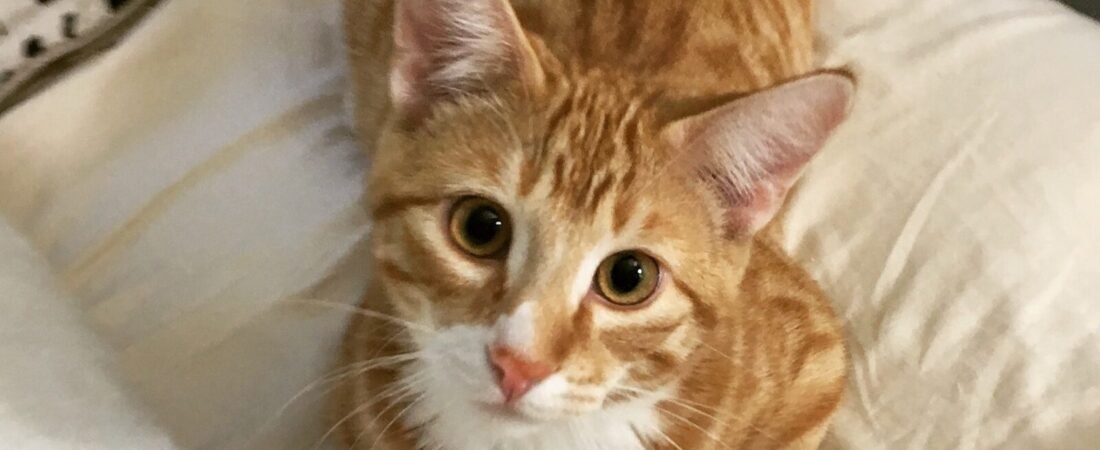
Photo: “An up-close picture of a curious male domestic shorthair tabby cat” by Ugrashak, licensed under CC BY-SA 4.0.