Table of Contents
How PawSeniors Researches This
PawSeniors articles are written and edited in-house, then checked against primary veterinary sources before publishing.
- Every medical claim is sourced to the American Kennel Club, PetMD, VCA Animal Hospitals, or another named veterinary source, linked at the end of the article.
- Every claim is tied to a named, checkable veterinary source linked at the end of the article — nothing is published without a reference you can verify yourself.
- Articles are updated when veterinary guidance changes.
If your old cat is suddenly drinking much more water than usual, the most common reasons are chronic kidney disease, hyperthyroidism, and diabetes. A change of diet (especially from wet to dry food), hot weather, and some medications can also increase thirst, but a lasting increase in drinking in a senior cat should always be checked by your vet, because the conditions behind it are easier to manage when they are found early.
Cats are naturally light drinkers. Their ancestors got most of their water from prey, and many healthy cats on wet food barely seem to visit the water bowl at all. That is exactly why increased thirst stands out: when a senior cat starts emptying the bowl, waiting by the tap, or leaving heavier litter clumps, the body is usually telling you something. This guide explains the likely causes, how to measure what your cat is really drinking, and when to call your vet.
How Much Water Should a Senior Cat Drink?
There is no single “right” amount that fits every cat. How much a cat drinks depends on body size, activity, the temperature at home and, above all, diet. A cat eating mostly wet food takes in a large share of its water with meals, so it will drink far less from the bowl than a cat eating only dry kibble.
Because of this, the most useful question is not “how much is normal for cats?” but “is this normal for my cat?” A clear, lasting increase compared with your cat’s own usual habits is the change that matters. Your vet can compare a measured daily amount with your cat’s body weight if they need a number.
Signs your cat may be drinking more than before:
- You are refilling the water bowl or fountain more often
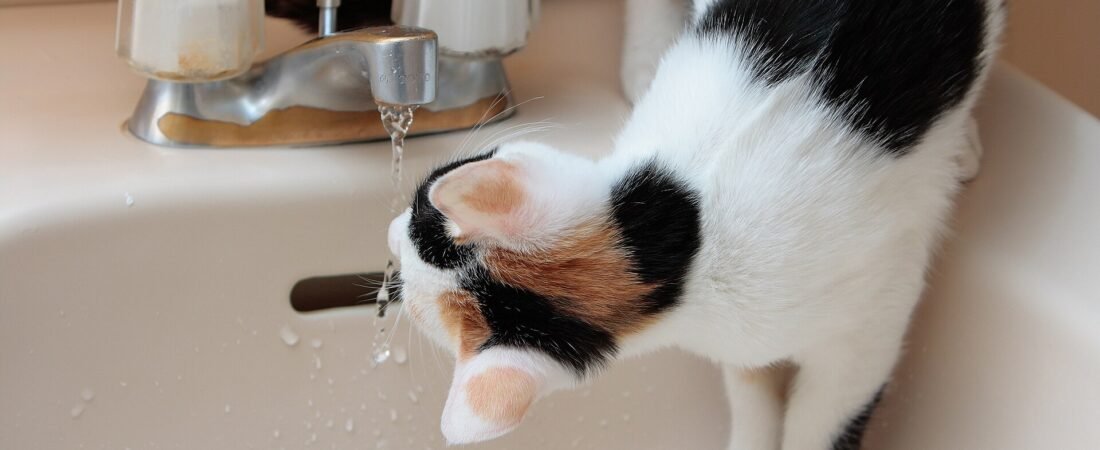
- Your cat drinks from new places: sinks, taps, the shower, plant saucers, or your glass
- Urine clumps in the litter box are larger or more frequent
- The litter needs changing sooner than it used to
- Your cat urinates outside the box, or the box seems “flooded”
- You hear your cat drinking at night when you did not before
Increased thirst (polydipsia) and increased urination (polyuria) almost always go together. Often the body is losing more water through the kidneys, and the cat drinks more to keep up.
The Most Common Medical Causes
1. Chronic Kidney Disease (CKD)
Kidney disease is one of the most frequent reasons an older cat starts drinking more. As kidney tissue loses function, the kidneys become less able to concentrate urine, so more water is lost and the cat drinks to compensate. Other signs can include weight loss, a reduced or picky appetite, vomiting, a dull coat, bad breath, and lethargy, but in the early stages thirst may be the only clue.
Kidney disease cannot be reversed, but it can often be managed for a long time with diet, hydration support, and treatment of related problems like high blood pressure. Read our full guide to chronic kidney disease in senior cats and our practical hydration tips for cats with kidney disease.
2. Hyperthyroidism
An overactive thyroid gland speeds up the whole body. The classic picture is an older cat who is eating more than ever yet losing weight, often with increased thirst and urination, restlessness, more vocalizing, vomiting, or a scruffy coat. Hyperthyroidism is treatable with medication, a special diet, radioactive iodine, or surgery, and treating it also protects the heart. See hyperthyroidism in senior cats for the full picture.
One important detail: hyperthyroidism can hide kidney disease, because it increases blood flow through the kidneys. Your vet will often recheck kidney values after the thyroid is under control.
3. Diabetes Mellitus
In diabetes, sugar builds up in the blood and spills into the urine, pulling water with it. The cat urinates a lot and drinks a lot to make up for it. Many diabetic cats also eat well but lose weight, and some develop a weak, flat-footed stance in the back legs. Overweight cats are at higher risk. With early treatment and the right diet, some cats can even go into remission. Learn more in diabetes in senior cats.
4. Liver Disease
Liver problems can cause increased thirst along with poor appetite, vomiting, weight loss, and sometimes yellowing of the gums, skin, or whites of the eyes (jaundice). Jaundice needs a prompt vet visit. Read liver disease in senior cats.
5. Urinary Tract Infections
Urinary tract infections are more common in older cats, especially those with kidney disease or diabetes, because their urine is more dilute. Signs include straining, frequent small urinations, blood in the urine, or peeing outside the box. Some cats with infections show few obvious signs. See recurrent urinary tract infections in senior dogs and cats and FLUTD in senior cats.
Warning: a cat, especially a male cat, who strains in the litter box and produces little or no urine may have a blockage. That is an emergency. Go to a vet immediately.
6. Other Possible Causes
- Some cancers, such as lymphoma, can affect the kidneys or blood calcium levels and increase thirst.
- High blood calcium from various causes can lead to drinking and urinating more.
- Uterine infection (pyometra) in an unspayed female cat, often with lethargy or discharge. This is an emergency.
- Dehydration from vomiting or diarrhea, where the cat drinks to replace lost fluid.
Non-Medical Reasons a Cat Might Drink More
Not every increase in drinking means illness. Before you worry, consider whether anything has changed recently:
- Diet change: switching from wet food to dry food, or adding more kibble, naturally increases bowl drinking because there is less water in the meals. Salty treats or human food can do the same.
- Warm weather or heating: a hot summer or a heated home in winter can increase water needs.
- A new water fountain: some cats simply drink more when water is fresh, moving, or easier to reach, which is usually a good thing.
- More activity: rare in seniors, but a cat who has become more active may drink a little more.
- Medications: steroids (such as prednisolone) and diuretics (such as furosemide) commonly increase thirst and urination. If your cat recently started a new medication, ask your vet whether this is an expected side effect. Our guide to managing multiple medications in a senior pet can help you keep track.
Even when there is an obvious explanation, a senior cat whose drinking stays high for more than a few days, or who shows any other change in weight, appetite, or behavior, should still be seen. Older cats often have more than one thing going on at the same time.
How to Measure How Much Your Cat Is Drinking
A simple measurement at home gives your vet useful information and can help you see whether the change is real. Here is a practical method:
- Use a measuring jug. Fill the water bowl with a known amount in the morning.
- Measure what is left after 24 hours. Pour the remaining water back into the jug and note the difference.
- Allow for evaporation. Place a second, identical bowl of water out of the cat’s reach (for example, inside a closed cupboard or in a room the cat cannot enter) and subtract what evaporates from it.
- Repeat for 3 days. One day can be misleading; an average over several days is more reliable.
- Count every water source. If your cat also drinks from a fountain, a tap, or another bowl, include those, or temporarily limit your cat to one measured source.
- Note the diet. Write down how much wet and dry food your cat eats each day.
- Watch the litter box. Note the number and size of urine clumps each day, or take a quick photo before scooping.
- Weigh your cat if you have a reliable scale. Weight loss alongside increased thirst is important information for your vet.
In multi-cat homes this is harder. If you cannot separate the cats safely, tell your vet what you have noticed. They may ask you to bring in a urine sample or run tests anyway.
Never restrict water to “fix” increased drinking. A cat drinking more usually needs that water, and limiting it can quickly lead to dangerous dehydration, especially with kidney disease or diabetes.
What Your Vet Will Check
Increased thirst in a senior cat is a common reason for a vet visit, and the first tests are usually straightforward. Your vet will typically:
- Ask about appetite, weight, diet, medications, litter box habits, and how long the change has been going on
- Do a full physical exam, including weight, body and muscle condition, hydration, the thyroid area of the neck, the mouth, and the size and feel of the kidneys
- Run blood tests to look at kidney values (including SDMA where available), blood sugar, liver values, and a thyroid level (T4)
- Test a urine sample to check how concentrated it is, look for sugar, protein, or infection, and sometimes send it for culture
- Measure blood pressure, since high blood pressure often goes along with kidney disease and hyperthyroidism (see hypertension in senior cats)
- Recommend imaging such as ultrasound if the first results point to the kidneys, liver, or a mass
Bringing your measurements, a list of foods and medications, and photos of the litter box makes the visit more productive. Our checklist on preparing for a senior pet’s vet visit walks you through it.
When Is Increased Thirst an Emergency?
Most cats who drink more need a vet appointment within a few days, not an emergency trip. Go to a vet immediately, or call an emergency clinic, if your cat drinks a lot and also:
- Strains in the litter box with little or no urine, or cries while trying to pee
- Stops eating completely for more than a day (see why senior cats stop eating)
- Vomits repeatedly or cannot keep water down
- Is very weak, wobbly, collapsing, or unusually sleepy
- Breathes fast or with effort, or breathes with a sweet or unusual smell
- Has yellow gums, skin, or eyes
- Seems suddenly blind or has very dilated pupils
- Is an unspayed female with lethargy or discharge from the vulva
A known diabetic cat who becomes lethargic, stops eating, or starts vomiting also needs urgent care.
How to Support a Senior Cat Who Drinks More
While you wait for your vet appointment, and after a diagnosis, a few simple steps help your cat stay comfortable:
- Keep fresh water available at all times, in several places around the home, including near where your cat sleeps.
- Use wide, shallow bowls so whiskers do not touch the sides, or try a cat water fountain.
- Offer more wet food if your vet agrees, which adds water to your cat’s day. Our guide to senior cat nutrition covers how to make diet changes gradually.
- Add an extra litter box and scoop more often. A cat producing more urine needs a clean, easy-to-reach box, ideally one with a low entry for stiff joints. See litter box adaptations for senior cats.
- Do not change foods or start supplements on your own before tests. Some changes can make results harder to read.
- Keep a simple log of water intake, appetite, weight, and litter box changes. Trends are often more useful than single readings.
Increased thirst is one of several quiet changes that can signal illness in an older cat. Our list of 10 health warning signs every senior cat owner should know and our guide to unexplained weight loss in senior cats are good next reads.
Frequently Asked Questions
Is it normal for an old cat to drink more water?
A small change can happen with a new diet or warm weather, but a clear and lasting increase in drinking is not a normal part of aging. In senior cats it often points to kidney disease, hyperthyroidism, or diabetes, so it is worth a vet check.
Can a cat drink too much water?
Healthy cats rarely drink “too much” for no reason. When a cat drinks a lot, the drinking is usually a response to losing more water through the urine. The thirst itself is not the problem; the cause behind it is. Never restrict your cat’s water.
My cat drinks a lot but eats normally. Should I worry?
Yes, it still deserves a vet visit. Early kidney disease and diabetes can cause increased thirst before appetite changes, and cats with hyperthyroidism often eat more than normal. A good appetite does not rule out illness.
Why is my old cat drinking a lot and losing weight?
Increased thirst together with weight loss is a common pattern in hyperthyroidism, diabetes, and kidney disease, and sometimes in cancer. This combination should be checked by your vet soon, ideally within a few days.
Does dry food make cats drink more?
Yes. Dry food contains much less water than wet food, so cats eating mainly kibble drink more from the bowl. If your cat’s drinking rose after a switch to dry food and everything else is normal, mention it to your vet, but do not assume it explains everything in a senior cat.
This article is for general information only and is not a substitute for veterinary advice. If your senior cat is drinking more than usual, or shows any of the emergency signs above, consult your vet. Sources: Cornell Feline Health Center: Chronic Kidney Disease, VCA Animal Hospitals: Hyperthyroidism in Cats.
Photo: “Cat drinking tap water 01” by MiNe, licensed under CC BY 2.0.