Table of Contents
How PawSeniors Researches This
PawSeniors articles are written and edited in-house, then checked against primary veterinary sources before publishing.
- Every medical claim is sourced to the American Kennel Club, PetMD, VCA Animal Hospitals, or another named veterinary source, linked at the end of the article.
- Every claim is tied to a named, checkable veterinary source linked at the end of the article — nothing is published without a reference you can verify yourself.
- Articles are updated when veterinary guidance changes.
Extra weight on a senior cat looks harmless, even endearing, but it quietly makes almost every age-related problem worse. It puts more load on arthritic joints, raises the risk of diabetes, and makes grooming harder for a cat who’s already stiff. The catch is that cats can’t be put on a crash diet the way people sometimes try. Losing weight too fast can trigger a serious liver condition, and older cats are already prone to losing muscle. Getting a senior cat to a healthier weight is absolutely possible, but it has to be done slowly and deliberately.
Why Senior Cats Gain Weight
Obesity in cats tends to peak in middle age, roughly between five and eleven years old. Activity drops, energy needs fall, and portions often stay the same. Free-feeding dry food, frequent treats, and an indoor lifestyle all add up. Arthritis then makes the cat even less active, which makes the weight harder to lose, which makes the joints hurt more. Breaking that cycle is one of the most useful things you can do for an aging cat’s comfort.
It’s also worth knowing that weight tends to drift the other way in very old cats, often past age twelve or so, when unexplained weight loss becomes the bigger worry. That’s why any weight-loss plan for a senior cat should start with a vet visit to confirm the cat is otherwise healthy.
Body Condition Matters More Than the Number
Vets assess weight using a body condition score, usually on a 9-point scale where 4 to 5 is ideal. At an ideal score you should be able to feel the ribs easily under a thin layer of fat, see a slight waist from above, and notice only a small belly pouch. A cat scoring 7 or higher is overweight to obese.
For senior cats, your vet should also check muscle condition separately, by feeling over the spine, shoulder blades, and hips. An older cat can carry extra fat and still be losing muscle underneath, and the goal of a diet is to lose the fat while keeping the muscle.
The Safe Rate: Slow Is the Point
A review in Veterinary Medicine: Research and Reports recommends a weight-loss rate of about 0.5% to 2% of body weight per week. For a cat that needs to lose 3 kg, that works out to somewhere between six months and over a year. That feels slow, but it’s deliberate, for two reasons:
- Hepatic lipidosis (fatty liver): when an overweight cat eats too little, its body mobilizes fat faster than the liver can process it. Fat builds up in the liver and can cause life-threatening liver failure. Overweight cats who suddenly stop eating, or who are put on drastic diets, are at the highest risk.
- Muscle preservation: slower weight loss is more likely to come from fat rather than lean tissue, which matters even more for a senior cat already at risk of muscle loss.
Never cut a cat’s food drastically on your own, and treat any overweight cat that stops eating for more than a day or two as an urgent problem.
Building a Senior-Friendly Weight-Loss Plan
- Let your vet set the calories. The daily target is calculated from the cat’s ideal weight, not its current one, and adjusted at each recheck.
- Prioritize protein. Weight-loss diets for cats are typically higher in protein and fiber and lower in calories per cup or can. Protein helps protect muscle during calorie restriction. Cats with kidney disease need an individualized plan, since protein targets may differ.
- Measure everything. A kitchen scale is far more accurate than a scoop. Count treats as part of the daily total and keep them under about 10% of calories.
- Swap free-feeding for meals. Several small measured meals a day suit cats well and make intake easier to track.
- Add gentle movement. Food puzzles, scattering kibble, and short play sessions with a wand toy increase activity without stressing sore joints.
- Treat the pain. If arthritis is limiting movement, managing it with your vet makes activity more comfortable and weight loss more achievable.
Monitoring Progress
Weigh your cat every two to four weeks on the same scale, ideally a baby or pet scale, and keep a simple log. Regular rechecks with your vet allow calories to be adjusted as the cat slims down, and studies suggest follow-up visits improve the chance of success. If weight is dropping faster than about 2% per week, or not at all after a month, the plan needs tweaking.
The Bottom Line
Helping an overweight senior cat lose weight can ease joint pain, lower diabetes risk, and make daily life more comfortable. The key is patience: a vet-guided plan, measured portions of a high-protein diet, gentle activity, and a slow, steady pace that protects both the liver and the muscles.
Sources: Hoelmkjaer & Bjornvad — Management of Obesity in Cats (Veterinary Medicine: Research and Reports), Dove Medical Press — Management of Obesity in Cats.
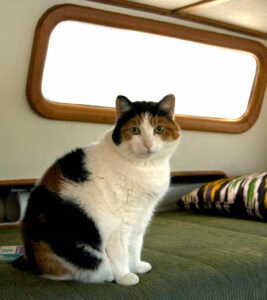
Photo: “An obese cat” by Ed94uk, licensed under CC BY-SA 4.0.