Table of Contents
How PawSeniors Researches This
PawSeniors articles are written and edited in-house, then checked against primary veterinary sources before publishing.
- Every medical claim is sourced to the American Kennel Club, PetMD, VCA Animal Hospitals, or another named veterinary source, linked at the end of the article.
- Every claim is tied to a named, checkable veterinary source linked at the end of the article — nothing is published without a reference you can verify yourself.
- Articles are updated when veterinary guidance changes.
A senior cat can step on the scale and show a perfectly stable weight while something real is quietly going wrong underneath: muscle mass slipping away while fat stores stay put or even grow. Weight alone misses this almost entirely, which is why muscle condition deserves its own attention at every senior cat checkup.
Sarcopenia vs. Cachexia: Two Different Kinds of Muscle Loss
Sarcopenia is muscle loss that comes with age alone, in the absence of any specific disease — a gradual, universal process that affects most cats to some degree as they get older. Cachexia is a related but distinct process, muscle loss driven by an underlying illness like chronic kidney disease, hyperthyroidism, or cancer, and it tends to progress faster and matter more clinically since it usually signals the disease itself is advancing. Both are associated with increased illness risk and shorter survival time in the research literature, which is part of why vets increasingly treat muscle condition as a vital sign in its own right, not just a side note to weight.
Why the Bathroom Scale Misses It
Some senior cats develop what’s specifically termed sarcopenic obesity: body fat is preserved or even increases while lean muscle mass declines, so the number on a scale looks stable or even reassuring while the cat is functionally weaker than it appears. A cat can be gaining fat and losing muscle at the same time, two opposite trends that cancel out on a scale but don’t cancel out in how that cat actually moves, jumps, or recovers from minor strain.
How Vets Actually Assess Muscle, Not Just Weight
Muscle Condition Score (MCS) is a separate, hands-on assessment from Body Condition Score (BCS): BCS estimates fat cover, while MCS specifically evaluates muscle mass over the spine, shoulder blades, and hips by feel. A cat can have an entirely normal or even high BCS while scoring poorly on MCS, which is exactly the sarcopenic obesity pattern and exactly why relying on weight or BCS alone can miss real muscle loss in progress. Some vets also use an ultrasound measurement of a specific back muscle for a more objective read, particularly useful for tracking change over successive visits.
What’s Commonly Driving It in Senior Cats
Chronic kidney disease and hyperthyroidism are two of the most common senior cat conditions that accelerate muscle loss well beyond what age alone would cause, both through the metabolic demands of the disease itself and through reduced appetite or nutrient absorption that often comes with them. Aging digestion plays a role independent of any diagnosed disease too: older cats can become less efficient at digesting and absorbing the protein they do eat, and reduced activity simply gives muscle less reason to maintain itself.
Signs Owners Can Watch For at Home
- Prominent shoulder blades or spine felt clearly under a light touch during normal petting, especially if that’s new compared to a year ago.
- New hesitation or weakness jumping onto furniture that used to be effortless, separate from any diagnosed joint issue.
- A less steady gait or subtle wobbliness, particularly noticeable on stairs or slick flooring.
- A weight that looks unchanged on a home scale despite a visibly different body shape — the sarcopenic obesity pattern in action.
What Can Actually Be Done
There’s currently no approved medication or supplement specifically for feline sarcopenia, which puts the emphasis squarely on diet and activity: adequate high-quality protein matched to what a cat’s kidneys and overall health can handle, rather than reflexively restricting protein the moment kidney disease enters the conversation, since under-restricting isn’t automatically safer but neither is over-restricting protein a cat needs to maintain muscle. Encouraging activity within a cat’s comfort level, even brief, low-effort play sessions, gives muscle tissue an ongoing reason to maintain itself. Most importantly, treating the underlying disease driving cachexia, when there is one, does more for muscle preservation than any diet change alone.
The Bottom Line
A stable number on the scale isn’t the same as a stable cat, and muscle condition deserves a direct, hands-on check at every senior wellness visit rather than being assumed fine because weight hasn’t changed. If your vet isn’t routinely mentioning muscle condition score alongside weight, it’s a reasonable thing to ask about directly, especially if your cat has any diagnosed condition known to accelerate muscle loss.
Sources: PetMD — Why Is My Cat Losing Weight?, VCA Animal Hospitals — Testing for Weight Loss in Cats.
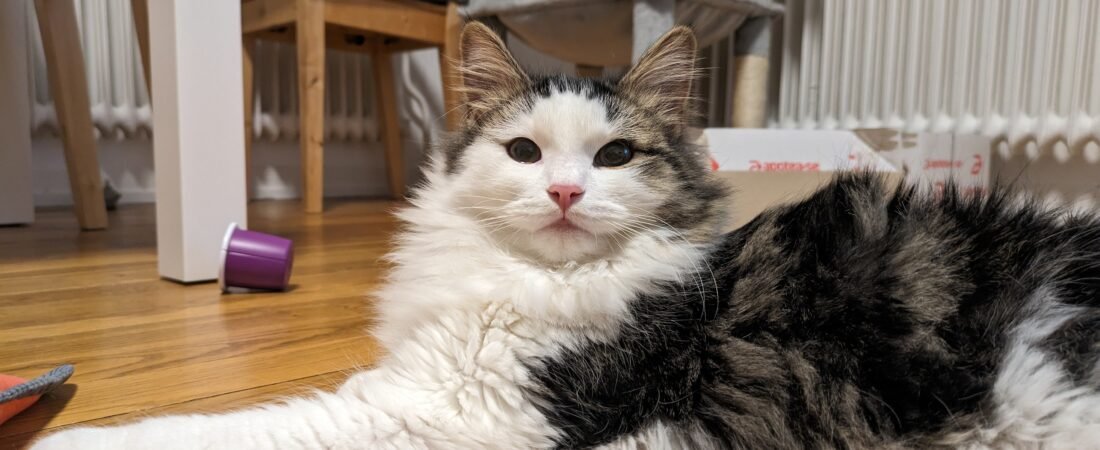
Photo: “A domestic longhair cat” by Pilarbini, licensed under CC BY-SA 4.0.