Table of Contents
- Heatstroke: A Bigger Risk Than Most Owners Realize
- Falls and Uneven Terrain
- Fencing: Containment Still Matters, Maybe More
- Adjusting the Routine, Not Just the Space
- Vision and Hearing Changes Add Another Layer
- Building a Senior-Adjusted Outdoor Routine
- The Bottom Line
- Heat and Sun Exposure
- Toxic Plants to Remove or Fence Off
- Fence and Escape-Route Checks for an Aging Dog
How PawSeniors Researches This
PawSeniors articles are written and edited in-house, then checked against primary veterinary sources before publishing.
- Every medical claim is sourced to the American Kennel Club, PetMD, VCA Animal Hospitals, or another named veterinary source, linked at the end of the article.
- Every claim is tied to a named, checkable veterinary source linked at the end of the article — nothing is published without a reference you can verify yourself.
- Articles are updated when veterinary guidance changes.
A yard that’s been safe for a dog’s entire life doesn’t automatically stay safe as that dog ages. Heat tolerance, joint stability, and even a senior dog’s ability to signal distress all change, which means the same outdoor routine can carry more risk than it used to — without anything about the yard itself having changed.
Heatstroke: A Bigger Risk Than Most Owners Realize
Senior dogs face an increased risk of heatstroke, and one of the most common causes is something that sounds harmless: being left in a yard without access to shade or water on a hot day. A younger dog might tolerate that oversight; an older dog’s reduced ability to regulate body temperature makes the same situation genuinely dangerous. Watching weather conditions and always having enough water available for your dog’s size and activity level is a simple habit that matters more with age, not less.
Practical Heat Safety Steps
- Guaranteed shade, not optional shade. A shaded spot that exists but that your dog might not choose to use isn’t the same as ensuring they’re actually out of direct sun during peak heat.
- Fresh water always available outdoors, not just water that’s technically accessible somewhere in the yard.
- Avoid keeping a senior dog outside during the hottest parts of the day entirely, rather than relying on shade and water alone to offset the heat.
- Check pavement temperature before walks. Hot pavement and sidewalks can burn paw pads, and senior dogs with any sensation changes may be slower to react or pull away.
Falls and Uneven Terrain
A yard’s terrain that a younger dog navigated without a second thought — a step down to a patio, an uneven garden path, loose gravel — becomes a genuine fall risk for a dog with joint pain or reduced muscle strength. Unlike a younger dog, a senior dog’s recovery from a bad fall (or the joint strain from catching themselves) is slower and can set back mobility that took months to maintain. Walking the actual paths your dog uses, at your dog’s pace, is the most reliable way to spot these hazards — they’re often invisible from a standing adult’s eye level and walking pace.
Fencing: Containment Still Matters, Maybe More
A secure fence remains just as important for a senior dog as for a younger one, and arguably more so: a disoriented senior dog, particularly one with cognitive decline, is less able to navigate back home if they do get out, and less able to respond appropriately to traffic or other hazards. Keep up with fencing repairs, and consider details like an L-footer (angled wire extending outward at the base) if digging under the fence has ever been a risk, even if it wasn’t a concern earlier in your dog’s life.
For yards where traditional fencing isn’t practical — hilly or heavily wooded terrain — invisible or wireless fencing is an alternative that works on nearly any terrain, though the correction-based training method isn’t the right fit for every dog, and a senior dog already dealing with anxiety or cognitive changes may respond to it differently than they would have when younger. This is worth discussing with your vet or a trainer rather than assuming what worked at five will work at twelve.
Adjusting the Routine, Not Just the Space
Beyond the physical yard itself, the way a senior dog uses it often needs to change:
- Shorter, more frequent outdoor sessions rather than one long unsupervised stretch, especially for dogs with joint pain or reduced stamina.
- More supervision, less “let them out and forget.” A senior dog is less likely to seek shelter proactively or signal distress clearly compared to a younger, more communicative dog.
- Non-slip surfaces near entry/exit points — a wet deck or slick patio stone right at the door is exactly where a stiff dog is most likely to slip, often right after getting up from resting.
Vision and Hearing Changes Add Another Layer
A senior dog managing vision or hearing loss navigates a familiar yard differently than they used to — by memory and habit more than by active sensing. Rearranging garden furniture, adding a new planter, or leaving a hose across a usual path removes the landmarks that memory-based navigation depends on. Keeping the yard’s layout consistent matters more for these dogs than it would for a younger dog with full sensory input to fall back on.
Building a Senior-Adjusted Outdoor Routine
None of this means keeping a senior dog indoors permanently — outdoor time remains genuinely valuable for physical and mental health at any age. It means treating the yard as something to actively re-evaluate rather than assume is still exactly as safe as it’s always been: check for shade and water access, walk the terrain at your dog’s pace, confirm fencing is still secure, and keep the layout predictable for a dog relying on memory and habit.
The Bottom Line
A yard doesn’t need a renovation to become senior-safe — it needs a fresh look through the lens of reduced heat tolerance, joint stability, and sensory changes that weren’t factors a few years ago. A short walk-through with those specific risks in mind catches most of what actually matters.
Heat and Sun Exposure
Senior dogs are at higher risk of heatstroke than younger dogs for a few compounding reasons: many have reduced cardiovascular efficiency, some carry extra weight that impairs heat dissipation, and dogs with cognitive decline or reduced senses may simply be slower to recognize and respond to overheating themselves, staying out in the sun longer than a younger dog would. Providing reliable shade throughout the day, not just at one time of day, since shade patterns shift as the sun moves, and always having fresh water available outdoors are baseline requirements, not extras, for any senior dog spending time in a yard.
Heatstroke in dogs can progress quickly and become life-threatening, and early signs, such as heavy panting, drooling, weakness, or disorientation, warrant bringing a dog inside and cooling them, not with ice-cold water which can worsen shock, immediately, followed by an urgent vet call rather than a wait-and-see approach.
Toxic Plants to Remove or Fence Off
A surprising number of common garden and landscaping plants are toxic to dogs, and a yard that looks perfectly ordinary can carry real risk. Anything in the lily family, along with daffodils, jonquils, hydrangeas, and elephant ears, can cause symptoms ranging from vomiting and drooling to tremors, seizures, or abnormal heart rhythms depending on the plant and amount ingested. Wild mushrooms and weeds like milkweed add further risk in yards that border wooded areas or aren’t regularly maintained.
The most reliable approach is prevention rather than supervision alone: removing known toxic plants from areas a dog has access to, or fencing them off entirely, is more dependable than trying to watch a dog closely every moment they’re outside, especially for senior dogs who may spend unsupervised time in a yard through a dog door. Pesticides and fertilizers deserve the same caution, since they can cause poisoning ranging from mild stomach upset to serious organ damage.
Fence and Escape-Route Checks for an Aging Dog
Fencing that was secure for a younger, more agile dog can develop gaps, loose boards, or dig-out points over time, and it’s worth walking the perimeter periodically rather than assuming a fence that’s always worked still fully does. Dogs who escape an inadequately fenced yard face real risks, including being hit by a vehicle, becoming lost, or encountering aggressive animals, and a senior dog with reduced hearing or vision is often less able to navigate back safely if they do get out. For dogs prone to digging under fences, a buried chicken-wire L-footer along the fence line is a straightforward way to close off that specific escape route without replacing the whole fence.
It’s also worth reassessing a yard’s terrain itself as a dog ages. Loose gravel, steps, or uneven ground that were a non-issue years ago can become a real fall risk for a dog with weaker joints or declining vision, and small adjustments like a smoother path to their usual bathroom spot can meaningfully reduce outdoor injury risk.
Sources: American Kennel Club — Heatstroke in Dogs, American Kennel Club — Yard Safety: Keeping Your Dog Safe Outside, VCA Animal Hospitals — Heat Stroke in Dogs, PetMD — 19 Toxic Plants for Dogs.
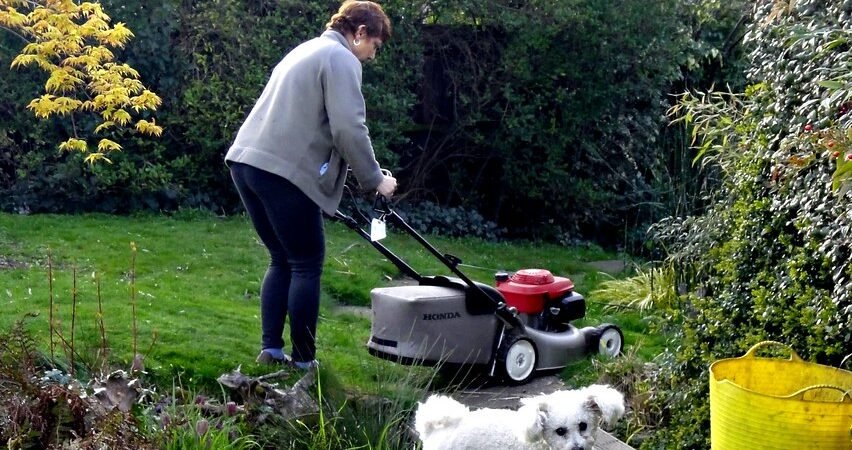
Photo: "Redhill Garden – Mar 2012 – Working Hard in the Garden" by Gareth1953 All Right Now, licensed under CC BY 2.0. Source.