Table of Contents
How PawSeniors Researches This
PawSeniors articles are written and edited in-house, then checked against primary veterinary sources before publishing.
- Every medical claim is sourced to the American Kennel Club, PetMD, VCA Animal Hospitals, or another named veterinary source, linked at the end of the article.
- Every claim is tied to a named, checkable veterinary source linked at the end of the article — nothing is published without a reference you can verify yourself.
- Articles are updated when veterinary guidance changes.
Advice about “new lumps” often gets written for dogs first, cats second, as if the same rules apply to both. They don’t entirely. The most common growths in senior cats aren’t the same as the most common growths in senior dogs, and that difference actually matters for how much urgency a new lump deserves.
Why Cats and Dogs Get Different Kinds of Lumps
In senior dogs, the most common benign mass by far is the lipoma, a soft, movable pocket of fat cells that grows slowly and rarely causes problems beyond its size. Cats get a different most-common growth entirely: basal cell tumors, small, firm masses that typically show up around the head and neck rather than the trunk. Skin tumors overall are also simply less common in cats than in dogs, one review found skin tumors made up about 72% of tumor samples in dogs compared to roughly 50% in cats, which is part of why a new lump reads differently in each species even before considering what it turns out to be.
Basal Cell Tumors: The Most Common Growth in Senior Cats
Basal cell tumors feel firm rather than soft and mobile the way a dog’s lipoma does, and they’re most often found on the head, neck, or shoulders. The reassuring part: fewer than 10% of basal cell tumors turn out to be malignant, and even the malignant version (basal cell carcinoma) tends to grow slowly and rarely spreads to other parts of the body. Persians and Himalayans appear to be somewhat more prone to this tumor type than other breeds, though any senior cat can develop one.
Why a New Lump in a Cat Deserves More Urgency Than in a Dog
Because lipomas are so overwhelmingly common and predictable in dogs, a experienced owner or vet can often make a reasonable guess just from how a lump feels. Cats don’t offer that same shortcut: they get far fewer of the reliably-benign fatty lumps, and the growths they do develop are more of a mixed bag between different tumor types, some benign, some not. That lack of a single dominant, easily-recognized benign growth is exactly why a new lump in a cat warrants a prompt vet visit rather than the more cautious wait-and-see approach that’s sometimes reasonable for an obvious, classic lipoma in a dog.
What a Vet Exam Actually Involves
A fine needle aspirate, drawing a small sample of cells with a thin needle for examination under a microscope, is usually the first step and is quick with minimal discomfort. This is often enough to identify a basal cell tumor or rule out something more concerning without needing sedation or a larger procedure. If the aspirate results are ambiguous, or the growth’s behavior (rapid growth, changing texture, ulceration) raises more concern, a full biopsy or surgical removal with pathology gives a definitive answer. Because basal cell tumors are usually straightforward to remove and rarely recur, many vets recommend removal once one is confirmed, both to close the question and to prevent a slow-growing mass from eventually interfering with normal movement if it’s in an awkward spot.
Other Skin Changes Worth Watching
- Rapid growth or sudden appearance is more concerning than a lump that’s been stable for months.
- Ulceration, bleeding, or oozing on the surface of a growth should be checked promptly rather than monitored.
- Multiple new lumps appearing close together in time is worth mentioning as a pattern, not just addressing one at a time.
- Any growth your cat repeatedly licks, bites, or seems bothered by, since that behavior itself can suggest discomfort or irritation worth investigating.
How to Monitor at Home
Running your hands over your cat during normal petting sessions is a low-effort way to catch new growths early, and keeping a simple note of location, approximate size, and the date first noticed makes it much easier to tell your vet what’s actually changed versus what’s been stable for a while. A photo taken next to a coin or another object of known size, repeated every few weeks for any lump you’re watching rather than immediately removing, gives an objective size comparison that’s more reliable than memory alone.
The Bottom Line
A new lump in a senior cat isn’t automatically a cause for alarm, most turn out to be manageable basal cell tumors, but it also isn’t something to treat with the same relaxed “probably just a lipoma” instinct that’s often reasonable in dogs. Cats simply don’t have one dominant, easily-recognized benign growth the way dogs do, which makes a prompt vet exam, usually just a quick needle aspirate, the more reliable path to peace of mind either way.
Sources: VCA Animal Hospitals — Basal Cell Tumors, PetMD — Cat Skin Lumps, Bumps, and Cysts.
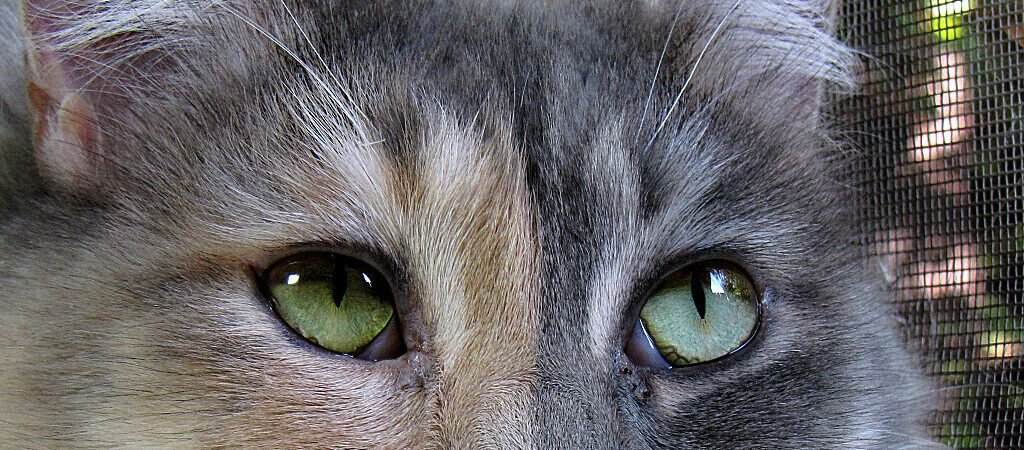
Photo: “Contemplative-looking cat” by Trish Hamme, licensed under CC BY 2.0.