Table of Contents
How PawSeniors Researches This
PawSeniors articles are written and edited in-house, then checked against primary veterinary sources before publishing.
- Every medical claim is sourced to the American Kennel Club, PetMD, VCA Animal Hospitals, or another named veterinary source, linked at the end of the article.
- Every claim is tied to a named, checkable veterinary source linked at the end of the article — nothing is published without a reference you can verify yourself.
- Articles are updated when veterinary guidance changes.
Few things wear on a household quite like a senior cat who starts yowling at 3 a.m. It often begins gradually, a few loud meows in the hallway, then a nightly routine of wandering and crying that leaves everyone exhausted. It’s tempting to treat it as a behavior problem to be ignored or trained away. In an older cat, though, new or louder nighttime vocalization is much more often a sign that something has changed medically, and many of those causes are treatable.
Why Age Changes the Picture
In a young cat, extra meowing usually means “feed me” or “pay attention to me.” In a cat over ten, the list of likely explanations shifts toward physical and neurological causes. Veterinarians at MSPCA-Angell point out that any significant change in an older cat’s behavior, including vocalizing, deserves a vet visit rather than a wait-and-see approach.
The Most Common Medical Causes
Hyperthyroidism
An overactive thyroid is one of the most common hormonal disorders in older cats. Excess thyroid hormone tends to make cats restless, hungry, and agitated, and many affected cats become noticeably louder, especially at night. Other clues include weight loss despite a big appetite, increased thirst, and a scruffier coat. It’s diagnosed with a simple blood test and responds well to treatment.
High Blood Pressure
Hypertension in cats is frequently tied to kidney disease or hyperthyroidism. One theory for why it causes vocalizing is discomfort: people with high blood pressure often get headaches, and cats may experience something similar. Untreated hypertension can also damage the eyes, sometimes causing sudden blindness, which can bring on its own disorientation and crying. A blood pressure check should be part of any workup for nighttime yowling.
Hearing or Vision Loss
Cats losing their hearing often don’t realize how loud they’ve become, so their normal meows turn into yowls. Cats losing their sight can become anxious in the dark, when they have even less information about their surroundings. In both cases, the cat may be calling out simply to locate you.
Pain
Arthritis is extremely common in older cats and frequently overlooked. A cat who is stiff and uncomfortable may be restless at night, unable to settle, and vocal about it. Dental disease and other sources of chronic pain can do the same.
Cognitive Dysfunction
Feline cognitive dysfunction, essentially age-related brain changes similar to dementia, is a classic cause of nighttime waking with vocalization. Other signs include wandering aimlessly, seeming lost in familiar places, changes in social interaction, and accidents outside the litter box. MSPCA-Angell notes that about one in three cats between 11 and 14 years old shows at least one sign of cognitive dysfunction. It’s a diagnosis made after other medical causes have been ruled out, because so many of them look similar.
What Your Vet Will Likely Check
A reasonable starting workup includes a full physical and orthopedic exam, bloodwork with a thyroid level, a urinalysis, a blood pressure measurement, and an eye exam. Bring notes or a short video of the nighttime behavior: when it starts, how long it lasts, whether the cat seems confused or is asking for something. That record is often more useful than a description from memory.
Practical Ways to Help at Home
Alongside treating any medical cause, small changes to routine and environment can make nights calmer:
- Use night lights along the cat’s usual routes and near the litter box and water bowl, especially for cats with failing vision.
- Shift play and meals later. A short, gentle play session followed by a meal shortly before bedtime can encourage a longer sleep.
- Keep daytime engaging. Cats who sleep all day have more energy to spend at night. Window perches, food puzzles, and brief interactive sessions help.
- Keep the layout consistent. Avoid moving furniture or resources around for cats with vision loss or cognitive decline.
- Offer a warm, padded bed in a quiet spot, and consider letting the cat sleep closer to you if being alone seems to trigger the crying.
- Don’t punish the yowling. A disoriented or uncomfortable cat can’t connect punishment to the behavior, and the added stress usually makes things worse.
For cats diagnosed with cognitive dysfunction, your vet may also suggest diets enriched with antioxidants and omega-3 fatty acids, supplements, or medication to support sleep and reduce anxiety.
The Bottom Line
Nighttime yowling in a senior cat is a symptom worth investigating, not a habit to wait out. Thyroid disease, high blood pressure, sensory loss, pain, and cognitive changes are all common at this age, and most of them can be managed once identified. A calmer night for your cat usually means a calmer night for you, too.
Sources: MSPCA-Angell — Why Is My Cat Meowing So Much?, Petplan — Why Is My Elderly Cat Yowling?.
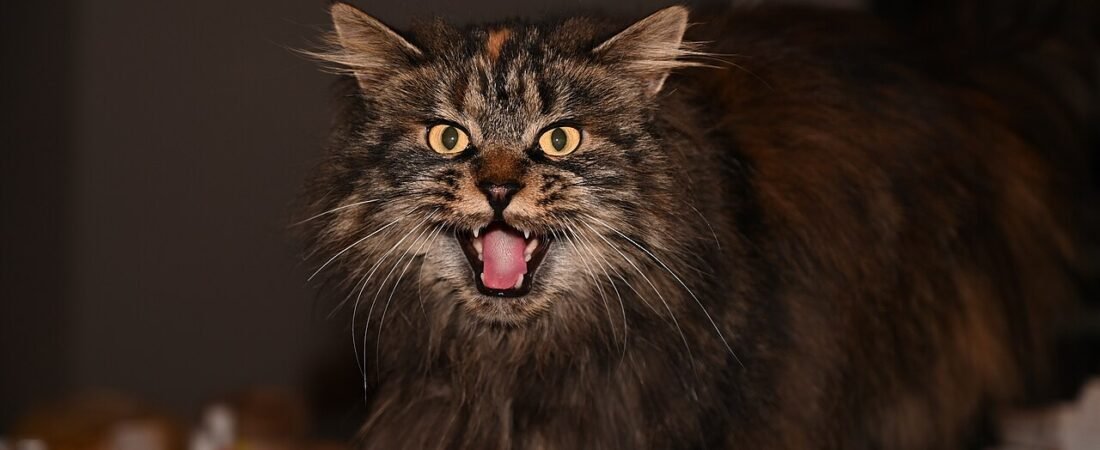
Photo: “Maine Coon Meowing” by Nortlio, licensed under CC BY-SA 4.0.