Table of Contents
- Why Hydration Matters So Much With CKD
- Practical Ways to Increase Water Intake
- When Home Strategies Aren’t Enough
- Tracking Whether It’s Working
- Signs Your Cat May Already Be Dehydrated
- Making the Switch to Wet Food Easier
- The Role of Diet Beyond Just Moisture
- Building Hydration Into the Daily Routine
How PawSeniors Researches This
PawSeniors articles are written and edited in-house, then checked against primary veterinary sources before publishing.
- Every medical claim is sourced to the American Kennel Club, PetMD, VCA Animal Hospitals, or another named veterinary source, linked at the end of the article.
- Every claim is tied to a named, checkable veterinary source linked at the end of the article — nothing is published without a reference you can verify yourself.
- Articles are updated when veterinary guidance changes.
For a senior cat living with chronic kidney disease, hydration isn’t a minor detail; it’s one of the few genuinely manageable factors that can meaningfully slow how fast the disease progresses.
Why Hydration Matters So Much With CKD
Dehydration speeds up damage to already-compromised kidneys and makes clinical signs worse, creating a cycle where a dehydrated cat’s kidneys work harder under worse conditions. The International Society of Feline Medicine’s consensus guidelines on feline CKD explicitly recommend that cats with the disease have constant access to fresh water, with flowing water sources specifically encouraged to promote intake.
Practical Ways to Increase Water Intake
A pet water fountain is one of the most effective tools, since many cats are instinctively drawn to moving water and will drink more from a fountain than a still bowl. Switching some or all of a cat’s diet to canned food is another highly effective strategy: canned diets typically contain 70 to 80 percent moisture, compared to roughly 10 percent in dry kibble, meaning a diet shift alone can substantially increase a cat’s total daily water intake.
Placing multiple water bowls in different rooms, especially away from food and litter boxes which some cats prefer to keep separate, and occasionally adding a small amount of low-sodium broth to water can also encourage more frequent drinking throughout the day.
When Home Strategies Aren’t Enough
In later stages of CKD, some cats simply can’t drink enough on their own to maintain healthy hydration, no matter how appealing the water source. At that point, vets often recommend subcutaneous fluids, given at home a few times a week, which are generally well tolerated by cats and can noticeably improve comfort and quality of life even in advanced disease.
Tracking Whether It’s Working
Simple signs like skin elasticity, gum moisture, and litter box output can give a rough sense of hydration status day to day, but regular vet checkups with bloodwork remain the most reliable way to monitor whether hydration efforts are actually protecting kidney function over time. Consistency matters more than any single strategy, since small, steady increases in daily water intake add up meaningfully for a cat managing CKD long-term.
Signs Your Cat May Already Be Dehydrated
Gently lifting the skin at the scruff and watching how quickly it settles back into place is a simple at-home check; skin that stays tented for more than a second or two can indicate meaningful dehydration. Dry or tacky gums, sunken eyes, and reduced litter box output are other signs worth mentioning to your vet promptly rather than waiting for the next scheduled recheck.
Making the Switch to Wet Food Easier
Cats who’ve eaten dry food their whole lives sometimes resist a sudden switch to canned food, so introducing it gradually, mixed with their current food and slightly warmed to release more aroma, tends to succeed more often than an abrupt swap. Trying a few different textures, pate versus shredded versus gravy-style, can also help identify what a particular cat is willing to eat consistently.
The Role of Diet Beyond Just Moisture
Prescription kidney diets do more than add moisture; they’re also formulated with reduced phosphorus and controlled, high-quality protein levels specifically designed to ease the kidneys’ workload, which is why vets usually recommend a therapeutic renal diet rather than simply switching to any canned food. Transitioning slowly over one to two weeks, mixing increasing amounts of the new food with the old, helps prevent the diet change itself from causing stomach upset in an already vulnerable cat.
Building Hydration Into the Daily Routine
Refreshing water bowls at least twice a day, rather than once, keeps water tasting appealing to a cat with a sensitive palate, since water left sitting out can develop a taste or smell that some cats simply refuse to drink. Placing a bowl near a favorite resting spot, not just in the kitchen, makes drinking more convenient and can noticeably increase how often a cat chooses to take a sip throughout the day.
Sources: VCA Animal Hospitals — Nutrition for Cats with Chronic Kidney Disease, PetMD — Kidney Disease in Cats: Signs, Causes, and Treatment.
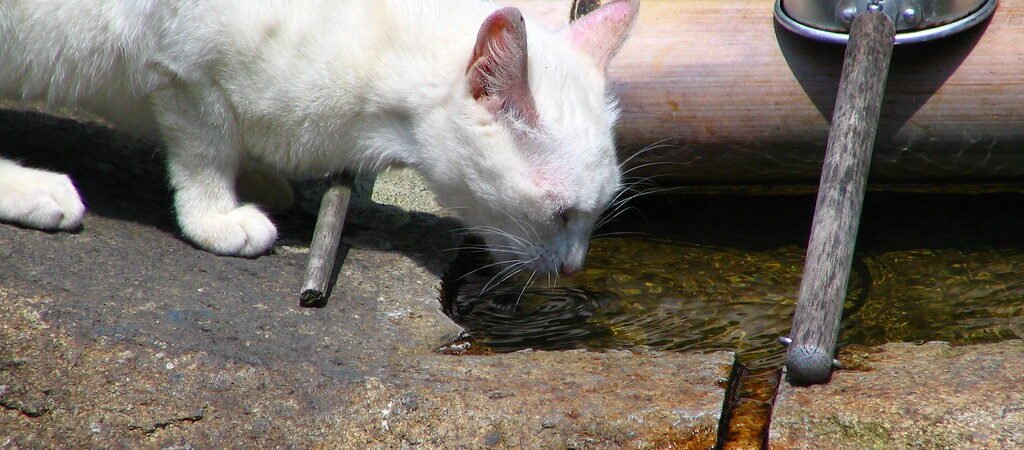
Photo: "A cat drinking water" by pelican, licensed under CC BY-SA 2.0. Source.