Table of Contents
How PawSeniors Researches This
PawSeniors articles are written and edited in-house, then checked against primary veterinary sources before publishing.
- Every medical claim is sourced to the American Kennel Club, PetMD, VCA Animal Hospitals, or another named veterinary source, linked at the end of the article.
- Every claim is tied to a named, checkable veterinary source linked at the end of the article — nothing is published without a reference you can verify yourself.
- Articles are updated when veterinary guidance changes.
A senior cat who suddenly can’t walk straight, tilts their head sharply, and seems to have lost their balance entirely within the span of an hour is almost certainly experiencing feline vestibular disease, a condition that looks alarming but, in the majority of cases, resolves well on its own.
What Vestibular Disease Looks Like
The onset is typically sudden and dramatic: incoordination, falling or circling toward one side, involuntary rapid eye movement called nystagmus, a pronounced head tilt, and often nausea or vomiting from the disorienting sensation of false motion. These signs usually appear within less than an hour, which understandably alarms owners who go from a normal cat to one who suddenly can’t stand up straight in a matter of minutes.
Why It’s Most Common in Senior Cats
While cats of any age can develop vestibular disease, it’s most commonly seen in senior cats specifically. The most frequent identifiable cause is a middle or inner ear infection, but in a genuinely significant share of cases, particularly the idiopathic form, no specific cause is ever found. Tumors, cysts, or polyps growing near the inner ear or brain are a less common cause but are more likely to be considered specifically in older cats, which is part of why a vet exam matters even when the idiopathic form is statistically the most likely explanation.
How Vets Sort Out the Cause
A vet exam typically starts with checking the ears directly for signs of infection, since this is both common and directly treatable. If the ears look clear and no other cause is obvious, further workup, sometimes including bloodwork or imaging, may be recommended, particularly for cats whose symptoms don’t follow the typical rapid-improvement pattern seen in idiopathic cases. The distinction matters because an ear infection responds to antibiotics, while idiopathic vestibular disease is managed with supportive care alone while the body heals on its own.
What Recovery Typically Looks Like
For idiopathic cases, the overall prognosis is genuinely good, and the condition often improves substantially on its own within days to a few weeks, even without treatment directly targeting a specific cause. Some cats are left with a mild, permanent head tilt even after otherwise recovering fully, which is generally considered a cosmetic residual effect rather than a sign of ongoing illness or discomfort.
Supporting a Cat Through an Episode
During the acute phase, cats need a safe, confined, low space to prevent falls from height, since climbing and jumping become genuinely dangerous while balance is so severely affected. Food and water should be placed at floor level and easily accessible without requiring any climbing, and patience matters enormously here, since a cat who suddenly can’t navigate their own home confidently is understandably frightened and disoriented, not simply injured or in pain in the way the dramatic symptoms might suggest.
When to Treat It as More Urgent
Because the sudden, severe symptoms of vestibular disease can look similar to more serious neurological events, and because tumors are a real possibility specifically in older cats, any cat showing these signs deserves a same-day vet visit rather than assuming it will resolve on its own without any evaluation at all. A vet exam is the only reliable way to distinguish a straightforward, self-resolving idiopathic case from one that needs more active investigation and treatment.
What Typically Causes It
In most senior cats, vestibular disease has no identifiable cause and is labeled idiopathic, meaning it likely arises from a temporary disruption in the inner ear or the brainstem’s balance-processing center that resolves largely on its own. Less commonly, an ear infection, a polyp, hypothyroidism, or in rare cases a brain lesion can trigger similar symptoms, which is why a vet exam is still worthwhile even when idiopathic vestibular disease is the most likely explanation.
What Recovery Usually Looks Like
The head tilt, stumbling, and rapid eye movements of idiopathic vestibular disease are often most severe in the first 24 to 72 hours and then improve steadily over one to two weeks, though a mild head tilt can persist permanently in some cats without affecting their quality of life. During the acute phase, keeping food and water close by, blocking off stairs, and confining a cat to a single safe room helps prevent injury while their balance system recalibrates.
When to Call the Vet Again
While most idiopathic vestibular episodes improve steadily, a cat that isn’t eating or drinking within a day, seems to be getting worse rather than better after the first 72 hours, or develops new symptoms like facial drooping should be rechecked promptly, since these can point to a cause other than the typical self-resolving inner-ear disruption.
Sources: PetMD — Vestibular Disease in Cats, VCA Animal Hospitals — Vestibular Disease in Cats.
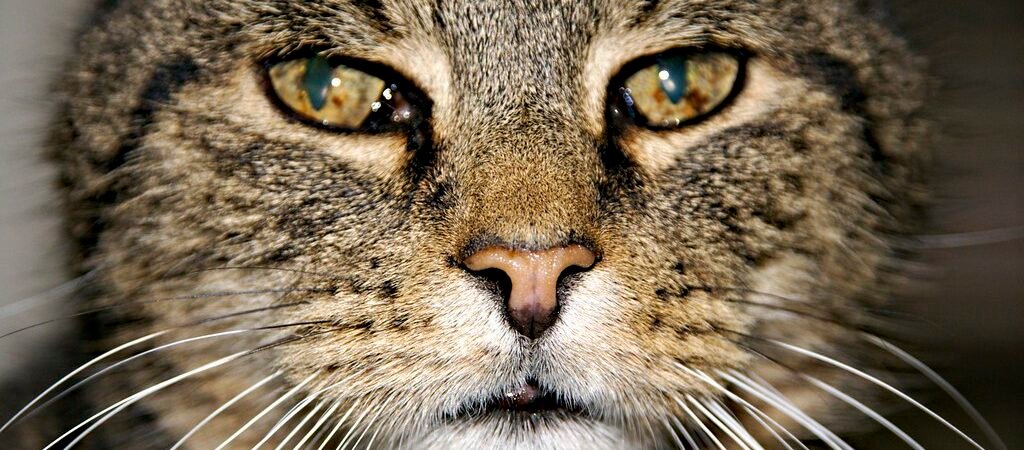
Photo: "Cat Face (IMG_2537)" by Ed Townend, licensed under CC BY 2.0. Source.