Table of Contents
How PawSeniors Researches This
PawSeniors articles are written and edited in-house, then checked against primary veterinary sources before publishing.
- Every medical claim is sourced to the American Kennel Club, PetMD, VCA Animal Hospitals, or another named veterinary source, linked at the end of the article.
- Every claim is tied to a named, checkable veterinary source linked at the end of the article — nothing is published without a reference you can verify yourself.
- Articles are updated when veterinary guidance changes.
A senior dog who suddenly can’t stop licking one spot, a paw, an elbow, a flank, often gets written off as a new habit or a quirk of old age. In practice, persistent licking in a senior dog is rarely just a habit, and figuring out which of three overlapping categories it falls into, pain, anxiety, or cognitive decline, matters for treating it effectively.
When It’s Actually Pain
As joints stiffen and inflammation increases with age, dogs often lick the specific areas that hurt, with paws, elbows, hips, and wrists being especially common targets since they bear so much of a dog’s weight and take the brunt of arthritis-related wear. This kind of licking tends to be localized to one consistent spot, tied to a joint or area that also shows other signs of discomfort, like stiffness after rest or reluctance to be touched there.
Underlying medical issues, arthritis, a previous injury or fracture, skin allergies, or infections, can all initially trigger this kind of focused licking, and if it continues long enough it can create a self-perpetuating cycle: licking irritates the skin further, which increases the urge to lick.
When It Becomes a Lick Granuloma
Left unaddressed, that cycle of licking and irritation can progress into a lick granuloma, a raised, thickened, often hairless sore, most commonly on a front leg, that forms when a dog licks one spot compulsively enough to damage the skin faster than it can heal. Once a lick granuloma forms, it tends to become its own separate problem, since the site itself becomes itchy or uncomfortable in a way that drives further licking regardless of what originally triggered it. These typically need veterinary treatment, sometimes including a protective covering, medication to break the cycle, and occasionally antibiotics if the site has become infected, since dogs rarely stop the behavior on their own once it’s this established.
When It’s Anxiety
Repetitive, compulsive behaviors, including licking, are also a recognized sign of anxiety in dogs, and aging itself can be a trigger, as declining senses, new physical limitations, or changes in household routine create stress that a dog has no other outlet for. Anxiety-driven licking tends to be less anchored to one specific painful spot and more likely to happen during or after stressful triggers, being left alone, loud noises, changes in the home, though it can become habitual enough to continue outside those moments too.
When It’s Cognitive Decline
Repetitive behavior, including licking, is also a recognized symptom of canine cognitive dysfunction syndrome, which is estimated to affect around fourteen percent of dogs eight years and older. In these cases, the licking is less about a specific trigger and more a manifestation of the same repetitive, seemingly purposeless behavior patterns seen in other symptoms of cognitive decline, like pacing or staring at walls.
Boredom and Lack of Enrichment
A simpler, easily overlooked cause: without enough mental engagement, dogs can turn to licking, grooming, or scratching simply because they’re understimulated. This is worth ruling out or addressing alongside the more medical possibilities, especially in senior dogs whose activity level and environment may have quietly narrowed over time without anyone noticing.
Figuring Out Which One It Is
Because these categories overlap so heavily, and because a dog can genuinely be dealing with more than one at once, arthritis pain feeding into anxiety, for instance, a vet visit is the most reliable way to sort out the actual driver. A physical exam can identify or rule out a painful joint or skin condition, while a vet familiar with your dog’s recent history and behavior changes can help distinguish anxiety or cognitive causes from a purely physical one. Treating only the surface behavior, without addressing which of these is actually driving it, tends to produce limited or temporary results.
What Vets Look For During the Exam
A vet working through a persistent licking case typically starts with a close physical exam of the licked area itself, checking for skin breaks, swelling, hair loss patterns, or signs of infection, alongside a broader joint and mobility assessment to check for arthritis in that same region. Bloodwork or skin testing may follow if allergies are suspected, and for licking with no clear physical trigger at all, a vet will usually ask detailed questions about when the behavior started and what else has changed at home, since that context often points toward anxiety or cognitive causes that a physical exam alone can’t detect.
Why Just Stopping the Behavior Isn’t the Real Goal
Products like bitter-tasting sprays or physical barriers can interrupt licking in the moment, but used alone, without identifying and addressing what’s actually driving the behavior, they tend to produce only temporary results, or push the underlying pain, anxiety, or cognitive symptom toward a different outlet instead of resolving it. Treating the cause, pain relief for an arthritic joint, an anxiety management plan, cognitive support for a dog showing signs of decline, is what actually changes the trajectory, with barrier tools serving at most as a short-term aid to prevent skin damage while the real treatment takes effect.
Sources: VCA Animal Hospitals — Compulsive Disorders in Dogs, PetMD — Excessive Licking, Chewing, and Grooming in Dogs.
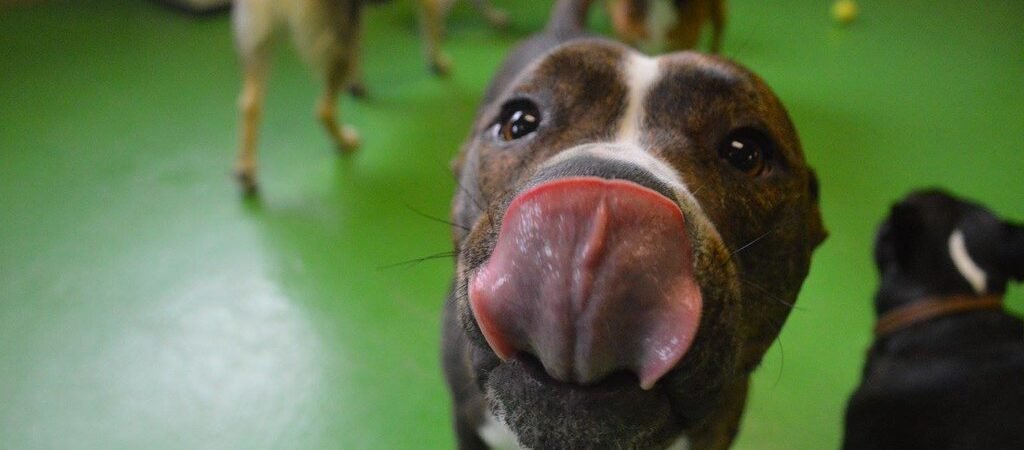
Photo: "Dog Lick – A Creative Commons Image" by liveoncelivewild, licensed under CC BY 2.0. Source.