Table of Contents
How PawSeniors Researches This
PawSeniors articles are written and edited in-house, then checked against primary veterinary sources before publishing.
- Every medical claim is sourced to the American Kennel Club, PetMD, VCA Animal Hospitals, or another named veterinary source, linked at the end of the article.
- Every claim is tied to a named, checkable veterinary source linked at the end of the article — nothing is published without a reference you can verify yourself.
- Articles are updated when veterinary guidance changes.
Bloat, formally called gastric dilatation and volvulus or GDV, is a genuine life-threatening emergency, and senior large-breed dogs carry meaningfully higher risk than most owners realize, making awareness of the warning signs a matter of real urgency rather than background knowledge.
What Actually Happens During Bloat
Bloat begins when the stomach fills with gas and expands, and in the more dangerous volvulus form, the distended stomach twists on itself, cutting off blood supply and trapping gas and stomach contents with no way to escape. This twisting can happen within a matter of hours, and without emergency surgical intervention, it’s frequently fatal, which is exactly why bloat is treated as one of the true veterinary emergencies that can’t wait for a next-day appointment.
Why Age Increases the Risk
Middle-aged and senior dogs are more likely to develop GDV than younger dogs, with risk climbing noticeably after around three years of age and continuing to increase through the senior years; dogs between nine and twelve years old are particularly at risk, with the chances rising by roughly twenty percent with each additional year. This age-related increase compounds with breed risk, meaning a senior dog of an already-predisposed breed carries a genuinely elevated risk profile worth actively planning around.
Which Dogs Carry the Highest Risk
Large and giant breeds with deep, narrow chests face the highest risk, with Great Danes, Saint Bernards, Weimaraners, Irish and Gordon Setters, Standard Poodles, and Doberman Pinschers specifically identified as higher-risk breeds. Dogs over one hundred pounds carry roughly a twenty percent lifetime risk of experiencing bloat, and having a close relative who’s bloated further raises an individual dog’s own risk, pointing to a real genetic component alongside body shape.
Signs That Mean Immediate Emergency Care
A visibly distended, hard abdomen, unproductive retching where a dog tries repeatedly to vomit without anything coming up, restlessness and obvious distress, and rapid, labored breathing are the classic warning signs. Any combination of these, especially the unproductive retching paired with a swollen belly, warrants an immediate trip to an emergency vet rather than waiting to see if symptoms pass, since every additional hour without treatment meaningfully worsens the prognosis.
Reducing Risk Through Feeding Habits
Eating too quickly and eating one large meal a day are both linked to increased bloat risk, which makes feeding smaller, more frequent meals throughout the day, and using a slow-feeder bowl for a dog who tends to gulp their food, genuinely useful preventive habits rather than minor tweaks. Avoiding vigorous exercise immediately before or after meals is another commonly recommended precaution, giving the stomach time to settle rather than being agitated by activity right after eating.
Gastropexy: The Most Effective Prevention
Gastropexy, a surgical procedure that attaches the stomach to the body wall to prevent it from twisting, is the single most effective way to prevent the volvulus, the life-threatening twisting, from happening even if bloating gas buildup does occur. Some vets recommend this procedure proactively for high-risk breeds, sometimes performed at the same time as spay or neuter surgery, and it’s a conversation genuinely worth having with your vet if your dog checks multiple risk factors, breed, size, age, and family history, rather than waiting until after a first bloat episode to consider it.
Emergency Signs That Mean Immediate Vet Care
A distended, hard, or drum-tight abdomen, unproductive retching with nothing coming up, restlessness and pacing that won’t settle, and rapid, shallow breathing are the hallmark signs of a GDV emergency and warrant an immediate trip to an emergency vet, not a wait-and-see approach, since bloat can progress from first symptoms to life-threatening shock within a couple of hours. Owners of at-risk breeds are generally advised to treat any combination of these signs as a true emergency rather than waiting to see if symptoms pass.
Preventive Measures for At-Risk Dogs
Feeding two or three smaller meals a day instead of one large meal, avoiding vigorous exercise for an hour before and after eating, and using a slow-feeder bowl for dogs that gulp their food are commonly recommended steps to reduce bloat risk in predisposed breeds. For dogs at especially high risk, such as Great Danes and other giant breeds, many vets recommend discussing a prophylactic gastropexy, a surgical procedure that tacks the stomach in place to prevent it from twisting, often performed at the same time as a spay or neuter.
Sources: American Kennel Club — Bloat (or GDV) in Dogs: What Is It and How Is It Treated?, VCA Animal Hospitals — Bloat: Gastric Dilatation and Volvulus in Dogs.
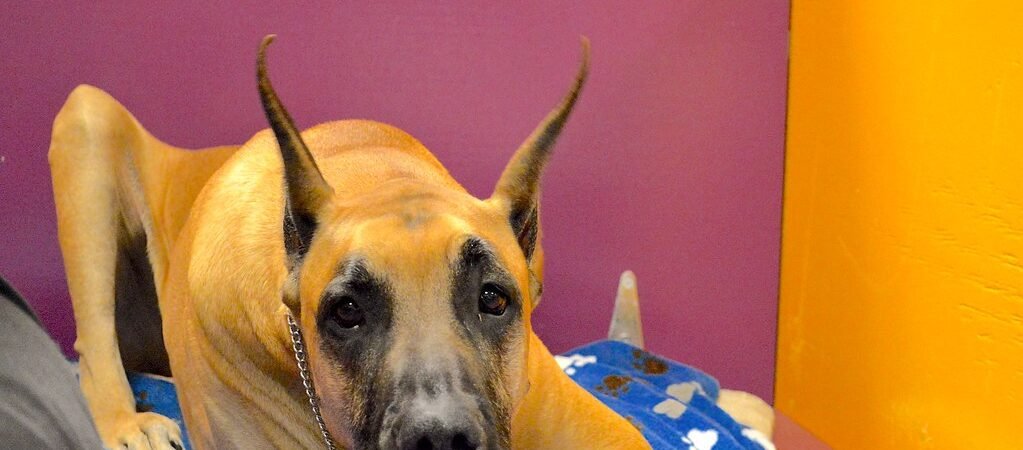
Photo: "Great Dane dog trying to take a nap" by Petful.com, licensed under CC BY 2.0. Source.