Table of Contents
How PawSeniors Researches This
PawSeniors articles are written and edited in-house, then checked against primary veterinary sources before publishing.
- Every medical claim is sourced to the American Kennel Club, PetMD, VCA Animal Hospitals, or another named veterinary source, linked at the end of the article.
- Every claim is tied to a named, checkable veterinary source linked at the end of the article — nothing is published without a reference you can verify yourself.
- Articles are updated when veterinary guidance changes.
Cutting exercise down to almost nothing feels like the safe, cautious choice for an aging dog, but too little activity often does more harm than good. Muscle wasting, weight gain, and stiffer joints all accelerate with inactivity, which then makes a dog even less able to move comfortably. The better goal for most senior dogs isn’t less exercise, it’s different exercise.
How Much Is Actually Recommended
Most senior dogs still benefit from daily, gentle movement rather than long stretches of rest. A reasonable starting benchmark for a senior dog, or any dog just getting back into activity, is around fifteen minutes of walking per session, several times a week, adjusted up or down based on how the individual dog responds. The right amount varies enormously by breed, size, and existing health conditions, which is why a vet check before changing a senior dog’s activity level matters more here than at any earlier life stage.
Get a Vet’s Clearance First
Before starting or significantly changing an exercise routine for an older dog, a veterinary evaluation is worth doing first, specifically to confirm that the heart, lungs, muscles, and joints can tolerate the added strain. This matters even for exercise that sounds gentle on paper, since underlying issues like heart disease or advanced arthritis can make certain activities genuinely risky in ways that aren’t obvious from the outside.
The Best Types of Activity for Senior Dogs
Walking on flat, even surfaces with good traction is generally the safest and most beneficial activity for a senior dog, since it builds and maintains muscle without the joint impact of running or jumping. Swimming is another strong option where available, since water supports body weight and lets a dog move joints through a full range of motion with minimal strain. Low-impact activities like gentle games of fetch on soft ground, hide-and-seek for mental engagement, or slow structured exercises sometimes called canine calisthenics, such as platform work and gentle stretches, round out a well-balanced routine.
Warm-Ups, Cool-Downs, and Pacing
Senior dogs benefit from the same warm-up and cool-down principles that make sense for aging human joints: a five-minute easy walk before more structured activity, and the same afterward, gives muscles and joints time to prepare and recover rather than going straight from rest to exertion. For dogs doing any structured exercises, aiming for just one to three sets of a small number of repetitions, rather than pushing for volume, keeps the activity beneficial rather than fatiguing.
Building a Routine After a Long Period of Inactivity
If a senior dog has been mostly sedentary for a while, whether from an injury, an illness, or just a gradual slowdown nobody noticed happening, jumping back into regular walks at the old pace isn’t the right approach. Starting with short, frequent sessions, five to ten minutes, two or three times a day, rather than one longer walk, lets deconditioned muscles and joints adjust gradually. Increasing duration before increasing intensity, and letting the dog’s recovery the following day guide how quickly to progress, avoids the setback of overdoing it in week one and losing weeks of momentum to soreness afterward.
Signs You’re Overdoing It
Limping or stiffness that shows up after exercise rather than before, excessive panting that doesn’t resolve quickly with rest, reluctance to continue partway through an activity your dog previously handled fine, or noticeable soreness the following day are all signs to scale back rather than push through. Unlike a younger dog, a senior dog’s recovery window after overexertion tends to be longer, so it’s worth erring toward consistent, moderate activity over occasional intense sessions.
Mental Exercise Counts Too
Physical movement isn’t the only kind of exercise that matters for a senior dog’s wellbeing. Short training sessions, food puzzle toys, sniff-focused walks where the dog sets the pace and route, and simple games like hiding treats around a room all provide mental stimulation without demanding much of aging joints. For senior dogs whose physical exercise has to stay limited due to arthritis or heart disease, leaning more heavily on this kind of low-impact mental engagement helps prevent the boredom and understimulation that can otherwise show up as restlessness or behavioral changes.
Adjusting Exercise for Specific Conditions
A senior dog’s exercise plan should bend around whatever conditions they’re actually managing, not follow a generic template. Dogs with arthritis generally do better with several short, gentle walks spread through the day rather than one longer outing, since shorter bouts avoid the stiffness that can follow extended activity while still providing the consistent movement that keeps joints from seizing up. Dogs with diagnosed heart disease need their vet’s specific input on safe intensity levels, since even moderate exertion can be riskier for a compromised heart than it looks from the outside. In both cases, and for most senior-specific conditions, the exercise plan is something to build together with a vet rather than adapt from general guidelines alone.
Sources: American Kennel Club — How Much Exercise Does a Dog Need Every Day?, VCA Animal Hospitals — Senior Dog Care: Special Considerations.
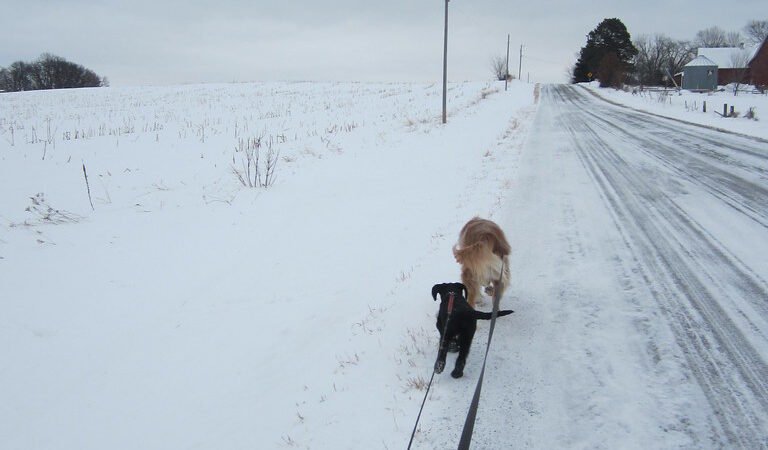
Photo: "Going down the road" by Pictures by Ann, licensed under CC BY 2.0. Source.