Table of Contents
- Large and Giant Breeds: The Hip Dysplasia Group
- Small Breeds Face a Different Joint Risk: Patellar Luxation
- Chondrodystrophic Breeds and Spinal Disc Risk
- Does Knowing the Breed Risk Actually Change Anything?
- How Vets Actually Screen for These Risks
- Mixed-Breed Dogs Aren’t Automatically Safe
- What This Means for a Senior Dog Right Now
- The Bottom Line
How PawSeniors Researches This
PawSeniors articles are written and edited in-house, then checked against primary veterinary sources before publishing.
- Every medical claim is sourced to the American Kennel Club, PetMD, VCA Animal Hospitals, or another named veterinary source, linked at the end of the article.
- Every claim is tied to a named, checkable veterinary source linked at the end of the article — nothing is published without a reference you can verify yourself.
- Articles are updated when veterinary guidance changes.
Every dog can develop joint pain with age, but some breeds are working against worse odds from the start. Knowing which joint problems your dog’s breed is genetically more likely to face doesn’t change what old age eventually asks of any dog, but it does change how early you and your vet start watching for it.
Large and Giant Breeds: The Hip Dysplasia Group
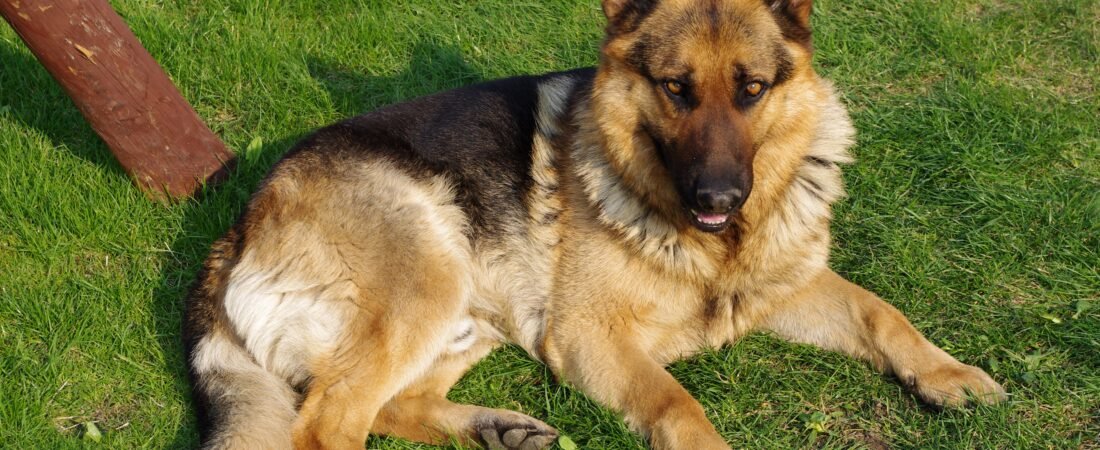
Hip dysplasia, a malformation of the hip joint that leads to abnormal wear and eventual arthritis, shows up disproportionately in medium-to-large and giant breeds. German Shepherds, Labrador Retrievers, Golden Retrievers, Rottweilers, Saint Bernards, Great Danes, and Newfoundlands are among the breeds most consistently flagged for it. The condition typically starts developing in puppyhood, tied to how the joint forms during rapid growth, but visible symptoms often don’t show up until years of gradual wear catch up with the dog in its senior years.
Small Breeds Face a Different Joint Risk: Patellar Luxation
Toy and small breeds — Chihuahuas, Pomeranians, Yorkshire Terriers, and Toy Poodles among them — are prone to a different joint problem: patellar luxation, where the kneecap slips out of its normal groove. Mild cases may cause an occasional skip or hop in a dog’s gait and go unnoticed for years, while more severe grades cause consistent lameness and, left unaddressed, contribute to arthritis in the knee over time. This is a structural issue present from a young age, but the arthritis it eventually causes is very much a senior-years problem.
Chondrodystrophic Breeds and Spinal Disc Risk
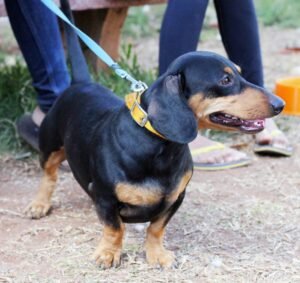
Breeds with a naturally short-legged, long-backed build — Dachshunds, Corgis, Basset Hounds, and French Bulldogs — carry a genetic predisposition to intervertebral disc disease (IVDD), where spinal discs degenerate and can herniate, sometimes suddenly. It’s not a hip or knee problem, but it belongs in the same conversation: these breeds’ skeletal structure creates a specific, well-documented weak point that becomes more relevant as a dog ages and disc material naturally degenerates further.
Does Knowing the Breed Risk Actually Change Anything?
For breeds with a known predisposition, some vets recommend earlier screening — hip X-rays or a formal OFA or PennHIP evaluation well before symptoms appear, rather than waiting for a limp to show up in the senior years. Weight management carries extra weight, so to speak, for these breeds specifically, since every excess pound adds load to a joint that’s already working with a structural disadvantage. It’s also a reasonable basis for bringing up joint supplements or a joint-support diet with your vet earlier than you might for a breed without the same risk profile.
How Vets Actually Screen for These Risks
For large-breed puppies from a known predisposed line, some vets recommend PennHIP evaluation as early as four months old, since it can predict adult hip conformation well before a dog reaches skeletal maturity, giving owners a genuine head start on prevention rather than just early detection. For breeds prone to patellar luxation, a vet checks kneecap stability by hand during routine exams, grading looseness on a standard 1-to-4 scale even in dogs showing no outward lameness yet, since the grading itself helps predict how likely a mild case is to progress. Chondrodystrophic breeds don’t have an equivalent preventive screening test for IVDD, which is part of why owners of these breeds are often counseled instead on everyday risk reduction: avoiding jumps on and off furniture, using ramps early rather than after a first disc episode, and keeping weight lean since extra weight adds direct load to an already vulnerable spine.
Mixed-Breed Dogs Aren’t Automatically Safe
A mixed-breed dog with significant ancestry from a high-risk breed still carries meaningful risk for that breed’s joint problems — genetics don’t reset to zero just because a dog isn’t a registered purebred. A large mixed-breed dog built like a Labrador or Shepherd is worth watching the same way a purebred of that breed would be, even without official papers confirming the lineage.
What This Means for a Senior Dog Right Now
Breed predisposition is a heads-up, not a diagnosis, and it doesn’t change what actually matters once a senior dog is showing signs: reluctance to jump, stiffness after rest, a changed gait, or reduced interest in walks all deserve a vet visit regardless of what’s written on a pedigree. Knowing the breed risk mostly changes the timing — it tells you when to start paying closer attention and asking your vet about screening, rather than what to do once a problem is already visible.
The Bottom Line
Genetics load the dice for some breeds more than others when it comes to joint disease, but weight management, timely vet visits, and home adaptations for mobility matter for every senior dog, purebred or not. Breed knowledge is most useful as an early-warning system, prompting earlier screening and conversations with your vet rather than changing anything about how you’d respond to symptoms once they show up.
Sources: American Kennel Club — Hip Dysplasia in Dogs, VCA Animal Hospitals — Hip Dysplasia in Dogs.
Photo: “20110425 German Shepherd Dog 8505” by Jakub Hałun, licensed under CC BY-SA 4.0.