Table of Contents
How PawSeniors Researches This
PawSeniors articles are written and edited in-house, then checked against primary veterinary sources before publishing.
- Every medical claim is sourced to the American Kennel Club, PetMD, VCA Animal Hospitals, or another named veterinary source, linked at the end of the article.
- Every claim is tied to a named, checkable veterinary source linked at the end of the article — nothing is published without a reference you can verify yourself.
- Articles are updated when veterinary guidance changes.
A senior dog who suddenly yelps when picked up, won’t jump onto furniture they used to manage easily, or seems reluctant to move their neck normally may be dealing with intervertebral disc disease, a spinal condition that ranges from manageable back pain to a genuine neurological emergency depending on severity.
What’s Actually Happening in the Spine
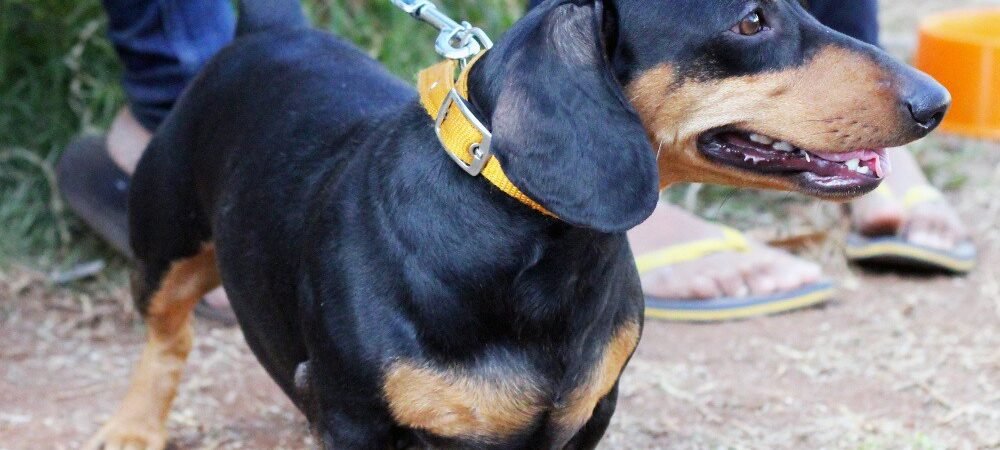
The discs between vertebrae act as cushions, absorbing shock and allowing flexible movement along the spine. In intervertebral disc disease, these discs degenerate, bulge, or rupture, and the displaced disc material presses on the spinal cord, producing anything from mild pain to significant weakness or, in severe cases, paralysis. Certain breeds, particularly chondrodystrophic breeds with long backs and short legs like Dachshunds, Corgis, and Basset Hounds, are especially prone to this condition due to their spinal conformation, though any dog can develop it.
Two Different Patterns of Onset
IVDD generally falls into one of two types, and the distinction matters for both treatment and prognosis. Type I involves a sudden disc rupture, producing an abrupt, often severe onset of pain or neurological signs, sometimes within hours. Type II develops more gradually, as a disc slowly degenerates and bulges over months or years, typically producing a slower progression of stiffness and mild neurological changes rather than a sudden crisis. Senior dogs can experience either type, though the gradual, Type II pattern is somewhat more commonly seen as an age-related development.
Signs to Watch For
Back or neck pain is the most consistent sign, and it can range from subtle, a reluctance to jump, climb stairs, or be picked up a certain way, to severe and obvious, a dog who yelps, trembles, or holds their body rigidly to avoid movement. A particularly telling neurological sign is a loss of what’s called conscious proprioception, essentially a dog’s awareness of where their own feet are positioned, which can show up as knuckling under, dragging a paw, or an uncoordinated, wobbly gait. In severe cases, weakness can progress to an inability to walk at all, or loss of bladder and bowel control, both of which represent a genuine emergency requiring immediate veterinary attention.
How Severity Is Assessed
Vets typically grade IVDD on a scale reflecting how much neurological function has been affected, from mild pain with normal walking ability, through varying degrees of weakness and coordination loss, up to complete paralysis with or without deep pain sensation still present in the affected limbs. This grading matters enormously for treatment decisions, since a dog with pain alone and normal mobility is managed very differently than one who’s lost the ability to walk, and the specific grade at diagnosis is one of the strongest predictors of how well a dog will respond to treatment.
Treatment: Medical Management or Surgery
Milder cases, particularly pain without significant weakness, are often managed medically: strict cage rest to prevent further disc movement, anti-inflammatory medication, muscle relaxants, and sometimes stronger pain medication, generally continued for several weeks even after symptoms improve, since resuming normal activity too soon risks re-injury. More severe cases, significant weakness, an inability to walk, or rapid progression, generally call for surgery to relieve pressure on the spinal cord, and outcomes tend to be meaningfully better when surgery happens promptly rather than after a prolonged period of severe compression.
Living With and Managing IVDD Long-Term
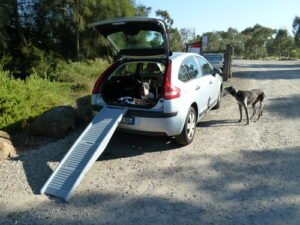
Whether a dog is managed medically or surgically, ongoing lifestyle adjustments help protect the spine going forward: using ramps instead of stairs, avoiding jumping on and off furniture, using a harness rather than a neck collar to avoid pressure on the spine during walks, and maintaining a healthy weight to reduce overall strain on the back. For dogs with residual weakness after treatment, physical rehabilitation, including underwater treadmill therapy in some cases, can meaningfully support continued recovery and mobility over the following months.
Reducing the Risk of a First Episode
For breeds known to be predisposed to IVDD, and really for any senior dog, a few consistent habits reduce strain on the spine before any problem develops. Maintaining a lean body weight removes excess load the spine has to support with every movement, and avoiding repeated jumping on and off furniture, using a ramp or steps instead, limits the kind of sudden spinal impact that can trigger a disc injury. A harness rather than a collar for daily walks avoids putting pressure directly on the neck and upper spine with every leash correction or pull, a small change that adds up over years of walks.
What Recovery Timelines Typically Look Like
For medically managed mild cases, meaningful improvement is often seen within the first one to two weeks of strict rest, though full recovery and safe return to normal activity generally takes several weeks longer than symptoms actually resolving, since the disc itself needs time to stabilize even after pain has eased. For dogs who undergo surgery, recovery timelines vary more based on how severe the neurological deficits were beforehand, ranging from a few weeks for dogs who retained some mobility through surgery to several months of rehabilitation for dogs who had lost the ability to walk. Your vet or a rehabilitation specialist can give a timeline specific to your dog’s grade and response to treatment, which varies considerably case to case.
Sources: PetMD — Intervertebral Disk Disease (IVDD) in Dogs, VCA Animal Hospitals — Hip Dysplasia in Dogs.
Photo: "Dachshund Dog Breed" by shamaasa, licensed under CC BY 2.0. Source.