Table of Contents
How PawSeniors Researches This
PawSeniors articles are written and edited in-house, then checked against primary veterinary sources before publishing.
- Every medical claim is sourced to the American Kennel Club, PetMD, VCA Animal Hospitals, or another named veterinary source, linked at the end of the article.
- Every claim is tied to a named, checkable veterinary source linked at the end of the article — nothing is published without a reference you can verify yourself.
- Articles are updated when veterinary guidance changes.
Weight tends to creep up quietly in middle-aged and senior dogs, and by the time it’s obvious, it’s already working against a dog’s joints, organs, and comfort. According to the American Kennel Club, the greatest prevalence of canine obesity occurs in dogs between 5 and 12 years old — not in puppies, and not typically in the oldest seniors either.
Why It’s Harder to Manage in Senior Dogs
As dogs age, metabolism slows and they naturally burn fewer calories at rest, which raises obesity risk even if food intake and activity stay exactly the same as before. Muscle mass also declines with age, a process called sarcopenia, and since muscle burns more calories at rest than fat does, that loss compounds the slowdown further — a dog can gain fat while actually losing lean weight, which is part of why the scale alone doesn’t always tell the full story. At the same time, it becomes genuinely harder for an older dog to lose weight once it’s gained — which is part of why prevention during the younger-adult years matters more than most owners realize.
Why the Extra Weight Matters More Now
Obesity is linked to a long list of conditions that are already more common in senior dogs: osteoarthritis, high blood pressure, skin infections, respiratory disorders, kidney dysfunction, diabetes, and heart disease. For a dog already managing age-related joint pain, excess weight isn’t just a general health concern — it’s actively adding load to the exact joints causing discomfort.
Checking Body Condition at Home
A body condition check between vet visits catches drift before it becomes a real problem:
- Rib check. You should be able to feel individual ribs with light pressure, without heavy pressing and without seeing them.
- Waist check. Looking down from above, a dog should have a visible waist behind the ribs, not a straight or barrel-shaped torso.
- Belly tuck. From the side, the belly should tuck up behind the ribcage rather than hanging level with the chest.
If any of these checks feel off, that’s worth mentioning at the next vet visit rather than waiting for the annual exam.
What an Effective Plan Looks Like
- Start with a vet-calculated calorie target. The right number depends on age, breed, activity level, and any existing conditions — not a generic feeding-guide amount on a bag.
- Choose the right diet composition. Weight-management diets typically combine higher fiber with lower caloric density and increased nutrient density, so a dog feels satisfied on fewer calories without missing nutrients.
- Adjust exercise, don’t eliminate it. A senior-specific exercise plan — shorter, more frequent, lower-impact — still matters for weight control, just scaled to what the dog’s joints can handle.
- Weigh in regularly. Monthly or every-other-month weigh-ins, along with a body condition score from your vet, catch small trends before they become a real problem.
Common Mistakes That Stall Progress
Most weight-loss plans that stall aren’t failing because the diet is wrong — they’re failing because of calories that never get counted. Treats, table scraps, and pill-pocket fillers add up faster than they seem to, and a household where more than one person feeds the dog often means nobody has an accurate picture of the day’s total intake. Measuring food by weight rather than by eye, and treating treats as part of the calorie budget rather than extra, closes most of that gap without changing the diet itself.
The Takeaway
Weight management in a senior dog is less about a crash diet and more about small, sustained changes tracked over months — partly because rapid weight loss isn’t safe for older dogs, and partly because the underlying metabolic slowdown means results take longer than they did at age three. Consistency, not intensity, is what moves the number.
Sources: American Kennel Club — Preventing Obesity in Senior Dogs, VCA Animal Hospitals — Overweight, Obesity, and Pain in Dogs.
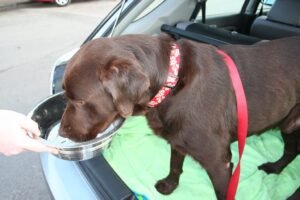
Photo: “Photo Hog” by The Pug Father, licensed under CC BY 2.0.