Table of Contents
How PawSeniors Researches This
PawSeniors articles are written and edited in-house, then checked against primary veterinary sources before publishing.
- Every medical claim is sourced to the American Kennel Club, PetMD, VCA Animal Hospitals, or another named veterinary source, linked at the end of the article.
- Every claim is tied to a named, checkable veterinary source linked at the end of the article — nothing is published without a reference you can verify yourself.
- Articles are updated when veterinary guidance changes.
Hip dysplasia is one of those conditions that starts long before it’s noticed. According to the American Kennel Club, the condition typically begins in puppyhood, but most dogs don’t develop visible clinical signs until years of gradual bone degeneration catch up with them — often well into their senior years.
What It Is
Hip dysplasia is a malformation of the hip joint where the ball and socket don’t fit or develop properly, causing the joint to wear unevenly over time. Left unmanaged, that abnormal wear leads to secondary osteoarthritis — which is often what actually causes the pain owners notice in a senior dog.
Which Dogs Are Most Affected
Hip dysplasia has a strong genetic component and shows up disproportionately in large and giant breeds — German Shepherds, Labrador Retrievers, Golden Retrievers, and Saint Bernards among them — though it can occur in dogs of any size. Rapid growth during puppyhood, excess weight, and certain exercise patterns early in life can all influence how much a genetic predisposition ends up mattering later, which is part of why breed alone doesn’t guarantee or rule out the condition.
Signs in Senior Dogs
- Lameness in one or both hind legs
- Reluctance to climb stairs or jump
- Reduced activity and less interest in play
- A “bunny hop” gait, where both hind legs move together, especially noticeable at a run
- Reluctance to go on walks that used to be routine
Symptoms can range from barely noticeable to severe, and severity doesn’t always track cleanly with age — a dog can have significant hip dysplasia on X-ray with relatively mild outward signs, or the reverse.
Diagnosis: What a Vet Actually Checks
A physical exam typically includes checking for the Ortolani sign, a manual test where the vet feels for looseness in the hip joint by gently manipulating the leg. X-rays confirm the diagnosis and let a vet grade the severity of joint malformation and any secondary arthritic changes, which matters for choosing a treatment approach — mild dysplasia with early arthritis is managed differently than a joint with significant existing degeneration.
How It’s Managed in Senior Dogs
Surgical correction is more commonly discussed for younger dogs; by the time hip dysplasia is diagnosed in a senior, the standard approach is usually conservative medical management aimed at controlling pain and slowing further joint damage:
- Weight reduction. Every extra pound adds load to an already compromised joint, making this one of the highest-leverage changes available.
- Pain management. Prescription NSAIDs (like those built around drugs such as Galliprant) are commonly used to reduce inflammation and pain from the secondary osteoarthritis.
- Joint supplements. Glucosamine and chondroitin are frequently recommended alongside medical treatment, though they support rather than replace pain management.
- Physical therapy. Controlled, low-impact movement helps maintain muscle mass around the joint without adding harmful stress.
- Advanced options. Stem cell therapy and platelet-rich plasma therapy are increasingly used as additional tools alongside standard management.
The Bottom Line
A senior dog newly diagnosed with hip dysplasia isn’t necessarily facing surgery — for many older dogs, a combination of weight control, medication, and joint support keeps them comfortable and mobile for years. The right combination depends on severity and overall health, which is why a proper vet workup (not just an assumption based on symptoms) matters before settling on a plan.
Sources: American Kennel Club — Hip Dysplasia in Dogs, VCA Animal Hospitals — Hip Dysplasia in Dogs.
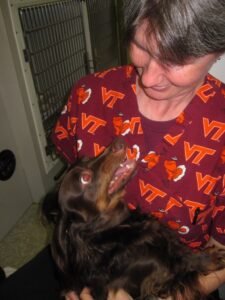
Photo: “nettie at vet” by annieb, licensed under CC BY-SA 2.0.