Table of Contents
How PawSeniors Researches This
PawSeniors articles are written and edited in-house, then checked against primary veterinary sources before publishing.
- Every medical claim is sourced to the American Kennel Club, PetMD, VCA Animal Hospitals, or another named veterinary source, linked at the end of the article.
- Every claim is tied to a named, checkable veterinary source linked at the end of the article — nothing is published without a reference you can verify yourself.
- Articles are updated when veterinary guidance changes.
Most senior cat health advice applies across the board, regardless of breed — arthritis, kidney decline, and dental disease don’t check a pedigree first. But a handful of purebred cats carry specific genetic risks that are worth knowing before symptoms show up, since a few of these conditions can be screened for years in advance.
Maine Coons and Heart Disease
Hypertrophic cardiomyopathy (HCM), a thickening of the heart muscle and the most common form of heart disease in cats, has a known genetic link in Maine Coons through mutations in a gene called MYBPC3. Many cats show no symptoms in HCM’s early stages, which is exactly why an annual echocardiogram, a heart ultrasound, is considered close to standard preventive care for the breed rather than something to wait on until coughing or lethargy appears. When symptoms do show up, they tend to appear later in the disease’s progression: labored breathing, coughing, and reduced activity.
Persians and Polycystic Kidney Disease
Feline polycystic kidney disease (PKD1) is a heritable condition seen commonly in Persians and cats with Persian ancestry, in which cysts develop on the kidneys and gradually impair function, often leading to kidney failure later in life. A DNA test can identify the gene before a cat ever shows symptoms, which matters because by the time kidney values on routine bloodwork start looking abnormal, meaningful function has often already been lost. Persians also tend to face brachycephalic-related breathing and eye issues throughout life, which can compound the discomfort of an already-demanding senior period if kidney disease develops alongside them.
Ragdolls and Siamese: Other Breed-Linked Risks
Ragdolls carry an elevated risk for the same HCM mutation seen in Maine Coons, making the same screening logic apply. Siamese cats are more frequently associated with certain cancers and with amyloidosis, a condition where an abnormal protein builds up in organs including the liver, along with a general tendency toward more dental issues over a lifetime than some other breeds. None of these are certainties for an individual cat, but they’re reasons a Siamese owner might want organ-focused bloodwork and a closer look at dental health prioritized a bit earlier than a generic senior wellness plan would otherwise suggest.
Other Purebred Cats Worth Watching
A handful of other popular breeds carry their own documented risks. Sphynx cats face a higher rate of HCM as well, alongside skin-care needs that become more demanding with age since they lack a coat to help regulate temperature and protect skin. Bengals have a recognized predisposition to a different heart condition, and to a kidney condition called PRA-related retinal issues in some lines, worth flagging to a vet who may not routinely see the breed. Devon Rex and Cornish Rex cats are more prone to certain neuromuscular and skin conditions that, while not primarily senior-onset, are worth an established vet relationship so subtle age-related changes are read against a baseline rather than assumed to be new.
What Genetic Testing Can (and Can’t) Tell You
DNA tests exist for the specific mutations behind HCM in Maine Coons and Ragdolls and PKD in Persians, and a positive result is useful information for planning ahead with your vet. A negative result is reassuring but not a guarantee, since not every case of these diseases is caused by the specific mutation currently testable, and cats can still develop the disease through other genetic or unknown pathways. Testing narrows the odds; it doesn’t eliminate the need for regular screening in a breed with a known predisposition.
Mixed-Breed and Domestic Shorthair Cats
The large majority of pet cats are mixed-breed or domestic shorthair and longhair cats without a documented pedigree, and these cats generally carry lower risk for the specific single-gene conditions tied to purebred lines. That doesn’t mean lower risk overall, though — mixed-breed cats develop the common age-related conditions covered throughout senior cat care (arthritis, kidney decline, hyperthyroidism, dental disease) at rates that track with age rather than breed, and none of that risk disappears just because a cat’s ancestry is unknown.
What This Means for Your Senior Cat’s Checkups
If you have a purebred cat with a known breed risk, it’s worth explicitly asking your vet whether that risk should change your screening schedule — an earlier or more frequent echocardiogram for a Maine Coon or Ragdoll, or kidney-focused bloodwork and imaging brought up sooner for a Persian. For everyone else, the standard senior wellness recommendations — twice-yearly exams, routine bloodwork — remain the most useful tool regardless of what’s in a cat’s ancestry.
The Bottom Line
Breed-linked genetic risk is real and worth knowing for a handful of popular purebred cats, but it’s a reason to ask targeted questions at the vet, not a verdict on how a cat’s senior years will go. Most of what actually determines a senior cat’s health — weight, dental care, regular checkups, and catching changes early — applies the same way whether a cat came with papers or showed up as a stray.
Sources: PetMD — Maine Coon Cat Breed Health and Care, VCA Animal Hospitals — Polycystic Kidney Disease in Cats.
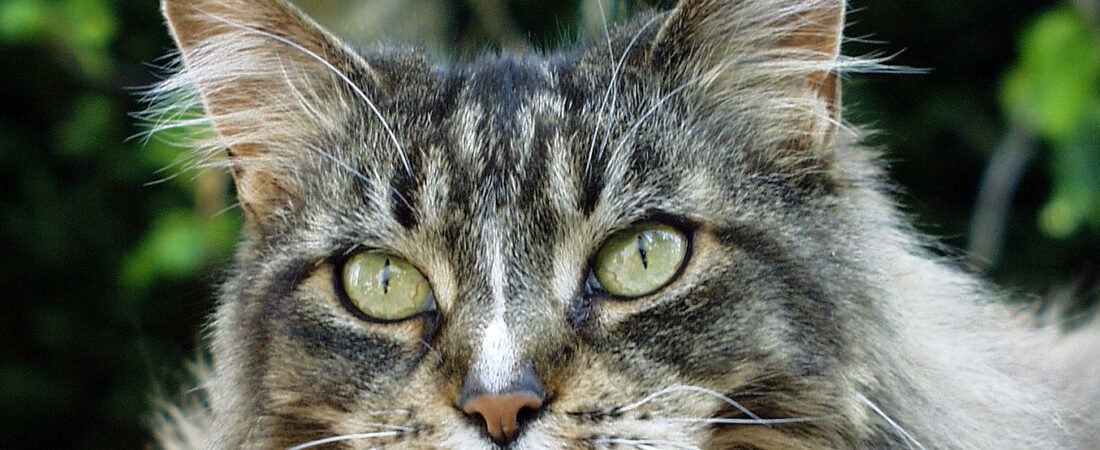
Photo: “Old Maine Coon” by Mueller-rech.muenchen, licensed under CC BY-SA 3.0.