Table of Contents
How PawSeniors Researches This
PawSeniors articles are written and edited in-house, then checked against primary veterinary sources before publishing.
- Every medical claim is sourced to the American Kennel Club, PetMD, VCA Animal Hospitals, or another named veterinary source, linked at the end of the article.
- Every claim is tied to a named, checkable veterinary source linked at the end of the article — nothing is published without a reference you can verify yourself.
- Articles are updated when veterinary guidance changes.
Not every senior pet’s journey ends with a sudden decision. For pets diagnosed with a terminal or progressive illness, hospice, or palliative, care offers a structured way to focus on comfort and quality time rather than pursuing further treatment aimed at a cure that may no longer be realistic.
What Pet Hospice Actually Means
Pet hospice care closely mirrors the human hospice model: it’s not a place, but a philosophy and approach centered on the idea that a pet’s final weeks or months can be comfortable and dignified, guided by day-to-day quality of life rather than a fixed timeline. It’s built around an active partnership between a family and their veterinary team, with the pet’s comfort placed at the center of every decision, rather than a switch flipped from treatment to nothing.
What Hospice Care Actually Involves
In practice, hospice care can include pain management, nutritional support tailored to what a pet can still comfortably eat, fluid therapy, and sometimes physical therapy or other supportive treatments, essentially anything that improves day-to-day comfort without necessarily aiming to treat the underlying terminal condition. This is different from giving up on care altogether; it’s a shift in the goal of care, from cure-focused to comfort-focused, and it requires just as much active attention and vet involvement as any other stage of treatment, arguably more.
Tracking Quality of Life Day by Day
A core piece of hospice care is measuring a pet’s quality of life regularly rather than relying on a single overall impression, since day-to-day comfort can genuinely fluctuate in a pet with a terminal or progressive condition. Our guide to the HHHHHMM Quality of Life Scale covers this exact framework in depth, scoring hurt, hunger, hydration, hygiene, happiness, mobility, and the overall balance of good days to bad, which hospice-focused vets frequently use as a structured way to guide ongoing decisions rather than relying on instinct alone.
Who Hospice Care Is For
Hospice care is generally considered once a cure is no longer a realistic goal, whether because a condition is terminal, has progressed beyond effective treatment, or because further intervention would meaningfully reduce a pet’s remaining quality of life more than it would extend it. It’s a genuinely personal decision, shaped by a pet’s specific diagnosis, their individual response to treatment so far, and a family’s own capacity and values, not a fixed protocol that applies the same way to every situation.
The Role of Your Veterinary Team
Hospice care requires an active, ongoing commitment from both the family and the veterinary team, not a one-time conversation. Some veterinary practices now offer dedicated hospice or palliative care services, including at-home visits, specifically to support families managing this stage without needing to transport an increasingly fragile pet back and forth to a clinic. Bringing this up directly with your vet, ideally before a crisis moment forces the conversation, gives everyone more room to plan thoughtfully rather than reactively.
Signs It Might Be Time to Start the Conversation
There’s rarely one obvious moment that signals a shift toward hospice-style thinking, but a few patterns are worth noticing. A diagnosis your vet describes as terminal or as having no further curative options is the clearest signal. Short of that, a pet who’s stopped responding well to ongoing treatment, whose bad days are starting to outnumber the good ones on a quality-of-life scale, or whose treatment itself has become more burdensome than beneficial are all reasonable prompts to bring up hospice, or at least palliative options, directly with your vet.
Starting this conversation early, before a crisis forces a rushed decision, gives you more room to actually think through what matters most for your specific pet and family, rather than making high-stakes choices under pressure. Many owners find that simply asking their vet what hospice-style support could look like for their pet, well before it feels urgently necessary, makes the eventual transition feel less like an abrupt ending and more like a natural continuation of the care already being given.
Grief and Anticipatory Loss
Choosing hospice care often means living with a form of grief before a pet has actually passed, sometimes called anticipatory grief, and it’s a genuinely difficult emotional experience that deserves acknowledgment rather than being pushed aside in favor of practical caregiving tasks. Many veterinary hospitals now connect families with pet loss support resources, counselors or support groups specifically for this stage, recognizing that the caregiver’s wellbeing is part of what makes sustained, attentive hospice care possible in the first place. If a surviving pet is also part of the household, our guide to helping a surviving pet grieve after losing a companion covers what that adjustment tends to look like once the time comes.
Sources: VCA Animal Hospitals — Palliative Care and Hospice for Pets: Overview, AKC Canine Health Foundation — Hospice Care / End of Life Care for Dogs.
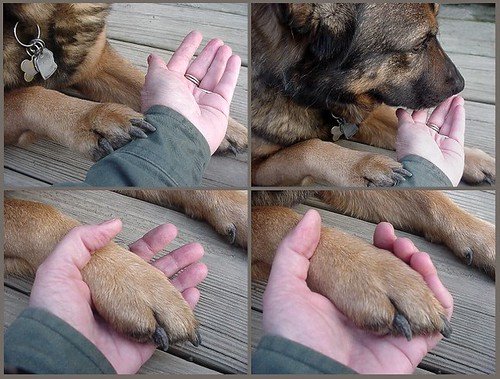
Photo: "A dog is the only thing on earth that loves you more than you love yourself" by EraPhernalia Vintage, licensed under CC BY-SA 2.0. Source.