Table of Contents
How PawSeniors Researches This
PawSeniors articles are written and edited in-house, then checked against primary veterinary sources before publishing.
- Every medical claim is sourced to the American Kennel Club, PetMD, VCA Animal Hospitals, or another named veterinary source, linked at the end of the article.
- Every claim is tied to a named, checkable veterinary source linked at the end of the article — nothing is published without a reference you can verify yourself.
- Articles are updated when veterinary guidance changes.
Anemia is one of those findings that often turns up on a senior cat’s bloodwork before anyone at home has noticed a thing. That’s not carelessness. Cats whose red blood cell count drops slowly adapt remarkably well, and the outward signs, a little more sleeping, a little less interest in jumping up to the windowsill, are easy to file under “just getting older.” Understanding what anemia actually is, and why it’s so common in aging cats, makes it much easier to know what a low number on a blood panel means and what comes next.
What Anemia Actually Is
Anemia isn’t a disease on its own. It’s a low level of red blood cells or hemoglobin, the oxygen-carrying part of the blood, and it’s almost always the result of something else going on. Vets usually measure it with a packed cell volume (PCV) or hematocrit. According to the Cornell Feline Health Center, a normal PCV for a cat sits roughly between 25% and 45%, and anything below 25% is considered anemic.
The number tells you that a problem exists. It doesn’t tell you why, and the “why” is what determines treatment.
Two Very Different Kinds of Anemia
Vets sort anemia into two broad groups based on whether the bone marrow is responding by making new red cells:
- Regenerative anemia means red blood cells are being lost or destroyed, but the marrow is working hard to replace them. Causes include blood loss (from fleas, intestinal bleeding, or a bleeding tumor), infections such as Mycoplasma, toxins like acetaminophen or onion, and immune-mediated destruction of red cells.
- Non-regenerative anemia means the marrow isn’t producing enough new cells in the first place. This is the type that becomes far more common with age, because its causes are mostly chronic diseases: kidney disease, chronic inflammation, some cancers including lymphoma, and bone marrow disorders.
Your vet can tell the two apart by looking for reticulocytes, young red blood cells, on a blood smear or in an automated count. Plenty of reticulocytes points to a regenerative cause; very few points the search toward chronic disease.
Why Kidney Disease Is the Big One in Senior Cats
Healthy kidneys produce a hormone called erythropoietin, which tells the bone marrow to make red blood cells. As kidney tissue is lost to chronic kidney disease (CKD), erythropoietin output falls and red cell production slows down with it. Cornell notes that 30% to 65% of cats with advancing CKD develop some degree of anemia, which makes it one of the most predictable complications of the disease.
This matters for two reasons. First, anemia in a senior cat is a good reason to check kidney values if they haven’t been checked recently. Second, in a cat already diagnosed with CKD, worsening anemia is a marker of progression and a real contributor to how tired and unwell the cat feels, separate from the kidney disease itself.
Signs to Watch For at Home
When anemia develops slowly, signs can be minimal until the count is quite low. Things worth noticing include:
- Sleeping more and playing less, or reluctance to jump
- Pale pink or white gums instead of a healthy salmon pink (yellow-tinged gums can point to red cell destruction)
- Faster breathing or a faster heart rate at rest
- Reduced appetite or weight loss
- Eating litter or licking concrete, an odd behavior called pica that’s sometimes linked to anemia
- Black, tarry stools, which can indicate bleeding in the upper digestive tract
A cat with pale gums who is breathing hard, collapses, or seems suddenly weak needs to be seen the same day. Sudden, severe anemia doesn’t give the body time to adapt the way slow anemia does.
How It’s Diagnosed
The workup usually starts with a complete blood count, a reticulocyte count, and a chemistry panel to look at kidney and liver function. Depending on what those show, your vet might add a urinalysis, testing for FeLV and FIV, a fecal check for parasites, abdominal imaging to look for masses or bleeding, and occasionally a bone marrow sample when the cause stays unclear.
Treatment Depends on the Cause
Because anemia is a symptom, treatment targets whatever is driving it. In practice that might look like:
- Kidney-related anemia: injections of darbepoetin, a synthetic relative of erythropoietin that prompts the marrow to make red cells again, often alongside iron supplementation. This is usually considered once the PCV drops into a range that affects quality of life.
- Parasites and blood loss: flea control, deworming, and treating the source of any bleeding.
- Infection: antibiotics for organisms like Mycoplasma.
- Immune-mediated disease: immunosuppressive medication such as steroids.
- Severe or sudden anemia: a blood transfusion to stabilize the cat while the underlying cause is addressed. Cats have blood types, so donor blood must be typed and matched.
Follow-up blood counts are the only reliable way to know whether treatment is working, so expect repeat PCV checks, especially in the first weeks.
The Bottom Line
A senior cat with anemia isn’t just “slowing down.” The low red cell count is a signal pointing back to something else, most often kidney disease in older cats, and identifying that cause is what makes treatment possible. Routine senior bloodwork every six to twelve months is the best way to catch anemia while it’s still mild and the cat still feels reasonably well.
Sources: Cornell Feline Health Center — Feline Anemia, PetMD — Signs, Causes, and Treatment of Anemia in Cats.
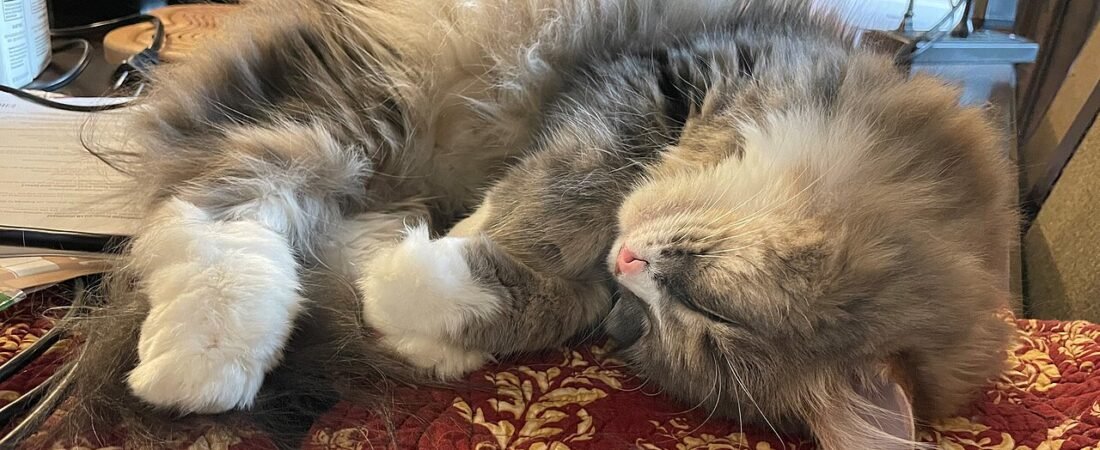
Photo: “Sleeping Siberian Cat” by Puedes, licensed under CC BY-SA 4.0.