Table of Contents
How PawSeniors Researches This
PawSeniors articles are written and edited in-house, then checked against primary veterinary sources before publishing.
- Every medical claim is sourced to the American Kennel Club, PetMD, VCA Animal Hospitals, or another named veterinary source, linked at the end of the article.
- Every claim is tied to a named, checkable veterinary source linked at the end of the article — nothing is published without a reference you can verify yourself.
- Articles are updated when veterinary guidance changes.
Water is the most important nutrient for a dog at any age, but senior dogs face a specific risk that younger dogs don’t: they’re more prone to dehydration, according to PetMD, partly because older dogs can simply forget to drink and partly because their sense of thirst weakens with age. That’s a meaningful gap, since water is involved in nearly every important body function — lubricating joints, cushioning organs, aiding digestion, and regulating temperature.
Why This Matters More As Dogs Age
Chronic mild dehydration puts extra strain on organs that are often already working harder in a senior dog, particularly the kidneys. It also compounds joint discomfort, since adequate hydration supports the fluid that lubricates joints — exactly the systems already under stress from arthritis or hip dysplasia.
How Much Water Is Actually Enough
As a rough guideline, dogs generally need about one ounce of water per pound of body weight per day, though the real number shifts with diet, activity level, and climate — a dog eating mostly wet food needs less from the bowl than one eating dry kibble, and hot weather or exercise raises the target. Rather than measuring precisely, the more useful habit is noticing the trend: a bowl that’s barely touched over a full day is worth paying attention to, even before it becomes an obvious problem.
Ways to Increase Water Intake
- Spread water bowls around the house. A bowl on every floor removes the need to travel far for water, which matters for dogs with mobility issues.
- Raise the bowl. Elevating food and water bowls reduces strain on the neck and joints while drinking, encouraging more frequent sips.
- Add wet food. Canned or wet senior food carries significant water content, which helps dogs who aren’t drinking as much as they used to, including those with dental discomfort that makes chewing kibble unappealing.
- Try a pet fountain. Many dogs are drawn to moving water and will drink more from a fountain than a still bowl.
- Add ice cubes. A simple trick that some dogs find more appealing than plain water at room temperature.
When More Thirst Is the Warning Sign, Not the Goal
Everything above is about encouraging adequate intake in a dog who isn’t drinking quite enough. The opposite pattern deserves just as much attention: a dog suddenly drinking far more than usual, refilling the bowl repeatedly, or asking to go outside to urinate more often isn’t showing healthy hydration habits — that’s a classic early sign of diabetes, kidney disease, or liver disease, and it’s worth a vet visit rather than simply topping off the water bowl and moving on.
What to Watch For
Track your dog’s water intake, appetite, and bathroom habits as a set — changes in any of them can be an early sign of illness. In particular, increased water consumption or urination is associated with diabetes, kidney disease, and liver disease, which makes a jump in the opposite direction (drinking noticeably less) just as worth mentioning to your vet as drinking more.
The Takeaway
Hydration isn’t just a summer concern or something to worry about after a long walk. For senior dogs specifically, it’s a daily variable worth actively managing rather than assuming their instincts will handle it the way they did at a younger age — and it’s worth watching in both directions, not just for too little.
Sources: PetMD — How Much Water Should a Dog Drink?, VCA Animal Hospitals — Helping Our Senior Dogs Age Gracefully.
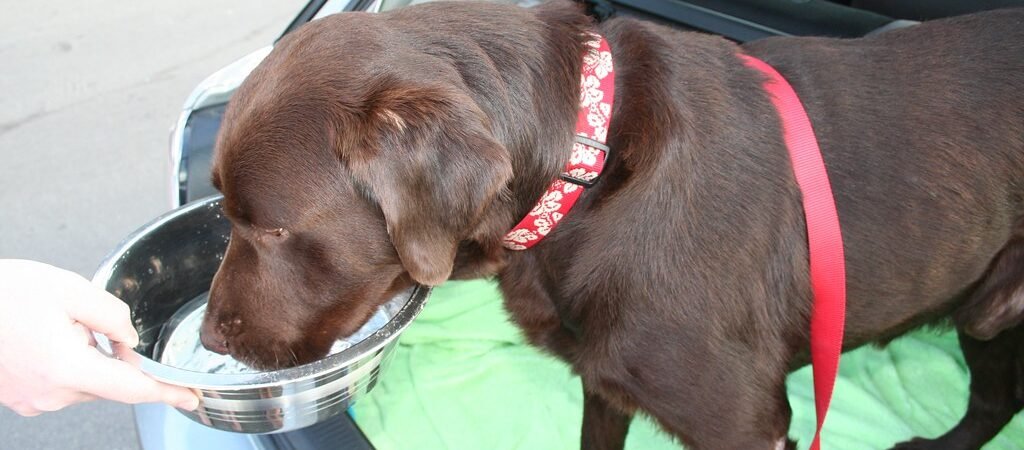
Photo: “Thirsty Henry” by ewen and donabel, licensed under CC BY 2.0.