Table of Contents
How PawSeniors Researches This
PawSeniors articles are written and edited in-house, then checked against primary veterinary sources before publishing.
- Every medical claim is sourced to the American Kennel Club, PetMD, VCA Animal Hospitals, or another named veterinary source, linked at the end of the article.
- Every claim is tied to a named, checkable veterinary source linked at the end of the article — nothing is published without a reference you can verify yourself.
- Articles are updated when veterinary guidance changes.
Cats don’t lose their love of height as they age, but arthritis and reduced muscle mass often take the jump out of their legs before it takes the desire for the windowsill or the bed out of their head. Pet stairs and ramps are one of the simplest ways to give that access back, but the product landscape is dominated by dog gear, and not every design actually suits how a cat moves.
Why This Matters More for Cats Than It Seems
Cats are used to reaching favorite perches, beds, and windowsills by jumping, and a senior cat that quietly stops making those jumps isn’t choosing to give up the spot, they’re avoiding pain. That avoidance can snowball: less climbing means less muscle use, which means more difficulty climbing, which means even more avoidance. Making a favorite height reachable again, without a jump, helps break that cycle and keeps a cat engaged with the spaces they’ve always used rather than gradually retreating to the floor.
What to Look For
Not every ramp or step product marketed for pets is built with a cat’s proportions and habits in mind. A few features make a real difference:
- A wide enough surface for a cat to walk normally rather than balance carefully, since a narrow ramp can itself become something an arthritic cat avoids.
- Grippy, non-slip material, ideally carpeted or textured rather than smooth wood or plastic, since cats with joint pain are especially cautious about surfaces that feel unstable.
- A shallow incline, particularly for ramps, since a steep angle asks for the same kind of joint strain the product is meant to eliminate.
- Stable footing that doesn’t wobble or shift underfoot, since a single bad experience is often enough for a cautious senior cat to refuse the product afterward.
- A height and shape that matches the specific furniture or window being accessed, rather than a generic one-size product that leaves an awkward final gap.
Carpeted Wooden Steps
Multi-step designs, usually two to four stairs, work well for moderate heights like a bed, sofa, or low windowsill. The stepped format tends to suit cats better than a continuous ramp because it mimics the kind of surface-to-surface movement cats already default to, short controlled steps rather than a long incline. Look for steps with a reasonably deep tread so a cat’s full paw lands comfortably, and a carpeted surface that provides traction without catching claws.
Foam Ramps
For taller or steeper access points, a foam or foam-core ramp with a fabric cover offers a gentler, more forgiving surface underfoot than wood or plastic. These work especially well for cats who need to reach a bed or couch from further away, since a longer gradual incline is often more comfortable than several steep steps. The tradeoff is footprint: a proper low-incline ramp takes up meaningfully more floor space than a compact set of stairs, which is worth measuring for before choosing this option in a smaller room.
Window Perch Ramps
Window access is a common blind spot in pet mobility products, since most stairs and ramps are designed with beds and sofas in mind rather than a windowsill. A small dedicated window ramp or platform, sized specifically for that purpose, can restore a favorite sunbathing or bird-watching spot that a senior cat may have quietly given up. This is worth prioritizing specifically because windowsills tend to be exactly the kind of high-value, high-difficulty spot that gets abandoned first as jumping becomes harder.
Getting a Reluctant Cat to Use It
Even a well-chosen ramp or set of stairs sometimes needs an introduction period. Placing treats or a favorite toy along the steps for the first few days encourages a cat to test the surface at their own pace rather than being lifted onto it, which tends to build more lasting confidence. Keeping the ramp in place consistently, rather than moving it around while a cat adjusts, also helps, since senior cats generally take longer to trust a change in their environment than younger ones do.
A Note on Placement
The product only helps if it closes the actual gap a cat is struggling with. Measuring the height and angle from floor to target surface before choosing a specific stairs or ramp option avoids the common mistake of buying a product that’s too short, too steep, or positioned at an angle that still requires a small jump at the top, which defeats the purpose entirely for a cat with joint pain.
The Bottom Line
Pet stairs and ramps are a low-cost, low-effort way to preserve a part of a senior cat’s world that’s easy to overlook: not just mobility, but access to the favorite windowsills, beds, and perches that make a home feel familiar. Choosing a design that actually suits feline movement, rather than a generic pet product, makes the difference between something a cat uses daily and something that sits unused in a corner.
Sources: PetMD — How to Create an Accessible, Safe Home for Senior Cats, VCA Animal Hospitals — Helping Your Cat With Osteoarthritis.
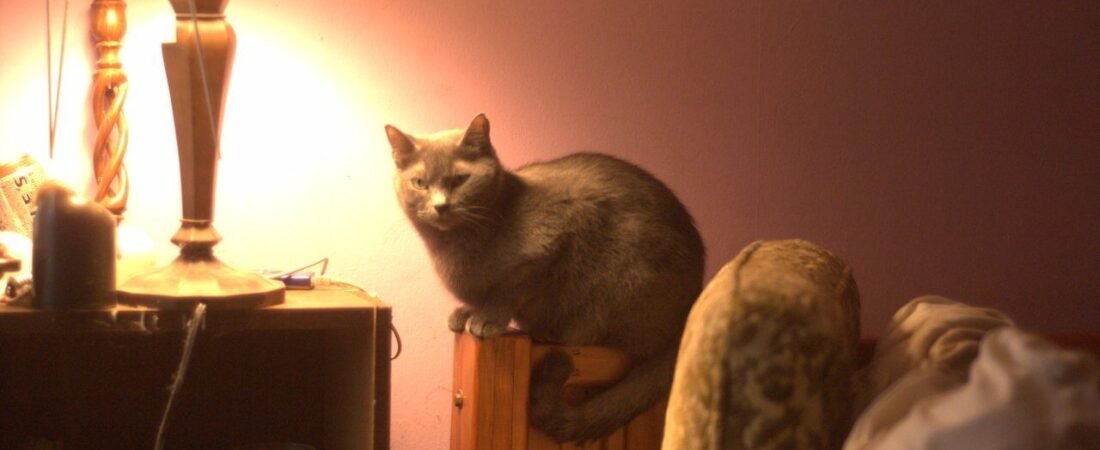
Photo: “Blue cat on bed in Oklahoma 02” by Open Source Dude, licensed under CC BY-SA 2.0.