Table of Contents
How PawSeniors Researches This
PawSeniors articles are written and edited in-house, then checked against primary veterinary sources before publishing.
- Every medical claim is sourced to the American Kennel Club, PetMD, VCA Animal Hospitals, or another named veterinary source, linked at the end of the article.
- Every claim is tied to a named, checkable veterinary source linked at the end of the article — nothing is published without a reference you can verify yourself.
- Articles are updated when veterinary guidance changes.
A senior dog or cat with two or three diagnosed conditions can easily end up on four, five, or more medications and supplements, each with its own dose, timing, and food requirements. Managing that without a system is how doses get missed, doubled, or given at the wrong time — not from carelessness, but because the mental math gets genuinely hard once you’re juggling more than two or three items.
Why Senior Pets End Up on Several Medications at Once
Chronic conditions common in older pets rarely travel alone: a dog with arthritis and early kidney disease, or a cat with hyperthyroidism and hypertension, is a completely ordinary combination once you’re past the age of ten or so. Each condition typically comes with its own medication, and some, like arthritis pain control, often involve more than one drug working together. By the time a pet has two or three diagnoses, the medication list can look intimidating even though every item on it is individually simple.
Building a Medication Chart That Actually Works
A simple written chart beats trying to remember everything, and it doesn’t need to be complicated: columns for medication name, dose, time of day, and whether it needs food cover the essentials. Color-coding by time of day (morning, evening) or by condition helps at a glance, especially useful if more than one person in the household handles doses. Keep the chart somewhere it’s actually seen — taped near the food storage area or the spot where pills live — rather than filed away where it’s easy to forget exists. Many owners find printing a fresh copy weekly and checking off each dose as it’s given removes the “did I already give this?” uncertainty that causes accidental double-dosing.
Organizing the Physical Medications
Grouping medications by category in labeled, resealable bags or a divided container, arthritis, heart, kidney, antibiotics, flea and tick, makes it far faster to grab the right item under time pressure, particularly during a hectic morning or when someone other than the primary caregiver is handling a dose. A weekly pill organizer, the kind sold for human use, works just as well for pets and adds a visual double-check: if Wednesday morning’s compartment still has pills in it by evening, you know a dose was missed.
Making Pills Easier to Give
Hiding a pill in a small amount of canned food, a soft treat, peanut butter, a bit of lunch meat, cheese, or cooked sweet potato is the most common and usually most reliable method for both dogs and cats, though it’s worth confirming with your vet that a specific medication is safe to give with food, since some absorb better or worse depending on stomach contents. If a pet becomes wise to the hidden-pill trick and starts eating around it, a pill gun (a soft-tipped syringe-style tool) can place the pill further back in the mouth with less struggle than doing it by hand. For pets on multiple pills at once, giving them one at a time with a small food reward between each, rather than trying to bundle several into one bite, tends to go more smoothly and is easier to keep track of.
Timing and Food Interactions
Not all medications play well together or with food in the same way: some need to be given on an empty stomach for proper absorption, others need food to prevent stomach upset, and giving two specific medications too close together can occasionally reduce how well one of them works. This is exactly the kind of detail worth confirming explicitly with your vet or pharmacist when a new medication is added to an existing list, rather than assuming the same routine that worked for one pill applies to all of them.
What to Do When You Miss a Dose
A single missed dose of most chronic medications isn’t an emergency, but the right response, give it as soon as you remember, skip it and wait for the next scheduled dose, or something in between, genuinely varies by medication. This is worth asking your vet proactively, before it happens, so you’re not searching for an answer while already stressed about a missed dose. Writing the answer directly on your medication chart for each drug saves that scramble later.
When to Loop In Your Vet or Pharmacist
Any time a new medication is added to an already-full list, it’s worth a specific conversation about interactions, timing conflicts, and whether anything on the existing list needs to shift as a result, rather than assuming the new addition simply slots in wherever there’s a gap. Pharmacists who fill veterinary prescriptions can also flag interaction concerns a general practice vet visit might not have time to cover in full, and are a genuinely underused resource for pet owners managing a complex regimen.
The Bottom Line
A senior pet on several medications isn’t a sign anything has gone wrong — it’s a common part of managing more than one age-related condition at once. A written chart, physically organized medications, and a clear plan for missed doses turn an overwhelming list into a routine that’s genuinely manageable, and asking your vet the specific timing and interaction questions upfront prevents most of the confusion before it starts.
Sources: VCA Animal Hospitals — Giving Pills to Dogs, VCA Animal Hospitals — Safe Handling of Medications at Home.
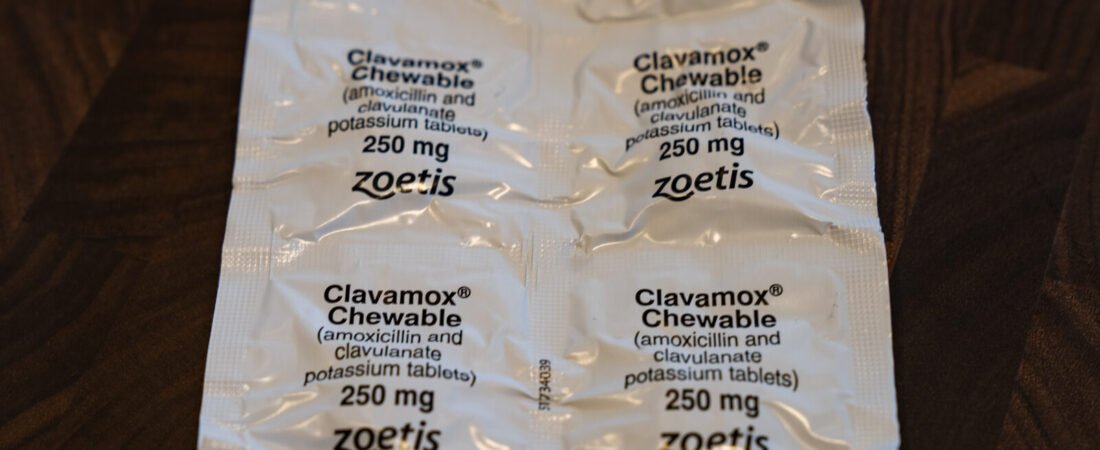
Photo: “Clavamox Chewable Dog Antibiotics” by Tony Webster, licensed under CC BY-SA 2.0.