Table of Contents
How PawSeniors Researches This
PawSeniors articles are written and edited in-house, then checked against primary veterinary sources before publishing.
- Every medical claim is sourced to the American Kennel Club, PetMD, VCA Animal Hospitals, or another named veterinary source, linked at the end of the article.
- Every claim is tied to a named, checkable veterinary source linked at the end of the article — nothing is published without a reference you can verify yourself.
- Articles are updated when veterinary guidance changes.
A senior cat who suddenly starts coughing, wheezing, or breathing with an open mouth isn’t just being dramatic; these can be the signs of feline asthma, a chronic respiratory condition that often first appears or worsens in middle-aged and senior cats.
Recognizing an Asthma Episode
Common signs include coughing, wheezing, rapid breathing, a crouched posture with the neck extended during an attack, and open-mouthed breathing, which is never normal in a resting cat and always warrants concern. The cough itself is usually dry and harsh, and cats will often gag right after coughing, which some owners mistake for a hairball attempt rather than a respiratory sign.
Why It Often Shows Up or Worsens With Age
While feline asthma can develop at any age, it’s diagnosed more frequently in middle-aged and senior cats, and it’s particularly challenging in this age group because it often coincides with other age-related conditions like chronic kidney disease and arthritis, complicating both diagnosis and medication choices. A vet managing an older cat’s asthma has to weigh treatment options against whatever else that individual cat is already dealing with.
How It’s Diagnosed
Chest X-rays showing a characteristic pattern in the airways, combined with ruling out other causes of coughing like heartworm disease or a respiratory infection, typically confirm the diagnosis. Some cats also undergo bronchoalveolar lavage, where a small amount of fluid is used to sample the airway directly, to rule out infection or parasites definitively.
Managing It Long-Term
While feline asthma can’t be cured, it’s effectively managed with daily anti-inflammatory medication, ideally delivered through a cat-specific inhaler that puts the medication directly into the lungs rather than circulating throughout the body the way an oral steroid does. For cats with more frequent or severe symptoms, a bronchodilator is often added to relax the airway muscles and make breathing easier during flare-ups.
Environmental changes matter too: switching to a dust-free, low-tracking litter, using an air purifier, and avoiding aerosol sprays, scented candles, and smoke around an asthmatic cat can meaningfully reduce how often flare-ups happen.
What Triggers Flare-Ups
Common triggers include dust from cat litter, cigarette smoke, aerosol sprays, scented candles, and seasonal pollen, all of which can irritate already sensitive airways and set off a coughing or wheezing episode. Keeping a simple log of when flare-ups happen can help identify a specific trigger unique to your home that’s worth eliminating first.
Recognizing a True Emergency
Open-mouthed breathing, blue-tinged gums or tongue, and a cat who seems unable to get a full breath are signs of a genuine asthma emergency requiring immediate veterinary care, not a wait-and-see approach at home. Having a rescue inhaler on hand, as prescribed and demonstrated by your vet, can make a real difference in the minutes before you can get to emergency care.
Asthma vs. Heartworm: Why the Distinction Matters
Feline heartworm disease can produce a strikingly similar cough and respiratory pattern to asthma, which is exactly why ruling it out with a specific heartworm test is a standard part of the diagnostic workup rather than an optional extra. Treating a cat for asthma when heartworm is actually the cause delays the treatment that condition actually needs, so this test is worth confirming was done if it isn’t mentioned during a diagnosis conversation.
Weight Management’s Role in Easier Breathing
Excess body weight adds pressure on the chest and lungs, making it harder for an asthmatic cat to breathe comfortably even between flare-ups, so keeping a senior cat at a lean, healthy weight is a genuinely useful supporting step alongside medication.
What to Bring to the Vet Visit
A short video of an actual coughing or breathing episode on your phone is often more useful to a vet than a verbal description, since cats frequently seem completely normal by the time they’re examined in the clinic.
Sources: PetMD — Cat Asthma: What It Is, Symptoms, and Treatment, VCA Animal Hospitals — Treatment Instructions for Asthma and Bronchitis in Cats.
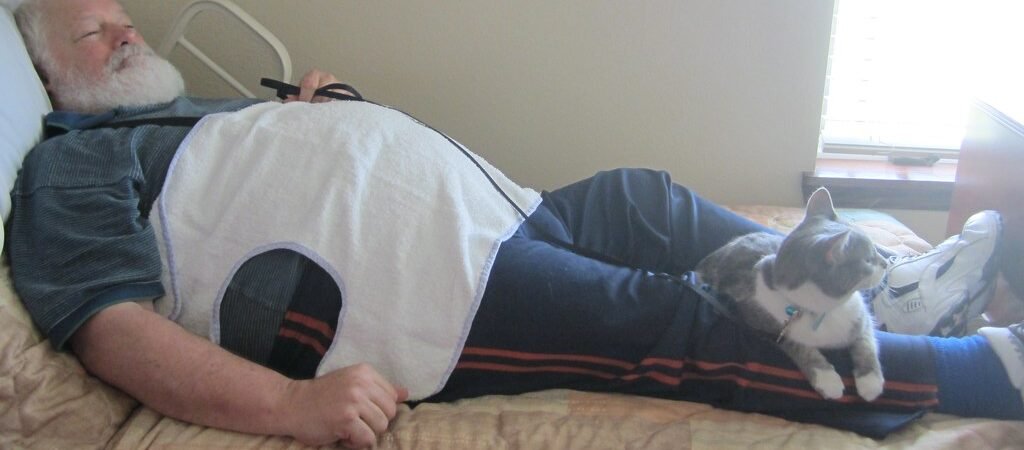
Photo: "John J Resting with Eenie" by Pictures by Ann, licensed under CC BY 2.0. Source.