Table of Contents
How PawSeniors Researches This
PawSeniors articles are written and edited in-house, then checked against primary veterinary sources before publishing.
- Every medical claim is sourced to the American Kennel Club, PetMD, VCA Animal Hospitals, or another named veterinary source, linked at the end of the article.
- Every claim is tied to a named, checkable veterinary source linked at the end of the article — nothing is published without a reference you can verify yourself.
- Articles are updated when veterinary guidance changes.
When a senior cat starts having accidents outside the litter box, it’s tempting to read it as a behavior problem. Often, it isn’t. It’s estimated that more than 90% of cats over age 12 have some degree of arthritis, according to PetMD, and the pain it causes can make the litter box itself the obstacle — not the cat’s willingness to use it.
Why the Litter Box Becomes a Problem
Osteoarthritis pain affects most senior cats, and its effects show up in specific, physical ways: reduced activity, less playing, less drinking — and difficulty with the exact movements a litter box requires. Climbing over a high side, squatting low enough, and turning around in a cramped space are all harder with sore joints, which is why urination or defecation outside the box is one of the most common signs of feline arthritis pain.
The posture a cat needs to hold while eliminating — weight shifted onto the hind legs, spine curved, balance held on three legs for several seconds — puts direct strain on the hips, knees, and lower spine, which are exactly the joints arthritis affects first in cats. A cat that used to squat instantly may start hovering at the edge of the box, shifting its weight, or stepping back out before finishing, all of which raise the odds of missing the box entirely.
Signs the Litter Box Itself Is the Problem
Not every accident outside the box means arthritis, but a few patterns point specifically at the box rather than the litter or the cat’s temperament:
- Accidents right next to the box, not across the room, suggesting the cat tried to use it and couldn’t manage the entry in time.
- Hesitating or pacing at the edge before stepping in, rather than walking in directly the way it used to.
- Standing to urinate instead of squatting, since a full squat asks more of sore hips and knees.
- Avoiding a box that requires climbing stairs, even when it was the cat’s regular box for years.
- Crying out or growling softly while in the box, a sign the position itself hurts.
Litter Box Changes That Actually Help
- Switch to a low-sided box. A box with a high lip is one of the biggest barriers for an arthritic cat. Look for one with a low entry point, even if that means using a shallow storage container instead of a dedicated “cat” product.
- Size up, not down. A larger box gives a stiff cat more room to turn around without twisting a sore joint, which matters more than most owners expect.
- Put a box on every floor. If your cat has to climb stairs to reach the only litter box in the house, that’s a real barrier — not a small inconvenience. A box on each level removes the need to climb at all.
- Clean more often. Senior cats often urinate more frequently due to common conditions like kidney disease, so litter that would have been fine for a day may need attention sooner.
- Add a low ramp or mat at the entrance. Even a low-sided box can be hard to reach if getting to it means stepping off a slick floor or over a raised door threshold first; a ramp or textured mat reduces the number of separate movements a sore cat has to string together in one go.
Litter Type Matters, Too
The box isn’t the only variable — what’s inside it matters for a cat with sore paws. Coarse, sharp-edged clumping litter can be uncomfortable to stand on for a cat with arthritic toes, and heavier pelleted or crystal litters ask for more digging and weight-shifting to bury waste, both of which demand more from joints that are already working harder than they used to. A soft, fine-grained, low-dust litter cuts down the physical effort of digging and standing, and switching gradually — mixing the old and new litter over a week or two — avoids a cat rejecting the box over a sudden change in texture on top of everything else.
Beyond the Litter Box
Litter box access is usually just one part of a broader accessibility pass worth doing for an arthritic senior cat: lower resting spots that don’t require jumping, ramps or steps to favorite perches, and non-slip flooring near the litter box itself so a cat isn’t fighting for traction on top of joint pain. None of these changes require an arthritis diagnosis to be worth making; they reduce physical strain for any aging cat, arthritic or not, and most cats adjust to them within days without any training needed.
Don’t Assume It’s Just “Getting Old”
House-soiling in a previously reliable senior cat is a symptom worth a vet visit, not just a home-adaptation project. It can point to arthritis, but it overlaps with signs of kidney disease, diabetes, and other common senior cat conditions — a checkup rules those out while you make the environment easier to navigate either way.
A vet visit for house-soiling typically includes a physical exam checking joint range of motion, bloodwork to rule out kidney or thyroid disease, and sometimes X-rays to confirm and grade arthritis if it’s suspected. If arthritis is confirmed, environmental changes like the ones above are usually paired with a broader, multimodal treatment plan — often starting with weight management, and adding pain medication or joint supplements if home changes alone aren’t enough.
The Bottom Line
A senior cat missing the litter box isn’t being difficult, and it isn’t just getting old — more often than not, it’s telling you the box itself has become physically hard to use. Lowering the entry, sizing up, spreading boxes across every floor, and softening the litter itself address the most common physical barriers directly, and most cats respond within days once the barrier is gone. If accidents continue despite those changes, that’s the cue to loop in a vet rather than keep adapting the house indefinitely.
Sources: PetMD — Arthritis in Cats: Signs & Treatment Options, VCA Animal Hospitals — Arthritis in Cats.
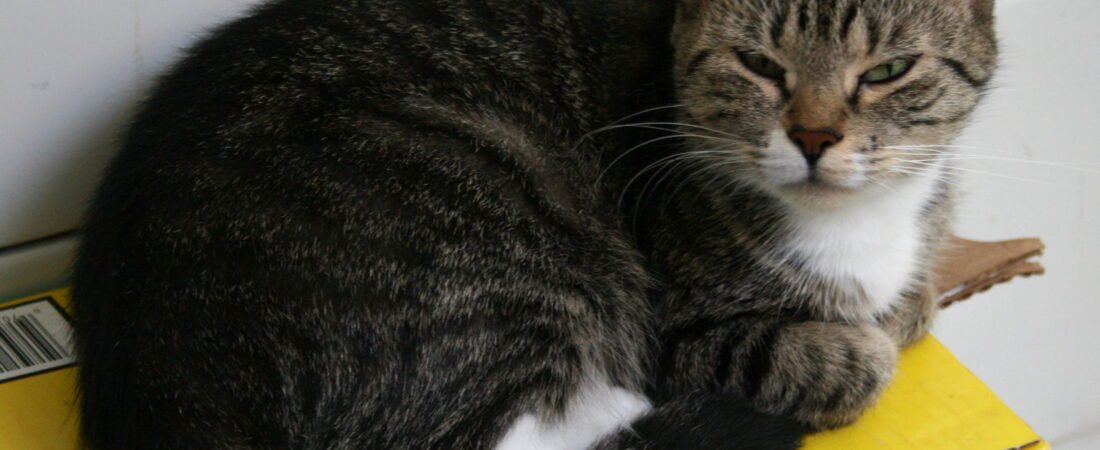
Photo: “2008-07-07 Kiska resting on cat litter box” by Ildar Sagdejev, licensed under CC BY-SA 4.0.