Table of Contents
- What Hypothyroidism Actually Is
- The Signs Owners Actually Notice
- Why This Condition Is Often Missed at First
- How It’s Diagnosed
- Treatment Is Simple and Effective
- Why Routine Senior Bloodwork Catches This Well
- Hypothyroidism’s Connection to Other Senior Conditions
- What Improvement Actually Looks Like
How PawSeniors Researches This
PawSeniors articles are written and edited in-house, then checked against primary veterinary sources before publishing.
- Every medical claim is sourced to the American Kennel Club, PetMD, VCA Animal Hospitals, or another named veterinary source, linked at the end of the article.
- Every claim is tied to a named, checkable veterinary source linked at the end of the article — nothing is published without a reference you can verify yourself.
- Articles are updated when veterinary guidance changes.
A senior dog who’s gained weight without eating more, seems tired and unmotivated, and has started seeking out warm spots by the heater more than they used to isn’t necessarily just slowing down with age. This specific pattern is one of the more recognizable signs of hypothyroidism, a common hormonal condition in middle-aged and senior dogs.
What Hypothyroidism Actually Is
Hypothyroidism develops when the thyroid gland, located in the neck, stops producing enough thyroid hormone, which slows down metabolism throughout the body. Unlike hyperthyroidism in cats, which involves an overactive thyroid, canine hypothyroidism is the opposite problem: an underactive one. It commonly develops in middle-aged and senior dogs, and while any breed can be affected, it’s seen frequently enough across the general dog population that it’s routinely considered whenever a senior dog shows the right combination of signs.
The Signs Owners Actually Notice
Weight gain without a corresponding increase in appetite is one of the more distinctive signs, since it isn’t explained by simple overfeeding the way ordinary weight gain often is. Alongside that, affected dogs often become noticeably lethargic, preferring to sleep and lie around rather than engage in their usual activity, and many develop a habit of seeking out warm spots, heat vents, sunny patches, fireplaces, more than they used to, since an underactive thyroid leaves dogs running colder than normal. Coat and skin changes are also common: hair loss, typically symmetrical along the trunk, back legs, and tail, paired with a dull, thin coat and flaky skin. Chronic, recurring skin and ear infections round out the classic picture, often showing up before an owner connects any of these signs to the thyroid specifically.
Why This Condition Is Often Missed at First
Individually, weight gain, low energy, and a duller coat all look like ordinary signs of a dog slowing down with age, which is exactly why hypothyroidism often goes unrecognized for months. It’s the combination, particularly weight gain without more food, paired with skin or ear infections that keep recurring despite treatment, that should prompt a vet to test thyroid function specifically rather than treating each symptom in isolation.
How It’s Diagnosed
Diagnosis is confirmed through bloodwork measuring thyroid hormone levels, most commonly total T4, sometimes alongside additional thyroid-specific tests if initial results are borderline or inconsistent with the clinical picture. Because thyroid levels can be affected by other illnesses or medications a dog might be taking, a vet typically interprets thyroid bloodwork alongside a full physical exam and history rather than a single number in isolation.
Treatment Is Simple and Effective
Treatment involves daily hormone replacement therapy, a pill given once or twice a day at home, which is generally very effective and low-effort once a routine is established. Regular bloodwork, typically every six to twelve months once a dog is stable on their dose, monitors thyroid hormone levels and lets the vet adjust dosing over time, since needs can shift gradually. Hypothyroidism is a lifelong condition that isn’t curable, but with consistent treatment, affected dogs generally regain normal energy, a healthy coat, and a good quality of life within weeks to a couple of months of starting medication.
Why Routine Senior Bloodwork Catches This Well
Because hypothyroidism is common enough in senior dogs, and because its early signs blend in so easily with normal aging, it’s exactly the kind of condition that routine twice-yearly senior wellness bloodwork is designed to catch. A dog flagged for mildly abnormal thyroid levels on routine screening, before obvious symptoms have fully developed, generally starts treatment earlier and settles into a normal quality of life faster than one diagnosed only after months of unexplained lethargy and skin problems.
Hypothyroidism’s Connection to Other Senior Conditions
Hypothyroidism doesn’t exist in isolation, and its effects can ripple into other areas of a senior dog’s health that owners might not immediately connect back to the thyroid. Chronic, recurring skin and ear infections are common in untreated hypothyroid dogs, since the condition affects normal skin barrier function and healing. Elevated cholesterol is another frequent finding on bloodwork, and left unmanaged for a long time, hypothyroidism has also been linked to broader cardiovascular and neurological effects, which is one more reason timely treatment matters beyond just resolving the more visible signs like weight gain and low energy.
What Improvement Actually Looks Like
Once treatment starts, most owners notice a return of normal energy within a few weeks, often before the coat and skin fully recover, since hair regrowth and skin healing simply take longer than the metabolic changes hormone replacement produces quickly. It’s worth being patient through this staggered timeline rather than assuming the medication isn’t working just because the coat still looks rough a few weeks in; full coat recovery can take several months even once thyroid levels are back in a normal range.
Sources: American Kennel Club — Hypothyroidism in Dogs: Signs, Symptoms, Treatments, PetMD — Hypothyroidism in Dogs.
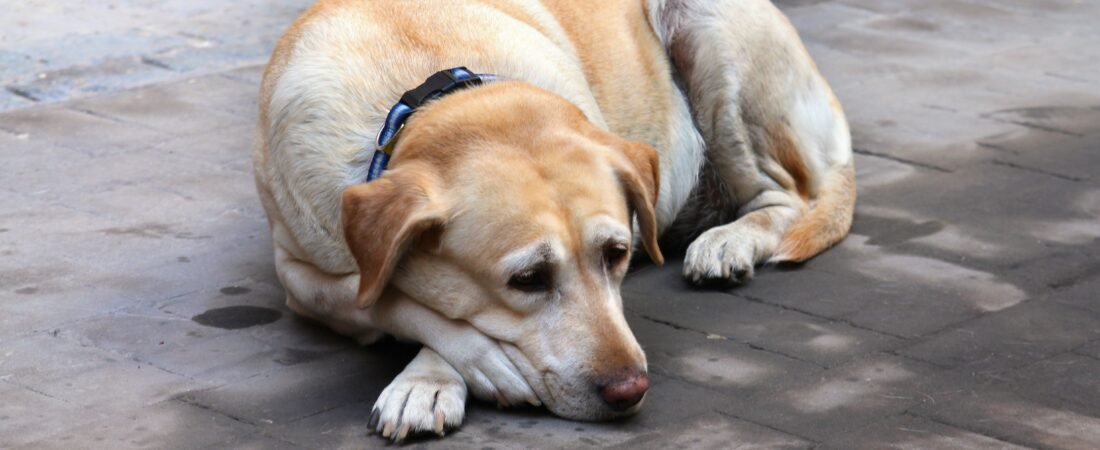
Photo: "Old dog – senior labrador dog with collar resting on sidewalk" by Marek Ślusarczyk (Tupungato), licensed under CC BY 3.0. Source.