Table of Contents
How PawSeniors Researches This
PawSeniors articles are written and edited in-house, then checked against primary veterinary sources before publishing.
- Every medical claim is sourced to the American Kennel Club, PetMD, VCA Animal Hospitals, or another named veterinary source, linked at the end of the article.
- Every claim is tied to a named, checkable veterinary source linked at the end of the article — nothing is published without a reference you can verify yourself.
- Articles are updated when veterinary guidance changes.
A senior dog who suddenly can’t stand up straight, whose head is tilted sharply to one side, or whose eyes are flicking rapidly back and forth looks like they’re having a stroke, and that’s exactly what most owners assume in the moment. Often, though, the actual diagnosis is far less dire: canine idiopathic vestibular disease, sometimes called “old dog vestibular disease,” one of the most common neurological conditions seen in senior dogs.
What the Vestibular System Actually Does
The vestibular system, located in the middle and inner ear, is responsible for balance. It constantly sends the brain information about head position, movement, and posture, and it’s what lets a dog know which way is up without having to think about it. When that system malfunctions, the brain receives false or conflicting signals about balance, and the result looks exactly like a dog who has suddenly and severely lost their equilibrium.
What It Looks Like
The onset is usually sudden and can look frightening: a pronounced head tilt to one side, leaning or falling toward that same side, tight circling, and rapid involuntary eye movement known as nystagmus, along with difficulty walking or even standing at all. Some dogs also experience nausea and vomiting, likely for a similar reason people get seasick, since the sudden mismatch between perceived and actual motion is disorienting to the body as well as the inner ear.
How It Differs From a Stroke
The overlap in symptoms is exactly why vestibular disease frightens owners so badly, and why it genuinely needs a vet visit rather than a guess at home. Strokes in dogs are far less common than in humans and tend to involve other neurological signs beyond balance, such as seizures, significant changes in consciousness, or weakness on one side of the body that doesn’t fit the vestibular pattern. A vet exam, and sometimes advanced imaging like an MRI, is the only reliable way to distinguish between the two, since the visible symptoms alone can look remarkably similar in the first hours.
Why It’s Called “Idiopathic”
When no specific underlying cause, like an ear infection, tumor, or toxin exposure, is identified, the condition is labeled idiopathic vestibular syndrome. Idiopathic cases are typically recognized by their sudden onset and the fact that they tend to improve fairly quickly on their own, which is part of how vets distinguish this from more serious neurological events. That said, a vet visit is still necessary, both to rule out those more serious causes and because the symptoms alone can’t reliably tell you which kind you’re dealing with.
What Recovery Actually Looks Like
For idiopathic cases, symptoms are usually most severe in the first twenty-four to forty-eight hours, and many dogs begin visibly improving within seventy-two hours. The head tilt and unsteadiness generally continue improving over a week to ten days, with most dogs substantially or fully recovered within two to three weeks. Some dogs are left with a mild, permanent residual head tilt even after the acute episode resolves, which is usually cosmetic rather than something that continues to affect quality of life.
Supporting a Dog Through an Episode
During the acute phase, dogs need a safe, confined space to prevent falls, easy access to food and water without needing to navigate stairs, and patience, since the disorientation can make dogs temporarily anxious or reluctant to move. Anti-nausea medication is commonly prescribed to manage the vomiting and general discomfort while the underlying imbalance resolves on its own.
When to Treat It as an Emergency
Because vestibular disease shares surface-level symptoms with genuinely serious conditions, any sudden onset of these signs warrants a same-day vet visit rather than a wait-and-see approach at home. A vet exam is the only reliable way to distinguish idiopathic vestibular disease, which typically resolves on its own, from something that needs more aggressive treatment.
How Common Is It, and Who’s Most at Risk
Idiopathic vestibular disease is considered one of the most common causes of sudden balance problems in older dogs specifically, though it can technically occur at any age. There’s no strong breed predisposition that clearly explains why it happens to some dogs and not others; age itself appears to be the main risk factor, which is consistent with it being classified as an idiopathic, meaning cause-unknown, condition of aging rather than something tied to a specific breed vulnerability.
Can It Happen More Than Once?
Most dogs who recover from an idiopathic vestibular episode don’t have a recurrence, but it isn’t impossible, and a small number of dogs do experience a second episode months or years later. A repeat episode doesn’t necessarily mean the first diagnosis was wrong; it’s more often treated as a second, separate idiopathic event unless a vet finds an underlying cause on closer investigation the second time around. Because of this possibility, owners who’ve been through one episode are usually advised to treat any recurrence of the same symptoms with the same urgency as the first, a same-day vet visit, rather than assuming it will resolve identically without being checked.
Sources: American Kennel Club — Vestibular Disease in Dogs, VCA Animal Hospitals — Vestibular Disease in Dogs.
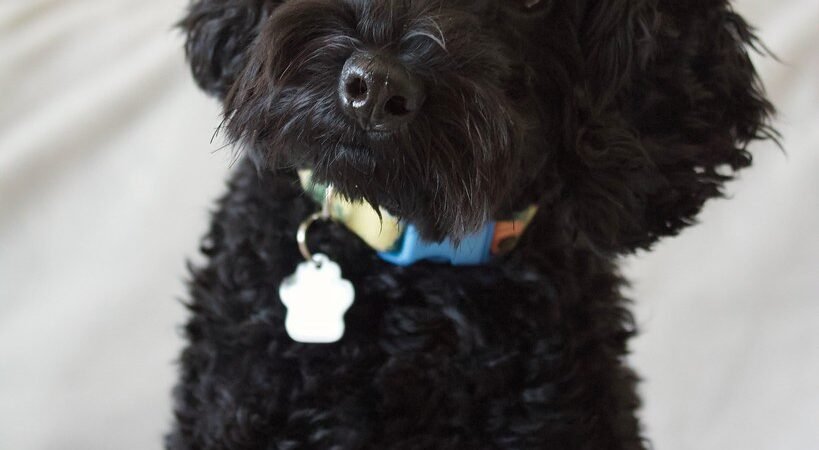
Photo: "Black dog head tilt" by Reid Campbell, licensed under CC0 1.0 (Public Domain). Source.