Table of Contents
How PawSeniors Researches This
PawSeniors articles are written and edited in-house, then checked against primary veterinary sources before publishing.
- Every medical claim is sourced to the American Kennel Club, PetMD, VCA Animal Hospitals, or another named veterinary source, linked at the end of the article.
- Every claim is tied to a named, checkable veterinary source linked at the end of the article — nothing is published without a reference you can verify yourself.
- Articles are updated when veterinary guidance changes.
Physical exercise gets most of the attention in senior dog care, but mental exercise matters just as much — arguably more, given how common age-related cognitive decline is. According to VCA Animal Hospitals, enrichment activities can make a real difference in helping senior dogs stay alert and connected, and are all the more valuable given how common cognitive dysfunction syndrome becomes with age.
Enrichment Activities That Actually Work
- Puzzle feeders. Making a dog work for their food engages problem-solving skills in a low-effort, built-into-the-day way.
- Snuffle mats. Hiding small treats in a textured mat taps into scent-driven foraging behavior, which is mentally engaging without requiring much physical exertion — useful for dogs with joint limitations.
- Slow, sniffy walks. Letting a dog explore at their own pace and investigate scents (rather than a brisk, destination-focused walk) is genuinely enriching, not just slower exercise. The scent-tracking itself is the mental workout.
- Hide and seek. Hiding treats or toys around a room, or having a family member call a dog to find them, combines physical movement with problem-solving.
- New toys and puzzle games. Rotating in novel toys, especially ones that require figuring something out to get a reward, keeps engagement higher than the same old toy on repeat.
How Much Enrichment Is Actually Enough
There’s no strict daily quota, but most senior dogs benefit from at least one dedicated enrichment session a day, somewhere in the range of ten to twenty minutes, separate from regular walks or playtime. Shorter, more frequent sessions generally work better than one long one for an older dog, since attention and physical stamina both run out faster than they used to — two five-minute puzzle-feeder sessions can be more effective than a single twenty-minute one that ends in frustration.
Why Combining Enrichment With Diet Matters
Environmental enrichment paired with the right nutritional support offers a stronger defense against cognitive decline than either alone. This typically means daily mental activities matched to a dog’s current energy and mobility level, alongside any brain-health-supporting supplements or diet changes a vet recommends — the two work together rather than substituting for each other.
Adjusting for a Senior Dog’s Limits
The right enrichment activity for a 3-year-old and a 13-year-old with arthritis look different. Favor low-impact options — snuffle mats over fetch, slow sniff walks over agility-style games — and watch for signs of frustration rather than engagement, which can mean a puzzle is too hard given current cognitive or sensory changes. A dog that walks away, paws at a puzzle without trying to solve it, or seems agitated rather than curious is telling you to make the activity easier, not to push through it; success should feel achievable most of the time, with just enough challenge to hold interest.
Signs a Dog Is Enjoying an Activity, Not Just Tolerating It
A dog that’s genuinely engaged leans in, sniffs actively, and keeps trying even when a puzzle takes a minute to figure out. That’s different from a dog who solves it once out of habit and then loses interest, which usually means the activity has gotten too easy and could use a small twist — a new hiding spot, a slightly trickier puzzle feeder, or a different room for a sniff walk — to keep it engaging rather than routine.
The Takeaway
A few minutes of genuine mental engagement most days does more for a senior dog’s quality of life than most owners expect, and it costs very little to start — a snuffle mat or a slower walk route is a lower bar than most enrichment advice implies.
Sources: VCA Animal Hospitals — Mental Stimulation for Senior Dogs, American Kennel Club — How to Keep Your Dog’s Mind Sharp.
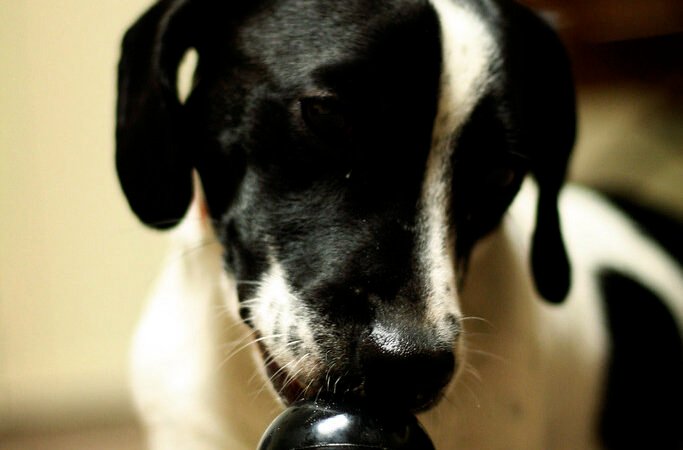
Photo: “Cosmo vs. KONG” by ginnerobot, licensed under CC BY-SA 2.0.