Table of Contents
How PawSeniors Researches This
PawSeniors articles are written and edited in-house, then checked against primary veterinary sources before publishing.
- Every medical claim is sourced to the American Kennel Club, PetMD, VCA Animal Hospitals, or another named veterinary source, linked at the end of the article.
- Every claim is tied to a named, checkable veterinary source linked at the end of the article — nothing is published without a reference you can verify yourself.
- Articles are updated when veterinary guidance changes.
Heart disease is far more common in senior dogs than most owners expect — roughly 35% of senior dogs are affected by some form of heart disease or condition, compared to about 10% of dogs overall. The tricky part is that most dogs won’t show outward symptoms before the condition is first picked up as a heart murmur during a routine exam, according to veterinary sources reviewed for this article.
Early Signs Worth Watching For
- An occasional cough — especially one that’s worse at night or after activity.
- Slowing down on walks — reduced exercise tolerance that wasn’t there before.
- Changed breathing patterns — different breathing at rest or during play, including panting that seems disproportionate to activity level.
- Fatigue after exertion — needing more recovery time after activities that used to be routine.
Individually, these can look like normal aging. Together, or if they’re a clear change from your dog’s baseline, they’re worth mentioning at a vet visit.
How Heart Disease Progresses
Veterinary cardiology generally describes heart disease in dogs across stages: an early stage where a dog is high-risk but shows no symptoms, a stage where a heart murmur is detected but the dog seems otherwise normal, a stage where structural heart changes appear without obvious clinical signs, and a later stage — congestive heart failure (CHF) — where breathing changes, fluid retention, and exercise intolerance become apparent. The goal of regular checkups is to catch a dog in one of the earlier, asymptomatic stages, when management options are broadest.
Diagnostic Tests Beyond the Stethoscope
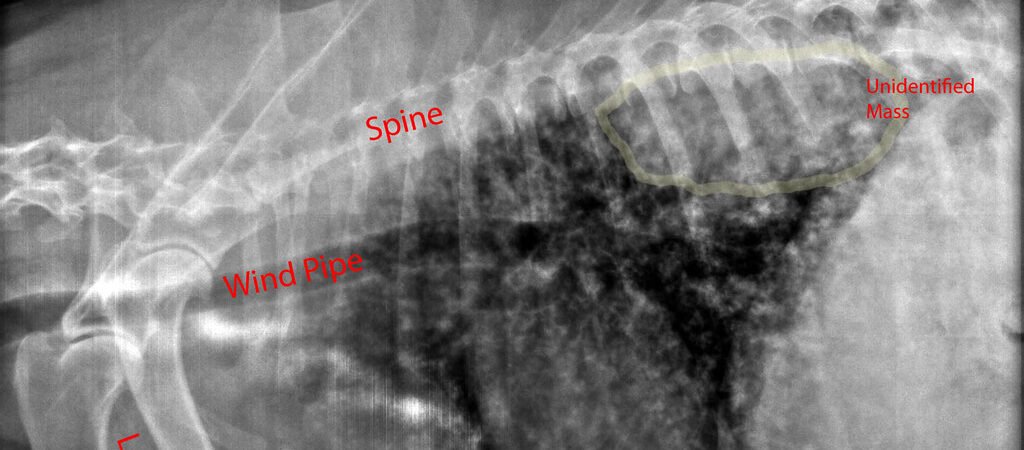
Once a murmur is heard, a vet typically follows up with chest X-rays to check heart size and look for early fluid buildup in the lungs, and often an echocardiogram — an ultrasound of the heart — to see exactly which valve or chamber is affected and how well the heart is actually pumping. Blood tests measuring specific cardiac biomarkers can help gauge severity and track whether treatment is working over time, giving a more complete picture than a murmur’s loudness alone, which doesn’t reliably predict how serious the underlying problem is.
What Congestive Heart Failure Looks Like
In CHF, the heart can no longer pump blood adequately, causing fluid to back up into the lungs or body cavities. Symptoms at this stage include labored breathing, persistent coughing, fluid retention, and clear exercise intolerance. Any signs of respiratory distress or difficulty breathing warrant emergency veterinary care immediately — this isn’t a “wait for the next appointment” situation.
Why Regular Checkups Matter More Than Symptom-Watching
Because a heart murmur is often the first detectable sign — audible on a stethoscope well before a dog shows any symptoms — routine senior wellness exams do more to catch heart disease early than watching for coughing or fatigue at home. By the time symptoms are obvious, the disease has usually progressed past its earliest, most manageable stage.
Managing a Dog Already Diagnosed
Once heart disease is confirmed, treatment usually combines medication — commonly a diuretic to reduce fluid buildup and drugs that support heart function — with lifestyle adjustments like a lower-sodium diet and activity scaled to what the heart can handle. Regular recheck appointments, including repeat X-rays or bloodwork, let a vet adjust medication doses as the condition changes rather than keeping a dog on a fixed plan indefinitely.
The Bottom Line
Given how common heart disease is in senior dogs, a stethoscope check at every routine visit is one of the higher-value five minutes of a senior wellness exam. If your dog is already showing coughing, breathing changes, or reduced stamina, treat it as a reason to see a vet promptly rather than a symptom to monitor at home.
Source: PetMD — Heart Disease in Dogs, PetMD — Congestive Heart Failure in Dogs.
Photo: “Farley’s X-ray” by ewen and donabel, licensed under CC BY 2.0.