Table of Contents
- What a Heart Murmur Actually Is
- How Murmurs Are Graded
- The Most Important Thing to Understand About Grading
- What Happens After a Murmur Is Detected
- Newly Detected Versus Long-Standing Murmurs
- Living With a Diagnosed Murmur
- Breeds More Prone to Murmurs From Valve Disease
- What a Cardiologist Referral Actually Involves
How PawSeniors Researches This
PawSeniors articles are written and edited in-house, then checked against primary veterinary sources before publishing.
- Every medical claim is sourced to the American Kennel Club, PetMD, VCA Animal Hospitals, or another named veterinary source, linked at the end of the article.
- Every claim is tied to a named, checkable veterinary source linked at the end of the article — nothing is published without a reference you can verify yourself.
- Articles are updated when veterinary guidance changes.
A vet listening to your senior dog’s chest and pausing a beat longer than usual is one of the more common moments that leads to a heart murmur diagnosis. The word “murmur” sounds alarming, but understanding what a grade actually tells you, and what it doesn’t, changes how worried that diagnosis needs to make you.
What a Heart Murmur Actually Is
A heart murmur is an abnormal sound created by turbulent blood flow through the heart, heard through a stethoscope as a whooshing or swishing sound alongside the normal heartbeat. In senior dogs, the most common cause, especially in smaller breeds, is a mitral valve that’s degenerated with age, allowing blood to leak backward instead of flowing in one direction as it should.
How Murmurs Are Graded
Vets grade murmurs on a scale from I to VI based on loudness and how easily they’re detected. A Grade I murmur is barely audible, only heard with a stethoscope in a very quiet room, while Grade II and III murmurs are increasingly easy to hear on one or both sides of the chest. Grade IV murmurs are loud enough to hear clearly on both sides, Grade V can actually be felt as a vibration when a hand is placed against the chest, and Grade VI, the most severe, is felt through the chest wall even without a stethoscope.
The Most Important Thing to Understand About Grading
A murmur’s grade describes how loud it is, not how sick the heart actually is, and this distinction trips up a lot of owners who assume a higher number automatically means a more serious problem. A loud murmur doesn’t always mean a failing heart, and in some cases a fairly soft murmur can be accompanying more significant underlying disease than a louder one. This is exactly why grade alone never determines treatment, and why further testing matters so much once a murmur is first detected.
What Happens After a Murmur Is Detected
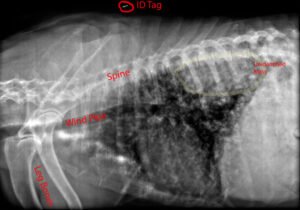
Following the initial detection, a vet typically recommends further diagnostics to understand what’s actually happening inside the heart: chest X-rays to check heart size and look for fluid in the lungs, and an echocardiogram, an ultrasound of the heart, to directly visualize valve function and heart muscle strength. Blood tests, including a specific marker called NT-proBNP, can also help gauge how much strain the heart is currently under. These tests, not the murmur grade itself, are what actually determine whether treatment is needed now or whether monitoring alone is the right call.
Newly Detected Versus Long-Standing Murmurs
A murmur that’s brand new, especially one detected alongside other symptoms like coughing or reduced energy, generally warrants a more urgent workup than a mild murmur that’s been stable and unchanged across several years of annual exams. Many senior dogs live for years with a mild, stable murmur that never progresses to symptomatic heart disease, which is part of why regular monitoring, tracking whether a murmur’s grade or a dog’s symptoms change over time, matters more than reacting to the murmur’s initial discovery alone.
Living With a Diagnosed Murmur
For dogs with a mild murmur and no current symptoms, life generally continues normally, with periodic rechecks to monitor for progression rather than starting medication immediately. If monitoring reveals the murmur worsening or symptoms developing, that’s when a fuller conversation about medication, most commonly the combination used for congestive heart failure, becomes relevant. Either way, a murmur diagnosis is the start of a monitoring relationship with your vet, not an immediate crisis, and most dogs diagnosed early continue living full, active lives for a considerable time afterward.
Breeds More Prone to Murmurs From Valve Disease
Small and toy breeds, particularly Cavalier King Charles Spaniels, Dachshunds, Poodles, and Chihuahuas, are especially predisposed to the mitral valve degeneration that causes most age-related heart murmurs, often developing murmurs earlier and more commonly than larger breeds. Knowing your dog’s breed-specific risk doesn’t change how a murmur is evaluated once found, but it does inform how proactively a vet might listen for one during routine exams as a dog moves through their senior years.
What a Cardiologist Referral Actually Involves
For a newly detected or changing murmur, a referral to a veterinary cardiologist for a full echocardiogram gives a far more detailed picture than a general practice vet’s stethoscope exam and X-rays alone. This specialist visit is typically a single appointment, non-invasive, and provides the clearest possible answer about valve function and heart chamber size, information that directly shapes whether starting medication now offers a real benefit or whether continued monitoring remains the better call for a specific dog.
Sources: PetMD — Heart Murmurs in Dogs, VCA Animal Hospitals — Heart Murmurs in Dogs.
Photo: "Chihuahua dog portrait" by tanakawho, licensed under CC BY 2.0. Source.