Table of Contents
- Why Cat Arthritis Treatment Lagged Behind Dogs
- What Solensia Actually Is and How It Works
- How It’s Given and What to Expect
- Safety, Including for Senior and Geriatric Cats
- Cost and Practical Considerations
- Combining Solensia With Other Arthritis Management
- What If Solensia Doesn’t Seem to Be Working
- Getting an Accurate Read on Whether It’s Helping
How PawSeniors Researches This
PawSeniors articles are written and edited in-house, then checked against primary veterinary sources before publishing.
- Every medical claim is sourced to the American Kennel Club, PetMD, VCA Animal Hospitals, or another named veterinary source, linked at the end of the article.
- Every claim is tied to a named, checkable veterinary source linked at the end of the article — nothing is published without a reference you can verify yourself.
- Articles are updated when veterinary guidance changes.
For years, arthritis in cats went underdiagnosed and undertreated largely because so few medications were actually approved and proven safe for feline use. Solensia changed that meaningfully, offering the first medication specifically developed and FDA-approved for feline osteoarthritis pain.
Why Cat Arthritis Treatment Lagged Behind Dogs
Cats aren’t simply small dogs from a pharmacological standpoint; several medications that are safe and effective for canine arthritis carry a much narrower safety margin, or are outright unsafe, in cats. This left a real treatment gap for years: arthritis is extremely common in senior cats, but the medication toolbox available to treat it safely was considerably smaller than what existed for dogs, leaving many arthritic cats undertreated simply because fewer safe options existed.
What Solensia Actually Is and How It Works
Solensia, the brand name for frunevetmab, is a monoclonal antibody therapy that works by targeting and neutralizing nerve growth factor, a protein that plays a central role in transmitting osteoarthritis pain signals. This mechanism is similar in concept to Librela, the equivalent medication developed for dogs, though the two are formulated and dosed specifically for their respective species. Because it works through the immune system rather than through the kidneys or liver the way traditional pain medications often do, it avoids much of the organ-related risk that limits other options in cats with any degree of kidney disease, a particularly common concern in senior cats specifically.
How It’s Given and What to Expect
Solensia is administered as a once-monthly injection given by your veterinarian, rather than a pill or liquid given at home, which sidesteps the challenge many owners face trying to medicate a cat daily. Most cats begin showing improvement within two to three weeks of their first injection, with owners commonly reporting increased activity, more willingness to jump, run, and play, and generally improved mobility as the medication takes effect.
Safety, Including for Senior and Geriatric Cats
Solensia has shown a strong safety profile specifically in older cats; clinical trials for the medication included a substantial number of senior cats, with a median trial age of twelve to thirteen years old, and these cats tolerated the medication about as well as younger cats did, with side effects reported as minimal overall. This safety data in an older population matters considerably, since senior cats are exactly the group most likely to have arthritis in the first place, and a medication with a strong track record specifically in that age group offers more confidence than one primarily tested in younger, healthier animals.
Cost and Practical Considerations
Cost generally runs in the range of seventy-five to over a hundred dollars per monthly injection, varying by clinic and region, which is worth budgeting for as an ongoing monthly expense rather than a one-time cost. Because it requires a monthly vet visit rather than a take-home medication, it also builds in a natural touchpoint for your vet to reassess your cat’s overall condition each month, which can be a genuine advantage for catching other age-related changes early, even though it does mean more frequent trips than a daily pill would require.
Combining Solensia With Other Arthritis Management
Solensia addresses pain specifically, and it tends to work best as part of a broader arthritis management plan rather than a standalone fix. Environmental adjustments, low-sided litter boxes, ramps or steps to favorite resting spots, and raised food and water bowls, along with weight management where relevant, all continue to matter alongside medication, since they reduce the physical demands arthritis makes harder in the first place rather than only treating the resulting pain.
What If Solensia Doesn’t Seem to Be Working
Not every cat responds equally well to Solensia, and if noticeable improvement hasn’t appeared after two to three months of consistent monthly injections, it’s worth a direct conversation with your vet rather than assuming this is simply how much benefit to expect. Other options can be layered in or substituted, including environmental adjustments, other pain-supportive supplements, or in some cases other medications used cautiously under close monitoring. A cat’s arthritis pain can also be compounded by an unrelated condition contributing to reduced mobility, so a lack of response is sometimes a useful signal to look for something else going on rather than only a reflection of the medication itself.
Getting an Accurate Read on Whether It’s Helping
Because cats are so good at masking discomfort, subtle improvement can be easy to miss without deliberately watching for it. Keeping a simple informal log, noting whether your cat is jumping onto furniture again, using stairs more readily, or grooming areas they’d stopped reaching, gives a more reliable picture over a few months than relying on a general impression alone. Bringing these specific observations to your vet at the monthly injection visit helps them gauge effectiveness more accurately than a general “seems about the same” assessment would.
Sources: PetMD — Solensia for Cats: Uses, Cost, Side Effects, VCA Animal Hospitals — Arthritis in Cats.
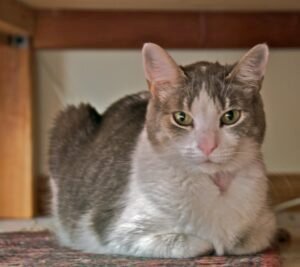
Photo: "Oh, did I disturb the big cat?" by kennethkonica, licensed under CC BY-ND 2.0. Source.