Table of Contents
- Why Senior Dogs Are Especially Prone to Overgrown Nails
- How Long Nails Actually Cause Pain
- How Often Senior Dogs Actually Need Trims
- Nail Grinders Often Work Better for Senior Dogs
- When to Let a Professional Handle It
- Building It Into a Routine Senior Dogs Can Tolerate
- Signs Nails Have Already Gone Too Long
- Making Peace With a Nail-Anxious Senior Dog
How PawSeniors Researches This
PawSeniors articles are written and edited in-house, then checked against primary veterinary sources before publishing.
- Every medical claim is sourced to the American Kennel Club, PetMD, VCA Animal Hospitals, or another named veterinary source, linked at the end of the article.
- Every claim is tied to a named, checkable veterinary source linked at the end of the article — nothing is published without a reference you can verify yourself.
- Articles are updated when veterinary guidance changes.
Overgrown nails are one of the most common, and most consistently underestimated, mobility problems in senior dogs. A dog whose nails have grown too long isn’t just dealing with a cosmetic issue, they’re compensating for it in ways that can actively worsen arthritis and joint pain.
Why Senior Dogs Are Especially Prone to Overgrown Nails
Nails naturally wear down through regular contact with hard surfaces like pavement and concrete during daily walks and activity. Senior dogs, who are typically less active than they once were, don’t wear their nails down at the same rate, even if their nail growth rate itself hasn’t changed, which means the same trimming schedule that worked fine at a younger, more active age often isn’t frequent enough anymore.
How Long Nails Actually Cause Pain
Overgrown nails alter the natural alignment of a dog’s paw, forcing them to shift their weight unnaturally to compensate, similar to the discomfort of constantly walking with a pebble stuck in your shoe. That altered weight distribution and toe hyperextension places new stress on joints, ligaments, and muscles that weren’t designed to bear weight that way, and in a dog already managing arthritis, this added strain frequently creates new points of inflammation and pain, on top of whatever joint issues already existed. This isn’t a minor or theoretical concern; overgrown nails are estimated to affect a majority of dogs to some degree, and the resulting postural changes have been shown to measurably worsen underlying arthritis over time.
How Often Senior Dogs Actually Need Trims
General guidance suggests trimming every one to two weeks for most dogs, though activity level and walking surface both shift that number considerably; a dog getting regular walks on concrete may need trims less often than one who’s mostly indoors or walking on grass. A simple, reliable test: if you can hear your dog’s nails clicking against a hard floor as they walk, they’re due for a trim regardless of how much time has passed since the last one.
Nail Grinders Often Work Better for Senior Dogs
A nail grinder, which gradually files the nail down rather than cutting it in one motion, is often gentler and more precise for senior dogs than traditional clippers, particularly for thickened senior nails or dogs with any anxiety around the process. The slower, more controlled approach reduces the risk of accidentally cutting the quick, the sensitive blood vessel inside the nail, which becomes an increasing concern with older, thicker, sometimes darker nails where the quick is harder to see clearly. Older dogs can also have more brittle nails, making a gradual grinding approach less likely to cause splintering than a single quick clip.
When to Let a Professional Handle It
Severely overgrown nails, a dog with a history of a bad nail-trimming experience, or thickened senior nails where the quick has grown unusually long are all good reasons to have a groomer or vet handle the trim rather than attempting it at home. This isn’t a failure on the owner’s part; it’s simply recognizing when the risk of a stressful or painful mistake outweighs the convenience of doing it yourself, especially for a senior dog who may already be managing enough discomfort without an added negative experience.
Building It Into a Routine Senior Dogs Can Tolerate
Because senior dogs need nail trims more frequently, not less, than they did when younger, building it into a predictable, low-stress routine, short sessions, positive reinforcement, and going slowly rather than trying to finish all four paws at once if a dog seems uncomfortable, matters more over time. Consistency here pays off doubly: it keeps nails at a length that doesn’t strain aging joints, and it keeps the process itself from becoming something a senior dog dreads.
Signs Nails Have Already Gone Too Long
Beyond the audible click on hard floors, a few visual and behavioral signs point to nails that have already grown past a comfortable length. Watch for a dog shifting their weight noticeably onto their heels or splaying their toes outward while standing, both subtle compensations for the altered pressure long nails create. Nails that visibly curve and begin touching the ground even when a dog is standing normally, rather than just when walking, have typically gone well past the point where trimming should have happened already, and in more extreme cases, an overly long nail can curl around and grow directly into the paw pad, causing a painful wound that needs prompt veterinary attention rather than a routine trim.
Making Peace With a Nail-Anxious Senior Dog
Some senior dogs carry years of accumulated anxiety around nail trims, whether from a past bad experience or simply general unease with the process, and that anxiety doesn’t have to be fully resolved to still make progress. Short, frequent sessions trimming just one or two nails at a time, paired consistently with a high-value treat, can gradually build tolerance even in a dog who’s never been easy about it, and there’s no rule that every nail has to be done in a single sitting, especially for a dog whose comfort matters more than finishing quickly.
Sources: American Kennel Club — How to Trim Your Dog’s Nails at Home, American Kennel Club — Improving Your Dog’s Nail-Care Routine.
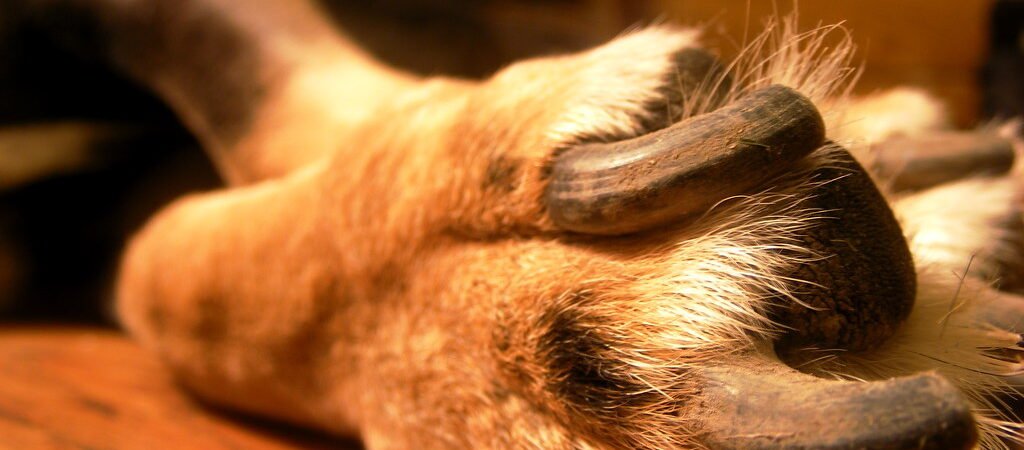
Photo: "Paw and Nails" by aarontait, licensed under CC BY 2.0. Source.