Table of Contents
- Grooming Is Safe, With the Right Adjustments
- Positioning and Support Matter More Than Ever
- Adjusting the Grooming Tools Themselves
- Session Length and Breaks
- What to Tell Your Groomer Beforehand
- Using Grooming as a Health Check
- Bathing Considerations for Senior Dogs
- When to Skip a Full Groom Entirely
How PawSeniors Researches This
PawSeniors articles are written and edited in-house, then checked against primary veterinary sources before publishing.
- Every medical claim is sourced to the American Kennel Club, PetMD, VCA Animal Hospitals, or another named veterinary source, linked at the end of the article.
- Every claim is tied to a named, checkable veterinary source linked at the end of the article — nothing is published without a reference you can verify yourself.
- Articles are updated when veterinary guidance changes.
Grooming a senior dog isn’t just about keeping them looking tidy, it’s genuinely one of the more useful regular touchpoints for catching health changes early. But the process itself needs to adapt as joints stiffen and stamina declines, and a few thoughtful adjustments make the difference between a stressful ordeal and a comfortable routine.
Grooming Is Safe, With the Right Adjustments
It’s reasonably safe to continue regular grooming for an older dog, but it does call for special precautions that a younger, more flexible dog simply doesn’t need. As dogs stiffen with age, it becomes harder for them to reach every area of their own body, which makes regular brushing and hair trims more important, not less, for preventing matting in spots a dog can no longer effectively self-groom. The main shift isn’t whether to groom, but how, with more attention to comfort, positioning, and pacing throughout.
Positioning and Support Matter More Than Ever
Standing in one place for an extended grooming session can become genuinely painful for a dog with arthritis or general joint stiffness. A grooming sling, or simply a hand placed under the belly for support, takes weight off arthritic hips and lets a wobbly dog hold a standing position longer and more comfortably. Non-slip surfaces in the bathtub and on any grooming table are essential, since a slip or loss of footing is both frightening and physically risky for a dog with reduced stability, and any lifting should support the full body rather than pulling from a single limb or the collar.
Adjusting the Grooming Tools Themselves
Clipper vibration directly over bony joints, hips, elbows, spine, can be uncomfortable for a senior dog in a way it wouldn’t be for a younger one, and switching to shears in those specific sensitive areas is often a more comfortable option worth requesting from a groomer. Brushing should generally be gentler overall, with extra care around thinner, more delicate senior skin, which bruises and tears more easily than a younger dog’s skin.
Session Length and Breaks
Rather than one long, uninterrupted grooming session, limiting periods to roughly fifteen to twenty minutes at a time, with breaks in between, or splitting the full groom across several shorter sessions entirely, respects a senior dog’s reduced stamina and tolerance for prolonged standing. If a dog needs to rest partway through, allowing them to lie down on a padded surface and continuing the grooming there, rather than insisting on a full standing position throughout, keeps the experience manageable without sacrificing the grooming itself.
What to Tell Your Groomer Beforehand
If you use a professional groomer, sharing specific, current information makes a real difference to how the session goes: any recent changes in mobility, vision, or hearing, current medications (and confirming whether an arthritis medication should be given before the appointment, per your vet’s guidance), and any known sensitive areas or health conditions. A groomer working from current, accurate information can adjust technique, pacing, and handling proactively, rather than discovering a sensitivity mid-session in a way that startles or hurts your dog.
Using Grooming as a Health Check
Regular grooming sessions double as one of the more reliable opportunities to examine a senior dog closely for new lumps, bumps, or skin changes that become more common with age. Running hands over the whole body during brushing, not just the visible surface, catches things a quick glance would miss, and while most new lumps found this way turn out to be benign, a groomer or owner noticing something new and mentioning it promptly is exactly the kind of early catch that makes a real difference for anything more serious.
Bathing Considerations for Senior Dogs
Getting in and out of a tub or shower stall poses its own fall risk for a senior dog with unsteady footing, so a non-slip mat inside the tub and a stable, non-slip surface just outside it for stepping out afterward both matter more than they did at a younger age. Water temperature deserves a second thought too, since older dogs regulate body temperature less efficiently than younger ones, making lukewarm water a safer default than water that would have felt comfortably warm to a younger, more resilient dog. Thorough drying afterward, particularly in skin folds and areas with thinning fur, helps prevent the skin irritation that senior dogs can be more prone to developing after a bath.
When to Skip a Full Groom Entirely
On days when a senior dog seems particularly stiff, in pain, or generally unwell, it’s reasonable to skip a full grooming session and stick to the essentials, a quick brush of any matting, a spot-clean if needed, rather than pushing through a complete groom that adds unnecessary stress to an already uncomfortable day. Grooming should support a senior dog’s comfort and wellbeing, not compete with it, and a flexible approach that bends around how a dog is actually feeling on a given day tends to keep the whole process more positive over the long run.
Sources: American Kennel Club — Senior Dogs, American Kennel Club — Dog Grooming Tips: How to Groom a Dog.
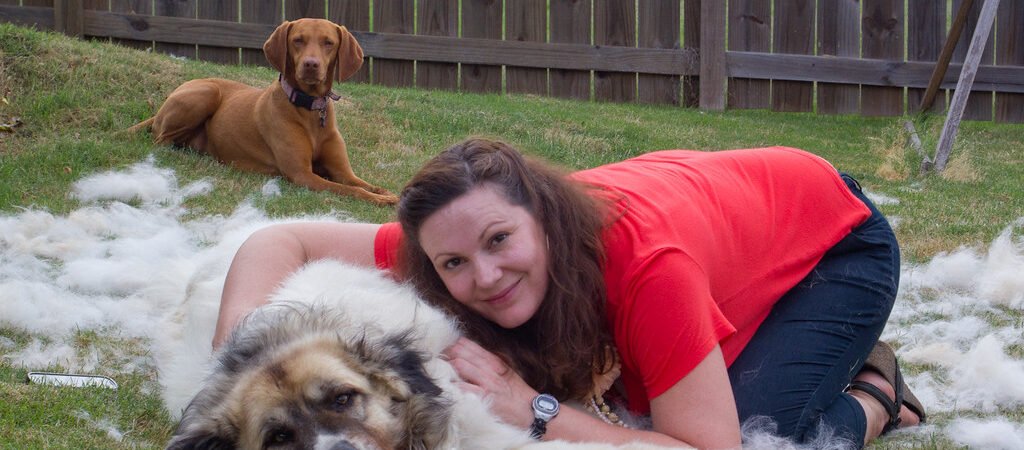
Photo: "Brushing Out the Pyrenees 2" by Monkey Mash Button, licensed under CC BY-SA 2.0. Source.