Table of Contents
- What Actually Counts as a Seizure
- Why New Seizures in an Older Dog Are Different
- The Most Common Underlying Causes
- What a Seizure Actually Looks Like
- What to Do During a Seizure
- How Vets Work Up the Cause
- Treatment and Outlook
- Keeping a Seizure Log
- Living With a Senior Dog on Anti-Seizure Medication
- What a Reasonable Outlook Looks Like
How PawSeniors Researches This
PawSeniors articles are written and edited in-house, then checked against primary veterinary sources before publishing.
- Every medical claim is sourced to the American Kennel Club, PetMD, VCA Animal Hospitals, or another named veterinary source, linked at the end of the article.
- Every claim is tied to a named, checkable veterinary source linked at the end of the article — nothing is published without a reference you can verify yourself.
- Articles are updated when veterinary guidance changes.
A senior dog collapsing into a seizure for the first time is one of the more frightening things an owner can witness, made worse by the fact that seizures in an older dog usually mean something different than seizures in a young one. Understanding that difference is the first step toward getting your dog the right workup rather than the wrong reassurance.
What Actually Counts as a Seizure
A seizure happens when a sudden surge of uncontrolled electrical activity fires across the brain, disrupting normal function for anywhere from a few seconds to several minutes. Seizures range widely in appearance, from a brief, subtle episode of staring and twitching to a full convulsion with your dog collapsed, paddling their legs, and losing control of their bladder or bowels. Both ends of that spectrum count as seizures, and both deserve the same level of concern in a senior dog.
Why New Seizures in an Older Dog Are Different
In young dogs, the most common cause of seizures is idiopathic epilepsy, a primary seizure disorder with no identifiable underlying cause, usually first appearing between one and five years old. It’s genuinely uncommon for idiopathic epilepsy to appear for the first time in a senior dog. When seizures start after roughly six or seven years of age, vets treat it as a red flag pointing toward an underlying medical cause rather than assuming primary epilepsy, and the diagnostic workup reflects that difference from the very first visit.
The Most Common Underlying Causes
In senior dogs, new-onset seizures are typically split into two broad categories: problems inside the brain (intracranial) and problems elsewhere in the body that affect the brain indirectly (extracranial). Brain tumors are a significant and common intracranial cause, directly irritating brain tissue and disrupting its normal electrical activity. On the extracranial side, liver failure, kidney disease, severe low blood sugar, hypothyroidism, and certain infections can all build up toxins or disrupt the body’s chemistry enough to trigger seizures, even though the brain tissue itself is structurally normal. This is exactly why a seizure workup in a senior dog casts a wide net rather than assuming a single likely cause upfront.
What a Seizure Actually Looks Like
Most seizures follow a rough pattern: an aura beforehand where a dog may seem anxious, clingy, or restless; the seizure itself, involving muscle rigidity, paddling, chomping, drooling, and sometimes loss of bladder or bowel control; and a post-seizure recovery period where a dog can seem disoriented, temporarily blind, or unsteady for anywhere from minutes to a full day. Recognizing this three-phase pattern helps distinguish a true seizure from other events that can look similar, like fainting or a vestibular episode, which matters for describing what happened accurately to your vet.
What to Do During a Seizure
The most useful thing an owner can do during a seizure is stay calm and keep the dog safe rather than trying to intervene directly. Move nearby furniture out of the way if it poses a fall or injury risk, but avoid putting your hands near your dog’s mouth, since a seizing dog can bite unintentionally and has no control over it. Time the seizure if you can, since duration is one of the most clinically useful pieces of information you can give your vet. A seizure lasting more than five minutes, or multiple seizures happening in quick succession without full recovery in between, is a genuine emergency that needs immediate veterinary care, not a wait-and-see approach.
How Vets Work Up the Cause
A senior dog’s first seizure workup typically starts with bloodwork checking liver and kidney function, blood sugar, and thyroid levels, since these extracranial causes are more straightforward and less invasive to rule out first. If bloodwork comes back clean, advanced imaging, an MRI or CT scan of the brain, is usually the next step to look for a structural cause like a tumor, along with sometimes a spinal fluid analysis. This staged approach lets a vet catch the more common, more treatable causes before moving to more expensive and invasive imaging.
Treatment and Outlook
Treatment depends entirely on what’s actually causing the seizures. A metabolic cause, like early kidney or liver disease, often improves once the underlying condition itself is managed, sometimes resolving the seizures without any seizure-specific medication at all. A structural cause like a brain tumor may call for its own targeted treatment, alongside anti-seizure medication to control symptoms in the meantime. For dogs whose workup comes back clear, or where seizures are becoming frequent enough to affect quality of life regardless of cause, daily anti-seizure medication is often started to reduce frequency and severity going forward, generally requiring lifelong use and periodic bloodwork to monitor for side effects.
Keeping a Seizure Log
Once a dog has had more than one seizure, keeping a written log becomes one of the more useful tools an owner has, arguably more useful day-to-day than any single test result. For each episode, note the date and time, how long it lasted, what the dog was doing beforehand, exactly what the seizure looked like, and how long recovery took afterward. Patterns that emerge over weeks or months, seizures clustering around certain times of day, increasing frequency, or changing in character, give your vet information that a single snapshot exam visit simply can’t capture, and they’re often what actually drives a decision to start or adjust medication.
Living With a Senior Dog on Anti-Seizure Medication
Dogs started on daily anti-seizure medication typically need periodic bloodwork, often every six months once stable, to monitor both drug levels and the liver and kidney function that some of these medications place extra demand on. Consistency in timing matters more with these medications than with most others; giving doses at roughly the same times each day helps maintain steady levels in the bloodstream and avoids the peaks and dips that can either under-treat or cause side effects. Missing a dose occasionally isn’t typically an emergency, but a consistent pattern of missed or late doses can lower the seizure threshold and bring on a breakthrough episode, so building the medication into a fixed daily routine, tied to an existing habit like a meal, tends to work better than trying to remember it standalone.
What a Reasonable Outlook Looks Like
Complete elimination of seizures isn’t always the realistic goal, especially for structural or degenerative causes, and vets often talk instead about meaningfully reducing frequency and severity to a level that no longer disrupts a dog’s quality of life. Many senior dogs with a well-managed underlying cause, or on an appropriately dosed anti-seizure medication, go on to live comfortably for a good stretch of time, with seizures becoming an occasional, managed event rather than a constant crisis. The bigger driver of long-term outlook tends to be the underlying cause itself rather than the seizures in isolation, which is exactly why identifying that cause, rather than only treating the visible symptom, remains the priority throughout.
Sources: PetMD — Seizures in Dogs: Symptoms, Causes, and What to Do, VCA Animal Hospitals — Seizures in Dogs.
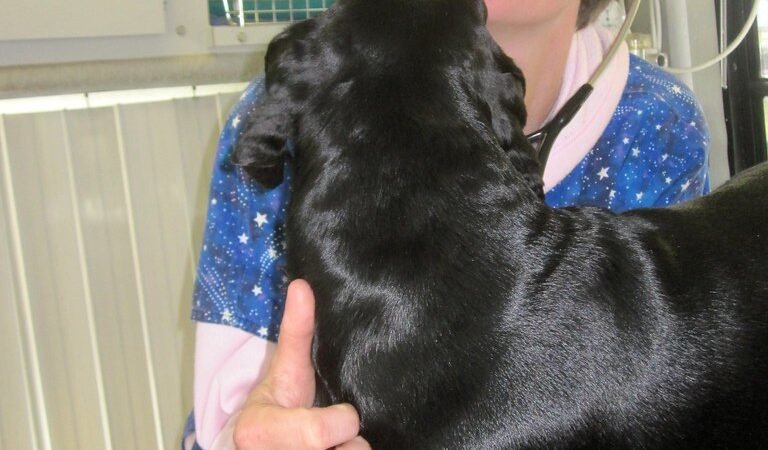
Photo: "Vet Visit" by Tobyotter, licensed under CC BY 2.0. Source.